
eXtensions - Friday 14 August 2026
By Graham K. Rogers
I have been taking photographs with film for several years, with some gaps. For the last ten years I have used a number of film cameras. I now use film half of the time, as well as digital inputs. I prefer using black and white although sometimes experiment with color. Photographic input from NASA and the use of photography as a documentary medium both have importance. I look forward to new films being produced.
I have a long history of taking photographs, with a couple of major gaps. My interest began in the UK when I was around 10. My cameras were little more than plastic boxes. One took two images from each frame of film which may have been 120 or 127 that was still plentiful then. I also used 127 in a couple of Box Brownie cameras that I picked up for ridiculously low prices at sales. That little plastic camera split the frame horizontally, unlike the Pentax 17 that splits the 35mm frame vertically: perfect for social media fans. Considering the 120 and 127 films (60 mm and 47mm respectively) the film was probably 127 as the half frame shots would have been more suitable.
I took this camera to Holland for Xmas 1960, but my best shot was of the Queen Mother who attended the official opening of our new estate on the Northern edges of London. I could look out of my bedroom and see what was left of the foundations for the Brockley Hill Northern Line station on the abandoned extension to Watford. She visited our flat, but my mother banished me for the day. Instead I took a photograph of the Queen Mother as she walked through the crowds outside our tower block: Garrick Court (now demolished).

|
|
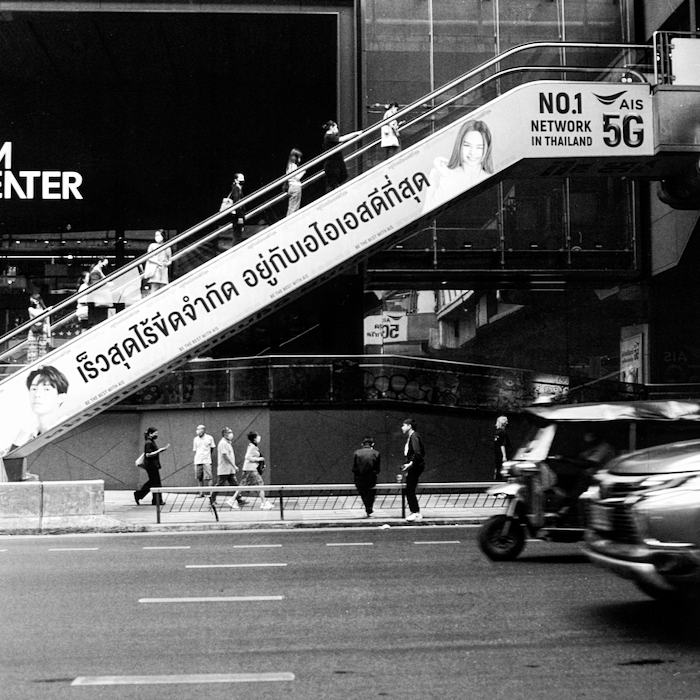
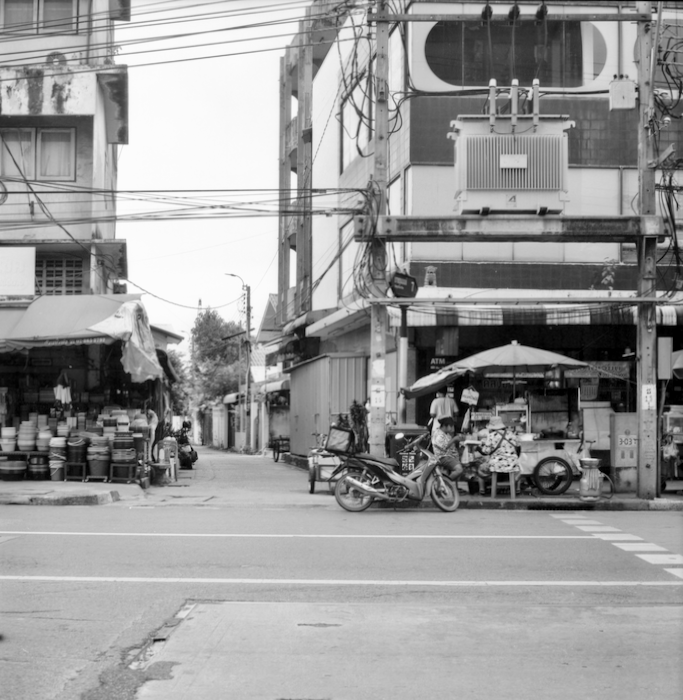
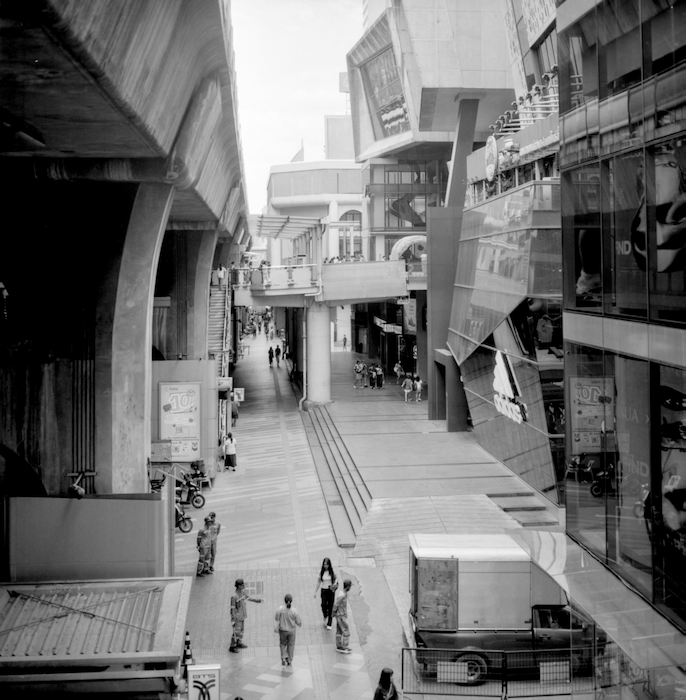
The film brand that I used was Ilford. They only made black and white film, but no one I knew then used color, although the company did produce this in 1960. A management buyout in 2005 seems to have set the scene for how the company now operates. Harman was purchased by Pemberstone Ventures, a private equity firm, in 2015 (Ilford). The company continues to produce the black and white films for which it is known, as well as a lower-priced range of films branded as Kentmere. Harman has been listening to its customers as in 2022, it added 120 medium format to its 35mm Kentmere 100 and 400 films. Shortly after it added Kentmere 200 in 35mm and 120. I use these regularly along with several of the Ilford films including SFX 200, Ortho 80, Pan 50, and FP4 125.
|
|
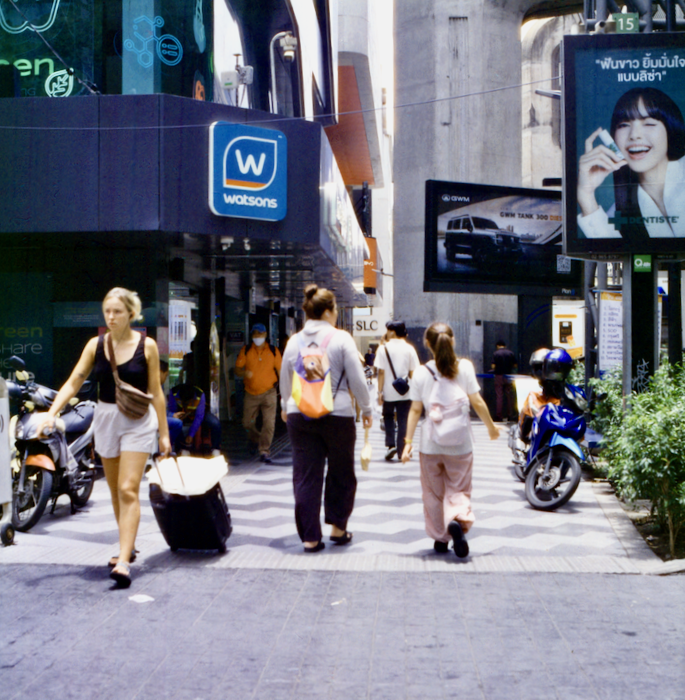
In 2023 there was a rumor of a new product. The company seeded rolls of its new, experimental, 35mm Phoenix to selected photographers in several countries. When Phoenix was announced there was a blitz of articles and YouTube videos that gave some fair comments on the new film. Harman was fairly open that this was a work in progress and that they were still playing about with the emulsions. Eventually, Harman released Phoenix in 120 and I was able to play with the film too. Although the box speed was 200 most photographers had the best results exposing the film at 125 or 100. The larger 120 format also produced images that were less grainy. This was followed by Phoenix 2 in blue boxes (120 and 135 at release). The adjusted emulsion (still a work in progress we were told) reduced the effect of the reds and gave better skin tones. I tried this soon after it came out, but still preferred my output of the original Phoenix at the 125 exposure.

|
|
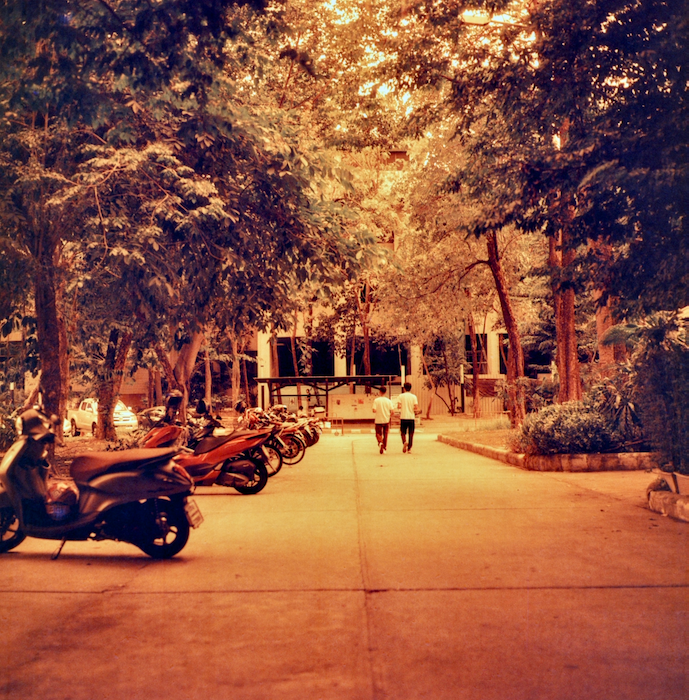
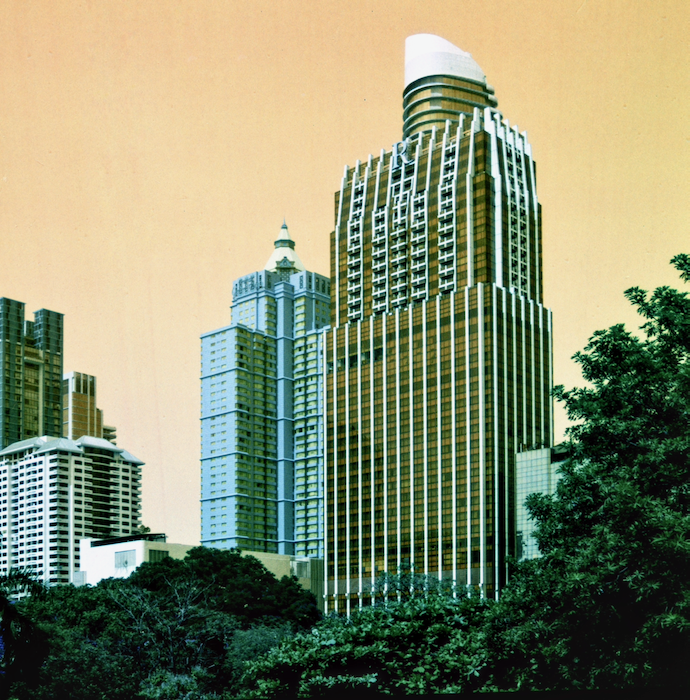
Harman appeared to be in its stride and two other films appeared: Harman Red which was unapologetically a film that gave a heavy red tint to all images. "The visual effect is achieved by shooting through the back of a color film which exposes the image through the film's base and red-sensitive layer first." Matt Growcoot (PetaPixel). Like the original Phoenix, this was originally released only in 35mm and I had to wait a while until 120 Red was available. I shot one roll at box speed (125) and one at 100. There is still one roll left in the fridge. I find that light conditions (sun, cloud, shade) have an effect on the final image, and I scan the negatives carefully: one by one, adjusting brightness input as necessary. It is an experimental film: fun to try, but not every shot is a masterpiece by a long shot.
|
|
Red was followed by Harman Switch Azure. Jon Stapley (Digital Camera World) writes that "This film is gloriously, unrepentantly nuts." The "Switch" in the name of the film refers to the way some colors, particularly blues and skin tones, are changed and, as Stapley notes, "Shots taken within seconds of each other might have radically different pink and purple hues." Dry grass comes out a rich blue. Out of 3 rolls, I had a couple of disasters, but also one or two shots that show an unusual potential. I had earlier tried the Lomo Topaz, but had better results with the Harman film.
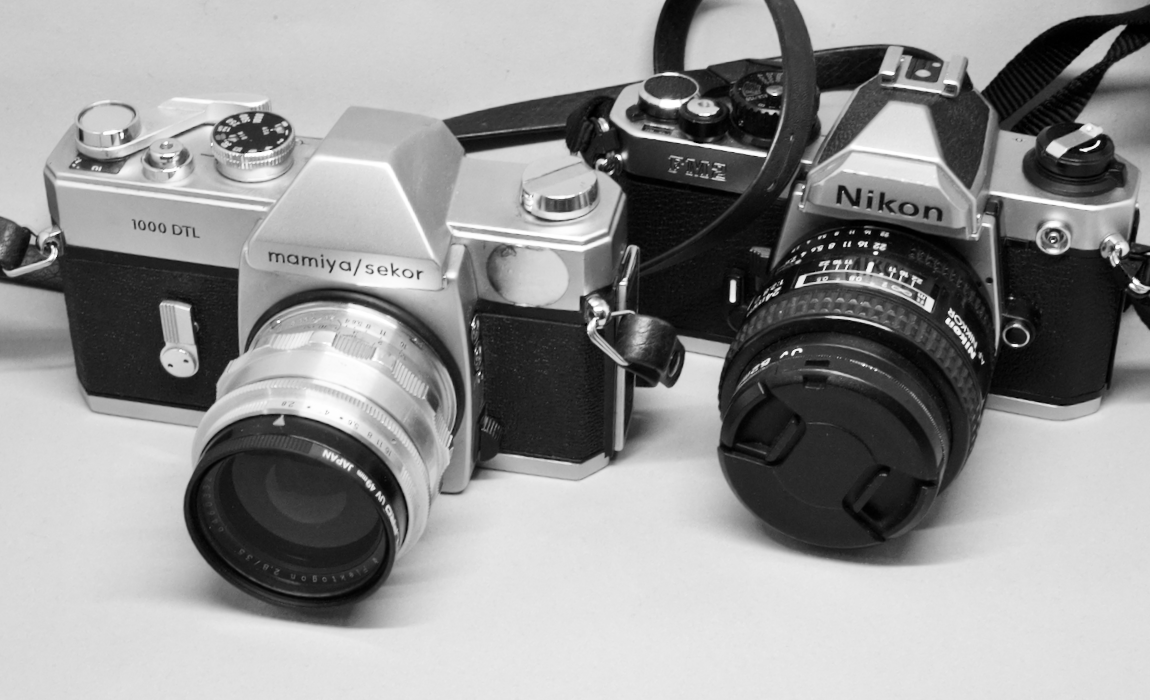
After my teens, I hardly touched cameras until the 1980s when I attended university after a few years in the police. I persuaded the student union to provide funds for an SLR camera that I could use as editor of the student newsletter. Duties included concerts when groups (Slade, Lindisfarne, the Hollies, et al) entertained the students. I also took hundreds of other images as I traveled around, until my turn in the chair ended and I passed the camera on to my successor.
I studied in the USA for a couple of years and was limited to a 110 cartridge camera. The film is sealed in a plastic container that slots into the camera. Each frame is 13 x 17 so we were a long way from medium format. Lomo and others still make the film and the cameras. I had some luck here and was invited by a friend to visit New York for Thanksgiving in 1986. At dinner I met Tony Harvey, who had directed the Oscar-winning, The Lion in Winter. He invited me to walk round the Soho area the next day and take photos. He did not embarrass me with the cassette camera (he had an SLR) and said that it did not matter. In the couple of hours we wandered about the streets I learned more about taking photographs than I had from all of the expert books I had read.
When I moved to Bangkok I bought a 35mm Minolta SLR camera. I used color film almost 100%. I found some slides from that time recently, and scanned a couple of the images. The film has deteriorated and will need more editing. Not long after, the first digital cameras began to appear. I tried an early Logitech device, that only took black and white images. While the quality was not high, there was clear potential. A colleague who had recently returned from studies in the USA, generously loaned me the early Kodak-Nikon DSLR he had bought there. Although the images were only (from memory) 4 MP, this showed a step forward and I was able to produce some reasonable output. Soon after, consumer cameras began to appear and I had a couple.
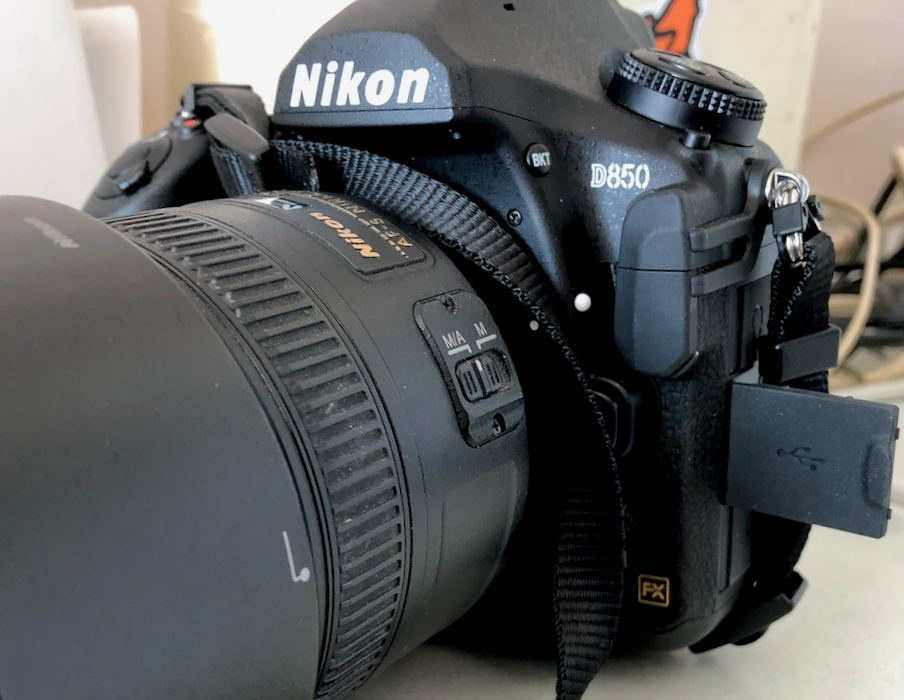
In 2004, I gave up riding motorcycles. I bought my first DSLR: a Nikon D70 and later a D70S. I had a lot of enjoyment with those cameras, but MacWorld 2007 (iPhone announcement) revealed some of the limitations. Not long after, I moved to the D7000 which served me well. In 2017, Nikon announced the D850 and one look at the specifications had me convinced. As soon as it was available here in early 2018, I bought one and was delighted. Before this, however, the use of the excellent D7000 increased my interest in photography and I began to think again about film. A year before the D850 was announced, I found a dealer (and repairer) of Hasselblad cameras who was based way down in the Ramkamhaeng area of Bangkok. He had several combinations of camera bodies, lenses, view finders (waist level, prismatic) and other accessories to choose from. The modular nature of the 500 CM camera allowed me to mix and match and I went home with the camera I still use almost daily.
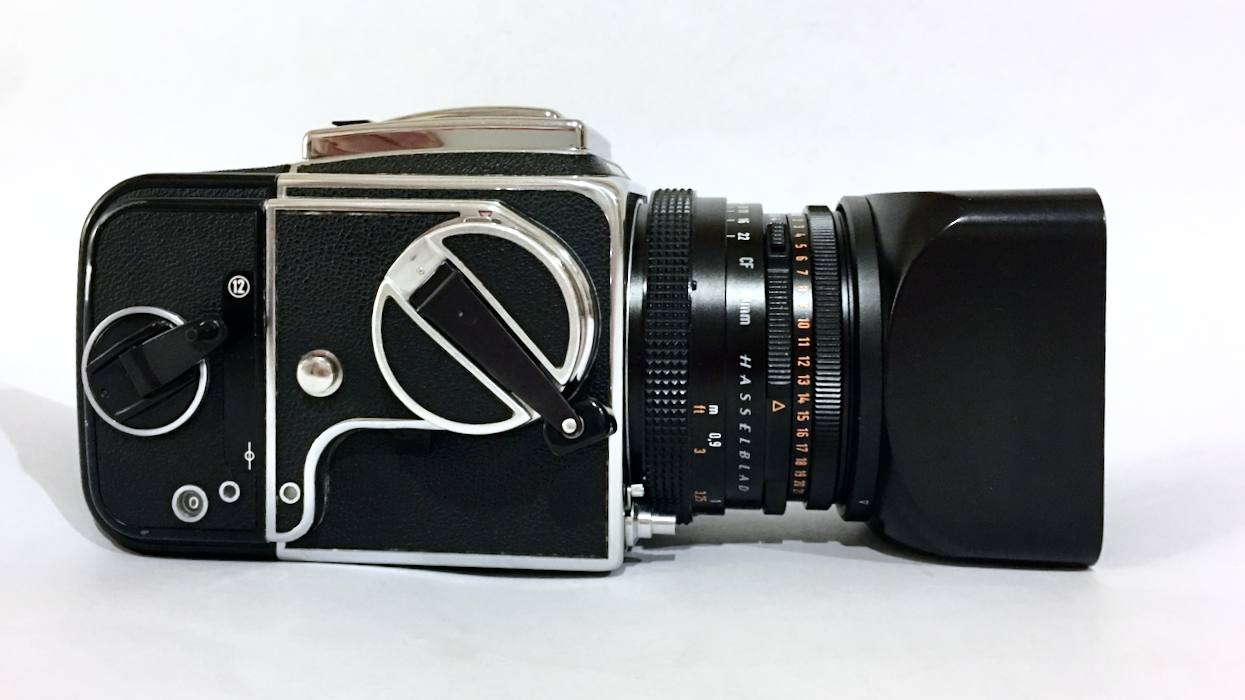
One of the most famous images ever was taken with a Hasselblad camera similar to mine and was almost an accident: Earthrise. The logistics of space flight and the suits that astronauts wear required the camera maker to come up with some interesting features. Film magazines usually allow 12 or 24 shots, and can be changed mid-roll, switching from black and white to color, for example. Changing film with gloves on is difficult, so Hasselblad came up with a magazine that took rolls with 200 frames. The gloves also needed a different push button for taking shots. Instead of the waist level view, there was a simple wire sighting ring. To finish the changes, Hasselblad developed an electric motor drive. Instead of the 500 CM, the NASA crews had the 500 EL, and a number of these were left on the surface of the moon (weight reduction).
Earthrise was almost an accident. The plan was for the crew to shoot several images of the lunar surface to allow NASA to consider suitable landing sites Alex Cooke (FStoppers) explains. Bill Anders was taking photoscof the moon's surface using black and white film. As Frank Borman repositioned the capsule, Anders saw the earth come into view and recognized the beauty of the scene. He had to change the film magazine within a limited time that the earth was in view, but managed two shots. Cooke quotes Anders: "We came all this way to explore the Moon, and the most important thing is that we discovered the Earth." Cooke's article has a number of facts about how the shot was taken and the camera, which is also shown in the article. On eBay there are versions of the 500 EL available. I would rather have the 500 CM which has no electrical parts at all.
To bring us up to the present, Steven Van Worth (FStoppers) reports on a photograph of the Miraflores butte on Mars, taken by the Mars Rover. In the article he explains how the camera system was developed with its "two fixed-focal-length cameras mounted side by side". Lenses used are 34mm and 100mm. Both cameras have "Kodak CCD sensors with 1,600 x 1,200 active pixels". Not much, but the series of images are stitched together to make a far larger finished view. The technical outline here gives us another example of NASA keeping up the good work when it comes to the (necessary) photography of the remote locations visited.
In the opening of Christopher Isherwood's Goodbye to Berlin, the narrator comments, "I am a camera with its shutter open, quite passive, recording, not thinking." As I take images using film, DSLR or the smartphone, this thought occurs to me from time to time. Monet is famous for his water lilies, and I find (not that I would compare myself to the artist) that each time I visit a scene, I am recording something different. Wait a moment and the world will change. Some photographers are well known: Ansell Adams for his landscapes; Dorothea Lange for migrant workers; Henri Cartier-Bresson for Parisian scenes and "the decisive moment" (wait and something will happen); Robert Capa, war photography (49 Most Influential Photographers in History).

Others may be less familiar, but their importance should not be diminished. Documentary photography has an importance, not just for news value, but many of the ordinary shots are historical records. Pesala Bandara (PetaPixel) reports on an exhibition of documentary photographs to be held in September (17-20) in Bristol at the Martin Parr Foundation - "Dark Tales: British Documentary Photography and the Gothic". Bandara writes that this "examines how more than 80 years of documentary photography has captured the darker, more unsettling side of life in Britain and Ireland".
The link in the article takes us to the site, and the link to the Exhibition page is available there, although only a couple of photos are shown. In the rubric describing the reasons behind the exhibition, there is this half sentence: "documentary photography itself is in a dark moment, with its purpose and role in question, public distrust of photographers, and the existential threat posed by Artificial Intelligence." Looking at the work of other people who take photographs always gives me ideas. In that context, another public view of photographs by Mark McEvoy, that I saw in a report by Luke Turner (Guardian) is worth a look. This time, photographs McEvoy took in the London Underground in the 1990s are currently available in a zine: London Underground 1992-1995 . An exhibition of his photographs is planned for next Spring at the London Transport Museum.
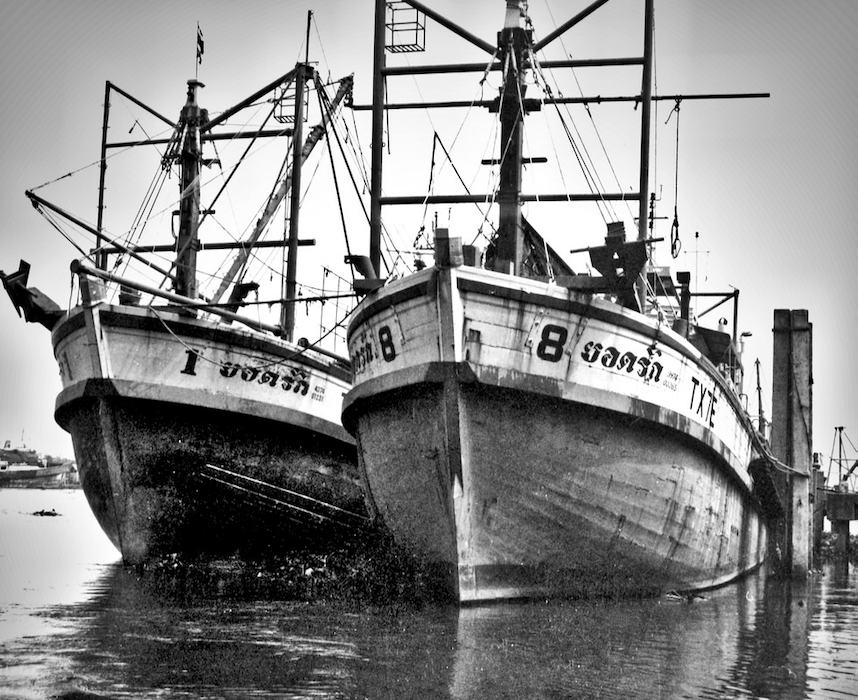
That taking photographs with film has become more popular is fairly evident by the prices of used cameras on eBay and in other markets. The regrowth of this area of photography has also seen an increase in the number and (as important) types of film that are becoming available. Lomo has developed a number of films in the last few years, and I suspect that some of the limitations, for example its excellent Fantôme 8 (ISO 8 that is) is only available in 35 mm. The company also has a range of 120 films that produce quite good results. Kodak is still working on good quality film (including the the 70mm Imax film Christopher Nolan used for The Odyssey) Fuji, Fomapan and others are also producing film. A couple in New York are making their own 35mm film (Matt Growcoot, PetaPixel) and there is one craftsman in Ukraine who makes 20 rolls of 120 film (ISO 20) each month (Alex Cooke, FStoppers). I would love to try a couple of rolls.
Ilford and Harman have put out several new films in the last few years (see above) and now make 135, 120 as well as sheet films. They also recognize that some people use older cameras for which the film is no longer made. Each year the company runs a specialist format ordering scheme and if there is enough demand for a particular size format, they will produce this Damien Demolder, DPReview). Although this information dates from 2017, there is no direct indication that this service has ceased although the specific links are no longer live.
Harman/Ilford do communicate with their customers and often post on social media. They also have a number of useful videos explaining processes, and letting us know what they are up to. Recently, I saw a note in social media from Harman that indicated a new variation on the Phoenix films. Like many (see above) I like the original Phoenix but preferred to take photographs at 125 or 100 rather than the box speed of ISO 200. Harman listened to the comments and have now produced a new Phoenix, rated at ISO 125. (Jeremy Gray (Petapixel) reports on the film, noting that "the new Phoenix 125 is a tweaked version of the original Phoenix color film released in 2023, which has since been discontinued." This fits with the original claims that the film was a work in progress and the company was still experimenting with emulsions. He also comments that the Phoenix 2 has seen a process reduction with the 35mm $2 less in B&H (USA).
My usual source CameraFilmPhoto in Hong Kong do not have the new Phoenix, although the original is still available. Freestyle Photo in California are also not listing this yet. They do have an interesting list of unusual or experimental films. I will keep checking for the availability of this new version of Phoenix; but in the meantime, there are enough rolls of film in my bag and in my fridge to keep me going.

|

|
Graham K. Rogers teaches at the Faculty of Engineering, Mahidol University in Thailand. He wrote in the Bangkok Post, Database supplement on IT subjects. For the last seven years of Database he wrote a column on Apple and Macs. After 3 years writing a column in the Life supplement, he is now no longer associated with the Bangkok Post. He can be followed on X (@extensions_th). The RSS feed for the articles is http://www.extensions.in.th/ext_link.xml - copy and paste into your feed reader. No AI was used in writing this item.

For further information, e-mail to
Back to eXtensions
Back to Home Page