eXtensions - Friday 24 July 2026
By Graham K. Rogers
The commentator John Dvorak left us last week. We rely on copper for most of our connections, but there are limits as to how much data this can handle. Beta versions of OS 27 were released last week, as well as the Release Candidate for 26.6 - coming real soon. Christopher Nolan apparently does not favor AI for film-making. I am not keen on this for photography or writing. Because of the lower standard of text sucked up, AI companies are now buying old books for better content.
It was sad to read about the death of one of the more fractious personalities from the early days of the personal computer: John Dvorak. He passed away suddenly at the age of 80 earlier this week. There have been many words used to describe him, but he seemed to delight in upsetting people by expressing several contrary opinions over the years. His comments certainly promoted reaction and discussion. William Gallagher (AppleInsider), for example, notes that without trying it out, he commented on the announcement of the iPad, "I'm of the opinion and hope that this device is only released as a market test and placeholder for something more spectacular in the future".
When I owned my first cars in the UK in the 1960s a common winter problem was damp electrics: no spark, no go. I tried many solutions, including carbon-impregnated fibre HT cables to replace the copper ones that were more common. With the coil, the plugs and other places where the damp could seep in, the cars often failed to start. Copper was mainly used because it is a good conductor. That is why it is used on buildings where lightning could cause risk.
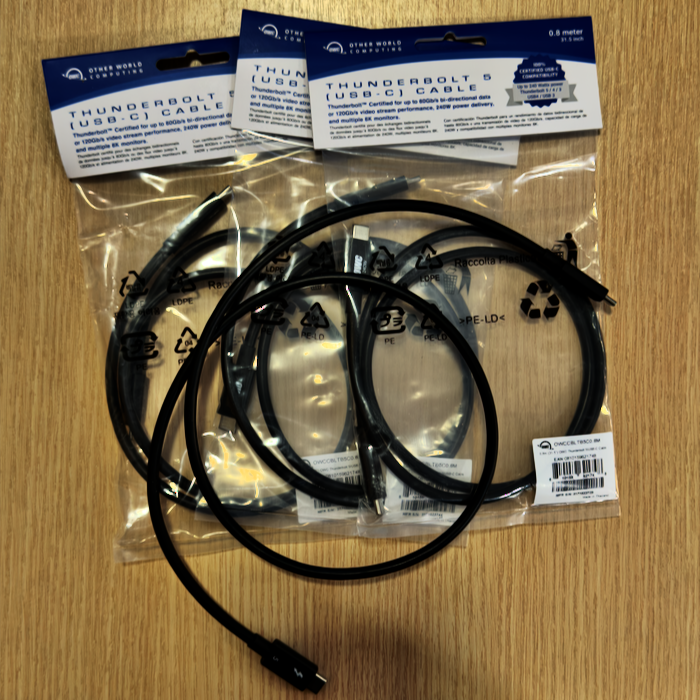 Copper is widely used in electronic devices, including our computers. Gold is sometimes used because it is also a superb conductor, but is limited because of its cost. Luke James (Tom's Hardware) notes that the development of USB-C and Thunderbolt cables, plus the need for ever-increasing data transfer speeds (up to 120 Gbps), are pushing copper to its limits.
One replacement for copper that has been used in several situations is fiber optic technology. I have this as the delivery method for my internet, and it is widely used in data centers, where devices are fixed. Fiber optic may not always be practical for mobile personal computers, and for USB-C this would need a reworking of the IEEE standards. We may have to wait for the development of non-metallic materials that can carry a current (and data) at higher speeds than copper can manage currently.
In a related article, David Nutt at Cornell looks at research into the use of crystal materials to replace the copper wires that link components in electronics: "single-crystal nanowires of niobium arsenide". In an outline of the development of this new material, he notes that it is a "better conductor than copper at the nanoscale, it also is surprisingly robust". This proof of concept may not be enough for cables that have different requirements than circuits within electronic devices, but it may provide a starting point.
Apple has released several beta versions of its OS 27 as well as version 26.6 in the last week or so. 26.6 is said to be at the Release Candidate stage so we may expect the user releases in a few days. As ever, back up devices. When the developer beta versions were made available earlier in the week, I checked the MacBook Neo but could not find the Public beta of macOS Golden Gate. That changed a couple of days later and several reports showed that the second Public beta versions of the operating systems were available (Juli Clover, MacRumors). I downloaded that and will run through the changes to see if I need to make any comments for Apple Feedback. I think I have one comment on the AI tools in photos, but want to run through the processes again. One new feature in iOS 27, as reported by Ryan Christoffel (9to5Mac) is the ability to save a frame of a video as a photograph from within Photos rather than as a lower resolution screenshot. This is also on macOS Golden Gate, accessed from the Image menu (no key command).
It has been widely reported that the award-winning series, The Daily Show, on AppleTV is to end after season 5 next year (Ryan Christoffel, 9to5Mac et al). As much as I enjoy watching this, I still think that Jeff Daniels did a better job in the HBO series, The Newsroom, which ran for 3 seasons. That linked more to the politics of the time, while The Daily Show seems more connected to internal politics and the related personal interactions. Five seasons is a good run and perhaps the best time to end. A TV series can become stale after that. Note that one of the best series ever, Breaking Bad that boosted Netflix significantly, ended on five, with an extra episode (perhaps unnecessary) to fill in some gaps. Another Netflix success, the surprising Heartstopper ran to 3 series. A final one-off movie-style version (1h 54 min) has recently been made available. I also see a 5-episode "podcast" in which cast members discuss the series and their parts. This may be milking it a bit too much. Among recent announcements on Netflix concerns the movie, I Swear, about a sufferer of Tourette Syndrome in Scotland. This is due to arrive 2 August.
I had seen nothing from local sources (I still have not), but was delighted to read a report by Jeremy Gray on PetaPixel about the winner of the Project // 21 category (for those 21 and under) in the Hasselblad Masters Contest for 2026. Not only was the young man Thai, but Panitbhand Paribatra Na Ayudhya is only 14 years old. Gray reports that he has won other contests. The winners were announced at the end of June (I missed this). There were 7 categories: Art, Architecture, Portrait, Project // 21, Landscape, Street, and Wildlife.
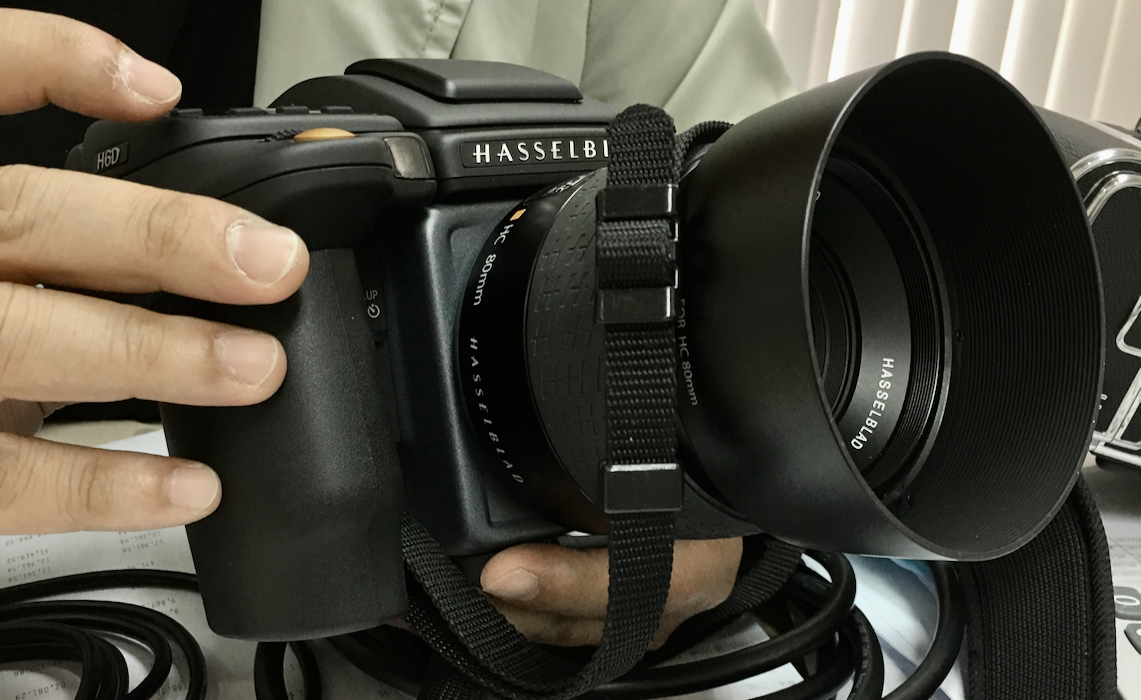
Each winner is now a "Hasselblad Master" and receives a prize of "a 100-megapixel Hasselblad camera kit of their choosing, two XCD lenses, and 5,000 euros (just over $5,700 or 19,2060 in real money)". That X2D II 100C mirrorless camera is top of my list for any replacement, but like the Porsche I crave, this will probably never happen. As well as the prizes and the title, the winners will each work with Hasselblad on a collaborative project that will be published in a commemorative book. In the interview, he shows a maturity far above his years. He seems destined for success.
Christopher Nolan's movie, The Odyssey received much criticism before its release, most notably from the Tesla man who did not think much of a black actor playing Helen of Troy. Homer (whose skin color we do not know) left no physical details of her. The epic poem itself came from the oral story-telling tradition that many cultures had. This includes much of the Bible, especially the Old Testament. The stories were written down sometimes several hundred years after the events. Story-telling maintains the core events, but the details are developed by the storytellers and will change over time. The audience knows the main plot and the characters, but the skill of the teller (or the director) is in the tension and the details during the delivery. As to the accents of the characters, John Wayne may not have played the best version of Genghis Khan; and (from experience) Yul Brynner did not have the accent right in The King and I which itself came from an untrustworthy source who kept her own origins hidden.
 Despite all the criticisms, the opening weekend saw a box office of over $260 million (Guardian), which means (like Oppenheimer [$975 m total]) takings exceed the filming costs. I hope the actors are on percentages rather than flat fees. I can hardly wait to see the Imax production. Siam Paragon seems to be the best option for me with the Imax laser, 1.43:1 screen aspect ratio (the largest format), and what appears to be the largest screen in Thailand at 28 x 21 m. Last time I discussed the cameras and the way it appeared (to me) that Nolan used analog film, albeit with the most modern cameras, as the technology was superior to digital output.
The hands on approach (the scene inside the Trojan Horse seems claustrophobic, because the actors were cramped inside the horse itself and it was indeed confined) has produced some excellent performances; and interviews with the actors confirm this. In my comments last time I looked at the contrast between Nolan and George Lucas who (like Martin Scorsese) seems to have accepted AI as inevitable. Nolan calls AI it an "obvious Trojan Horse".
Anthony Ha (TechCrunch) reports on interview comments in which Nolan says he has "never seen a technology advancing so rapidly [that's been] so completely rejected by the public. . ." adding that "[t]he motives of the people giving it to us also have to be viewed with skepticism". Regarding film, he says that it is "better in terms of representing the way the eye sees the world than any digital imaging system I've seen."
For my photography, I use film and digital cameras, although these days, I am more likely to take a film camera with me when I go out. The iPhone is my digital backup. I also prefer to stick with black and white images. I cannot change the film pictures, but with digital output I will use color when the subject demands it. Greyscale roses do not really cut it after all. I do as little editing as possible, starting with crop, then straighten and perspective (when needed). I will adjust exposure, brightness, contrast et al. The repair tool is sometimes necessary with my film images after I scan the negatives. I can do the basic editing in Photos on the Mac or iPad (even the iPhone if needs be). I am enhancing the original image.
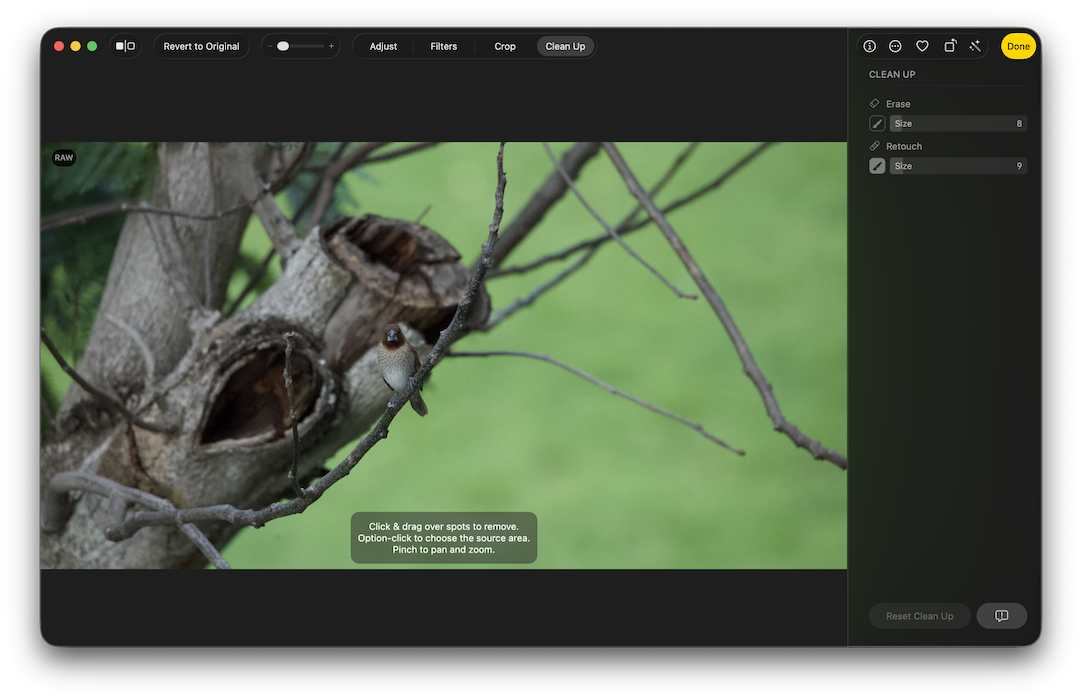
For the Repair tool I switch to Photomator as I find Apple's CleanUp harder to use accurately, and it is AI. It also takes too long to load. This is where I draw the line. I am unlikely to use the new Extend and Reframe tools as they use AI to create artefacts that are not in the original (analogue or digital). I have tried both but Apple's T&C preclude my use of screenshots. Extend imagines what might be there (sort of), based on what is in the original. Reframe seems to develop a 3D view of the scene and rotates as the user changes the point from which the subject is viewed.
The use of AI in writing also bothers me considerably. It might be OK for some people to write an outline, a list of ideas, or a reply to an email, but some want to take this further. One of the points about a graduate degree course is that the student should be learning skills: about how to conduct research; how to sort ideas; how to write a thesis. None of this is meant to be easy, but those who succeed have high-level skills, and the PhD or Masters degree should mean something. These days, some of the students delegate the formation of ideas to the LLM. My response is, Don't you have a brain?
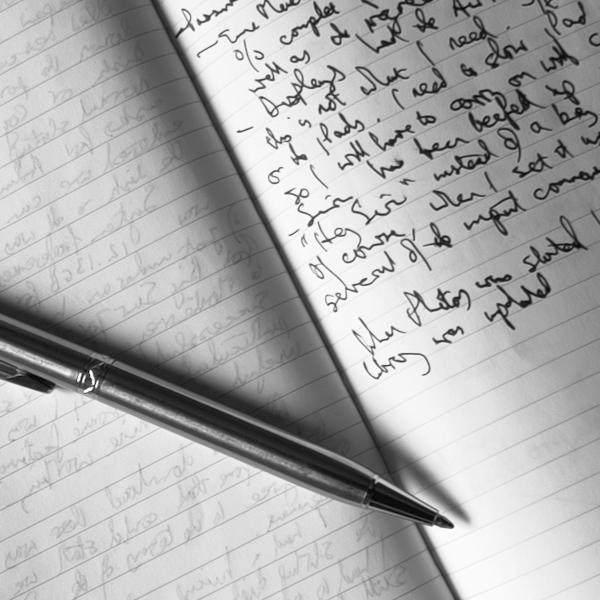 Writing English at the thesis level is hard for native speakers, so those whose first language is not English have a far more difficult task. In the past, many would write in their native language, then trust to translation. I would become part of the process by looking at their output and making suggestions - sometimes quite harsh - to guide them to make improvements. With encouragement, many of the undergraduate students I have taught have been able to turn a poor example of ThEnglish (the 50-50 attempt) into a fairly respectable piece of writing in a few weeks.
More recently the graduates have stopped coming to my office. They are encouraged to use AI tools to do the writing for them, often by academics whose own writing skills are questionable. I am usually disappointed when I see the results produced by the students. Few ask for guidance before the work is submitted. Some only ask for help after the work is returned from a publisher because of the poor writing. One look, and I want to weep. It is so obvious to me with just a cursory glance. The rubbish that AI turns out, or the errors that AI grammar checkers miss, as well as the insistence of the tool on changing suitable words for questionable synonyms (always the same ones), dismays me. It is not likely to improve.
It is reported this week by Blake Brittain (Reuters) that a judge has ordered Anthropic to pay some $1.5 billion in copyright fees as part of a settlement from copyright holders against AI companies. Note the plural: this is just one part of the settlement. That is the content that is just stolen from books and websites to feed the beast and churn it out as allegedly original content. Every so often the statistics on my site soar for just one day as the AI vacuum pumps come by and, without so much as a thank you, suck up the content from the entire site (and from thousands of others) to provide my words for others to use with zero acknowledgement. As I note at the bottom of the page, no AI is used in the creation of this text. It is all from my brain, based on what I have read over the years, the ideas I have absorbed, my reactions, and what I think. When I copy any idea or text, I provide a source (usually a link to the site).
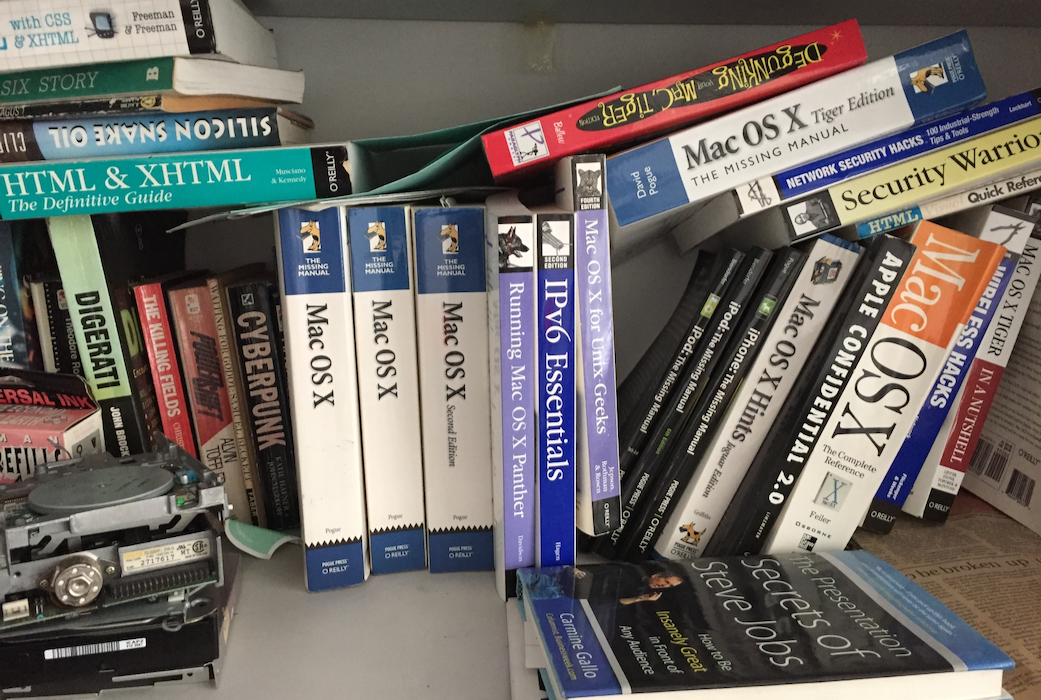
In an article on the conflict between authors and AI, the ISBN Database site (Val Giordano) carries an article (source 404 Media) that looks at the ways authors are fighting back. The article outlines technological methods that are used to poison the text for AI scanners (not for the reader), including the use of white text that the OCR picks up. We also read how the AI companies are defending against those moves in a number of ways. The one that caught my eye, was that apparently AI companies are buying up old books because printed books published before 2022 are ideal for AI training data: they don't include AI generated text. An admission on the dross AI produces if ever there was one.
This week, Nature reports on a survey that asked scientists about tasks they would not cede to AI. Examples include a student who would prefer to keep asking their own questions; a statistician who prefers cleaning up their own data; a programmer who prefers writing their own code as AI code takes too long to fix; a scientist who recognizes the value of spontaneous discussions in discovering ideas; and a writer from Colorado who likes the work of writing and reviewing rather than trusting AI (Anne Pichon, Nature). The hands-on approach is why I also enjoy scanning my own negatives.
In an interview - outlined in the Economist Insider Newsletter - with the owner of Tesla and SpaceX, in which AI is discussed, he is reported as expecting "AI to "exceed the sum of human intelligence" in "roughly five years". It is "unlikely" that humans will still be in control in ten. He can't see any way to stop the momentum of AI, but his approach is to simply "enjoy the ride". Zanny Minton-Beddoes (Economist) was "stunned by this sense of fatalism. His insouciance, too." The Economist Insider interview will be online on Friday 24 July (Subscription) .
Graham K. Rogers teaches at the Faculty of Engineering, Mahidol University in Thailand. He wrote in the Bangkok Post, Database supplement on IT subjects. For the last seven years of Database he wrote a column on Apple and Macs. After 3 years writing a column in the Life supplement, he is now no longer associated with the Bangkok Post. He can be followed on X (@extensions_th). The RSS feed for the articles is http://www.extensions.in.th/ext_link.xml - copy and paste into your feed reader. No AI was used in writing this item.

For further information, e-mail to
Back to eXtensions
Back to Home Page