
eXtensions - Sunday 19 July 2026
By Graham K. Rogers
Apple's Q3 results are out at the end of the month. More developer releases of OS 27 have been released, along with the Public betas. I put macOS27 on the MacBook Neo, focussing on Photos and the AI tools. Instagram tried AI and had to back off rapidly. The Odyssey arrives and IMAX scores highly. A badly-timed AI movie, Odysseus: the Fall also arrives. Not good. A dire script. Not Nolan. More AI writing problems.
With its Q3 2026 results due on 30 July, the share prices of Apple are rising because there are predictions of more record results. Sales of devices such as phones and Macs are reported to be high, when other PC and phone manufacturers sales are down. There are several rumors this week, all pointing back to last Sunday's column by Mark Gurman. One of these relates to the M6 and M7 chips. There is strong opinion suggesting that Apple might only produce a basic version of the M6 and move (almost) immediately to the M7 although this week Chance Miller (9to5Mac) reports on the expected release of the M6 later this year, with improved memory. He does expect the M7 next year and suggests some products may skip the M6. I expect Apple will know for certain.
Another rumor suggested that the Apple Pencil was to be renewed, updated, or revised with a battery that could be replaced by the user to comply with upcoming EU regulations. It seems that this may not now be necessary according to Amber Neely (AppleInsider) who writes that "EU regulators have now exempted wearable tech and a handful of other devices . . ." from the new rule which would also have included the Apple Watch and AirPods.
The 5th release of OS 27 beta versions of Apple's operating systems has been reported widely. Along with these releases, the first public (as opposed to developer) releases of the operating systems are also now available. I am reluctant to use this on the iPhone or iPads, but I have a spare Mac this time round with my recent MacBook Neo purchase. I had been seriously considering installing this for an early look and decided to try. I am particularly interested in how Photos has been developed.
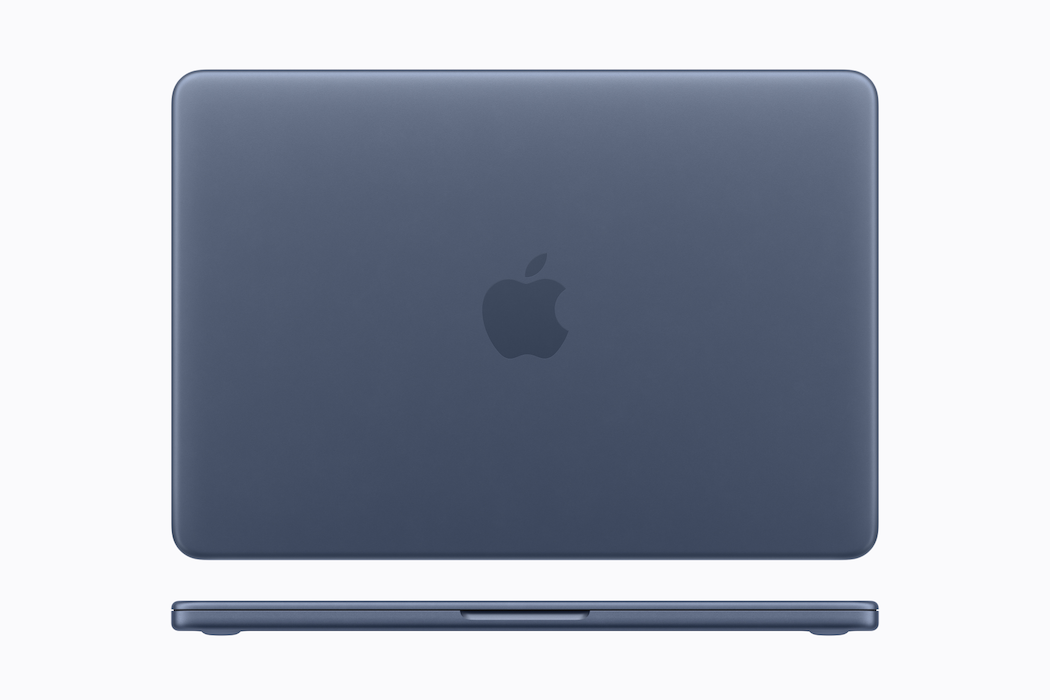
I downloaded the Public Beta on Tuesday afternoon and installation was problem-free. A couple of the settings had been put back to defaults, so I have been working through bit by bit. What I particularly wanted to do was look at Photos. This has not been a particularly good application for the last few years, but I do now have other software. Photos is important for me because I use it to synchronize my photographs across all my devices (as well as files and other data). It would be useful if its editing tools were better. Juli Clover (MacRumors) outlines 10 features that users might look at.
After a quick look round, I opened Photos and looked at the editing tools. Adjust, Filters and Crop are unchanged, but instead of Clean Up - as reported elsewhere - there is a new group: Tools. This includes Clean Up as well as the new Extend and Reframe options. I tried Extend with a quick iPhone snapshot I had taken. I must admit I was surprised by the result. I also tried the Reframe tool. Earlier reports indicate that the user can move the image as if in a 3D image. T&C limit what I can write about how this works, or provide screen shots. I have a fairly conservative approach with photography, particularly my film images, and I do not want to add or change significantly what is in the original RAW file or negative. Improving the original through exposure, contrast, sharpening (or other editing tools that bring out what was recorded when the photograph was taken) is fine.
There was something of a rush of news last week when it was revealed that Instagram now allowed "its new AI image maker to generate photos of users with public profiles by default" (Sanya Mansoor,Guardian). Users are not notified when this happens and there were some concerns regarding privacy. And I would think, ethics. The easiest fix was to switch the account to private, but this defeats the objective of what Instagram was supposed to be: that is before FaceBook had its grubby hands all over the popular app. There was a way to opt out, although every article I looked at directed me to something I was unable to find in my Settings.
There was considerable criticism. So much that by the end of the week, Instagram had backed off and the feature had been removed (Lucas Ropek, TechCrunch). On a blog post, Meta wrote, "We"ve heard the feedback that this feature missed the mark, so it"s no longer available". I have no doubt that somehow Meta or some other company that uses, displays or shares user information will try to sneak something similar past us sooner or later.
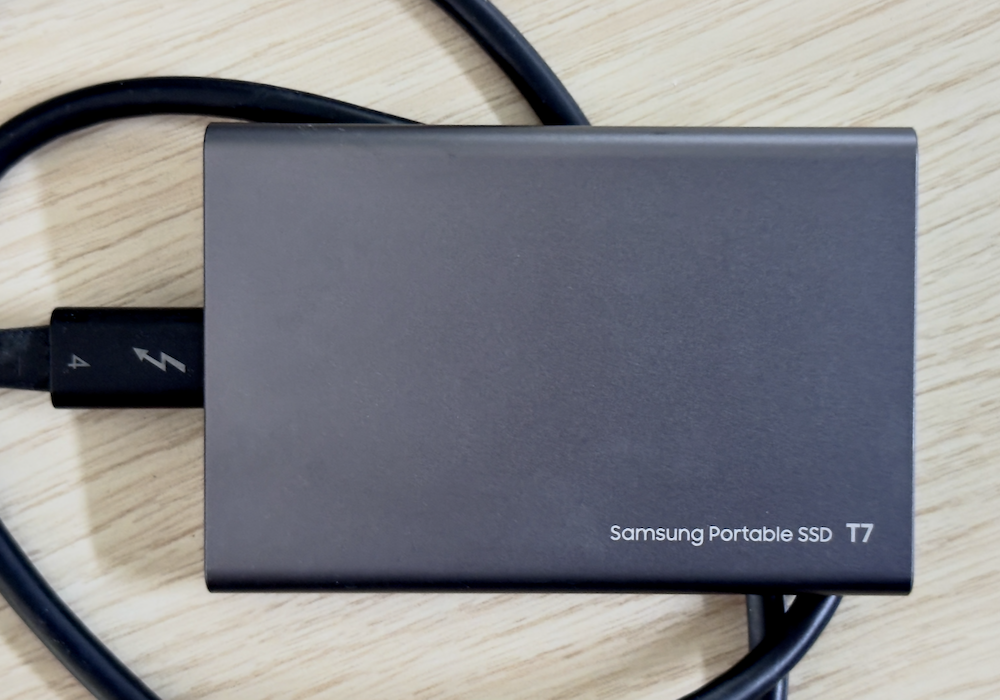
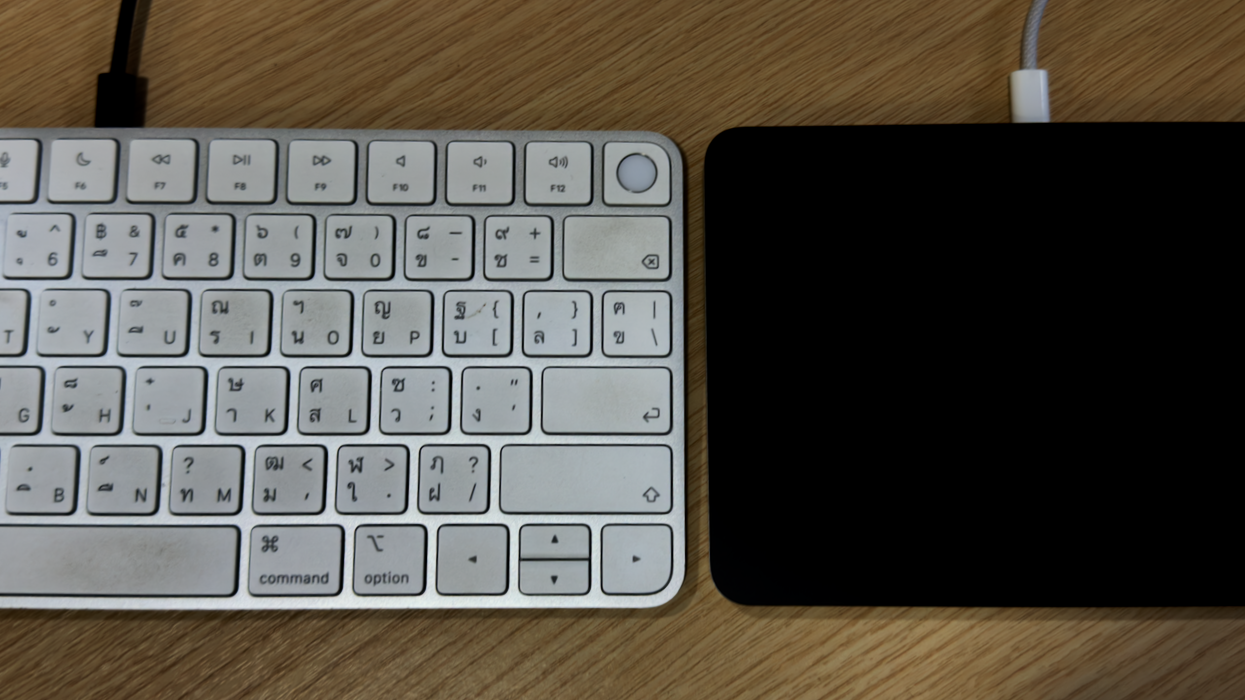
I mentioned last time about problems I had with an external disk that I wanted to make available for ResPro video, should I ever use that (eXtensions). Unlike many I was delighted when Apple finally switched the iPhone to the USB-C port as most of my devices use this standard and I was well-equipped with suitable cables and adapters. As it turns out, I still use Lightning cables as I bought an Apple trackpad and keyboard for the Mac mini just before the switch. Most of the time, they run fine with Bluetooth, but they do need charging. The ones I had before had replaceable batteries, which of course run out from time to time. Owing to ordering problems, I ended up with a black trackpad and a white keyboard, but the aesthetics are not a problem.
Some of the older external disks I have use micro-USB ports - a horrible design - although I have managed to phase most of these out. What I cannot phase out is my Nikon D850 which also uses the same port. For this, and those older disks, I have special converter cables that I ordered from overseas. Despite the wide use of these ports here, the USB-C to micro-b cable is a rarity in shops, with most assistants denying the very existence of such cables, even when they are shown an example. Belkin, UGreen, Pengo and others all make these, although the cable length is a little short.
While I was thinking about cables and ports, Mahmoud Itani (MacWorld) wrote an article that looks at 10 ways in which users might make fuller use of the USB-C port on the iPhone. These include cards, keyboards, Ethernet (I already have a USB-C ethernet adapter which I have tried on the iPad Pro, iPhone and Mac) and other ideas. I also use the port to connect hard disks for data transfers as well as that disk for ProRes video.
Walking through Bangkok city center last weekend, I saw a large display advertisement for The Odyssey movie by Christopher Nolan. This is opening here on 17 July. The original Odyssey was apparently written by Homer and it is about the epic journey of Odysseus back home to Ithaca after Troy was defeated. The first book was the Iliad - from the name of Troy: "Was this the face that launched a thousand ships and burned the topless towers of Ilium?" (Faustus, Marlowe).
I want to see The Odyssey in the cinema, rather than waiting for the movie download to arrive, for a number of reasons: Nolan and his other work; the story itself; the cast; and the use of IMAX. The cameras are incredibly expensive, but the quality is superb. It is noted that with the speed the film runs at, the film magazines only last for 3 minutes at a time. Editing is extremely complex and Adam Savage has a 21-minute film on how this is done at the IMAX headquarters. I was surprised to see the process is done by loading on one floor and being sent up to another. The reels themselves are massive.
IMAX cameras have been improved considerably. One aspect concerns the quietness, which enables closeups to be done. Previously this would have meant switching camera types. This sort of generates another problem with the sheer bulk of the camera and its housing. Face to face scenes, part of the intimacy between characters, were impossible. To deal with this, Nolan came up with a system of mirrors, so that the actors could maintain eye contact. I had already seen this in an interview with Matthew Damon, but Matt Growcoot reports on this in PetaPixel.
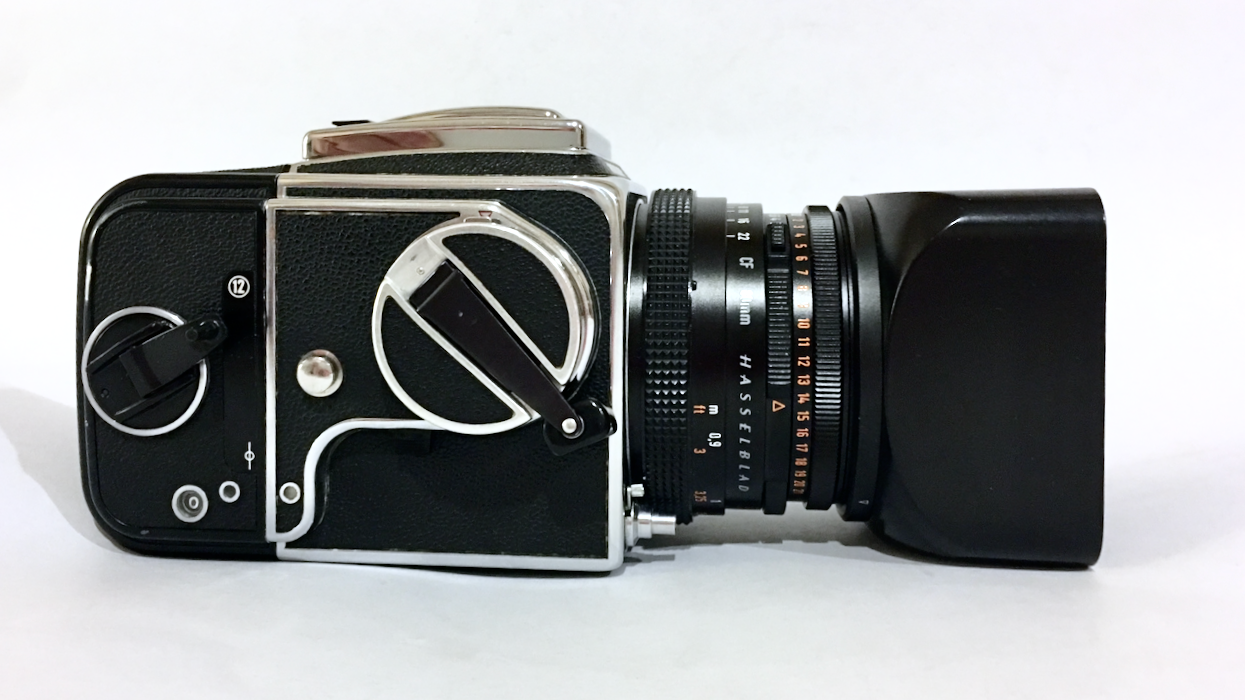
As with any technology, cinema cameras are always under development, and IMAX has been at work with the latest types used in the filming of The Odyssey. Matt Growcoot (PetaPixel) writes about the new Keighley camera, which is somewhat unusual in that it uses film, but has an LCD display on the back. Matt Growcoot notes that Kodak did this with a Super 8 camera a couple of years ago. The article includes a clip of the new Keighley camera produced by IMAX and you can begin to see why these movies are so expensive. Like many movie cameras (Panavision, Arri) the IMAX cannot be bought, it is rented: about $12,000 to $16,000 a week. You buy the film which unlike other 70mm films, is run horizontally through the camera. Lens rental is similarly high. Just after I wrote that paragraph, Jeremy Gray (PetaPixel) reported that Arri was "to sell its global rental business operations in Europe, the United Kingdom, and North America." This is due to a conflict of interest between its manufacturing and rental businesses after having been sold to Thomas Reidel.
As well as Christopher Nolan"s magnum opus, Jeremy Gray (PetaPixel) reports on another movie - Odysseus: the Fall - but this one is made using AI. This is from the same studio which produced the recent Dreams of Violets about problems inside Iran. Jeremy was fairly critical of that too. His article includes a trailer and this is not a good advertisement. You can hardly blame actors or the director for this as it was all done on computers. The characters move awkwardly and the sound in the trailer was not properly synchronized when one of the characters was speaking.
What hit me most was the dialogue and I wondered if that too were AI generated (see comments below on AI writing). The script, as far as conveyed by the trailer, is dire. As a note, reported widely online are comments attributed to George Lucas (who has not directed a film in about 20 years) who is all for using AI to make movies more easily (Matt Growcoot, PetaPixel). Nolan is the purist and sees the film medium as something to work at for the best results. Some like me recognize the value of working hard to produce honest writing (and photographs) and not some dross that usually needs fixing by someone with real skills. Also reporting on this is Bob Morris (Fstoppers) who adds that Lucas sees the downsides, is aware of the risks but thinks that making movies will be easier. Like writing, easy is not the point.
As if to prove the point, at the end of the week I was sent a paper returned from a journal that needs attention. A quick look at the opening showed me why it had been returned. I fix the problems that should have been fixed before the paper was submitted. And not for the first time. I suspect that the paper was examined by a person who is over-confident in their abilities after the AI had done its worst. Now it is my turn.
A few months ago I was trying to write something on the risks or limitations of using AI in academic writing. That is still on the back burner. One of the ideas I had in trying to explain the use of real English, rather than the dross turned out by these artificial tools, was to use first lines or sentences of novels and significant poems. One example was Paradise Lost: "Of man's first disobedience and the fruit/ of that forbidden tree. . . ." Others included Slaughterhouse Five and Earthly Powers.
 One of my problems with AI is that what my students (and colleagues) read, appears to be good English to them. For the most part it is grammatical (not always), but English is an oral language and when I read this academic output, it just doesn't sound right. Few of those to whom I explain this understand the point I am trying to make: just because it looks like English, doesn't mean it is good English. Or at least, not what a skilled native speaker might create. I submit "representativeness" as an example. Yes, the meaning can be extracted, but this 6-syllable word preceded by one of 5 syllables, adds nothing to the readability. It is not in my dictionaries. The Cambridge Dictionary online recognizes it as a word used in statistics and research.
Following a link from BoingBoing, I recently came across a site that produces first lines. The site is Verba Prima and it displays first lines of novels seemingly at random. When I tried it this week, it displayed the first sentence of Nabokov"s Lolita. The display can be changed from white text on black to black on white, but there is no search facility, just a "Next Chapter" link that produces another first line.
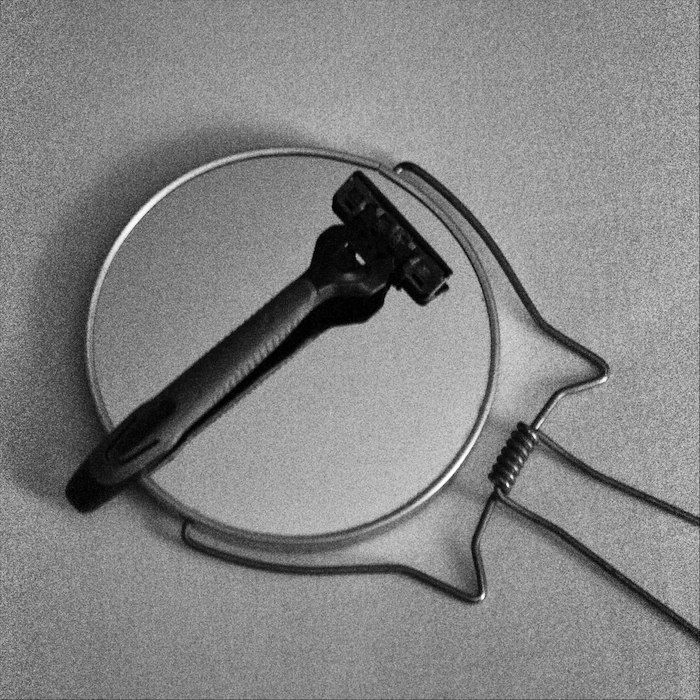
There were several that I knew, and a number I had not seen before; then there was this: "Stately, plump Buck Mulligan came from the stairhead, bearing a bowl of lather on which a mirror and a razor lay crossed." Say it out loud. It cannot be spoken fast. Taste the words.
Graham K. Rogers teaches at the Faculty of Engineering, Mahidol University in Thailand. He wrote in the Bangkok Post, Database supplement on IT subjects. For the last seven years of Database he wrote a column on Apple and Macs. After 3 years writing a column in the Life supplement, he is now no longer associated with the Bangkok Post. He can be followed on X (@extensions_th). The RSS feed for the articles is http://www.extensions.in.th/ext_link.xml - copy and paste into your feed reader. No AI was used in writing this item.

For further information, e-mail to
Back to eXtensions
Back to Home Page