eXtensions - Monday 18 May 2026
By Graham K. Rogers
Apple's WWDC is in June and we can look forward to some software innovations; and maybe hardware speculations. AI discovers a way to access Root in macOS. A spoof with a real Monet caught out some when they were told it was AI. Elon Musk, Sam Altman, Apple and AI litigation. Happy Birthday to Mactracker: 25 years.
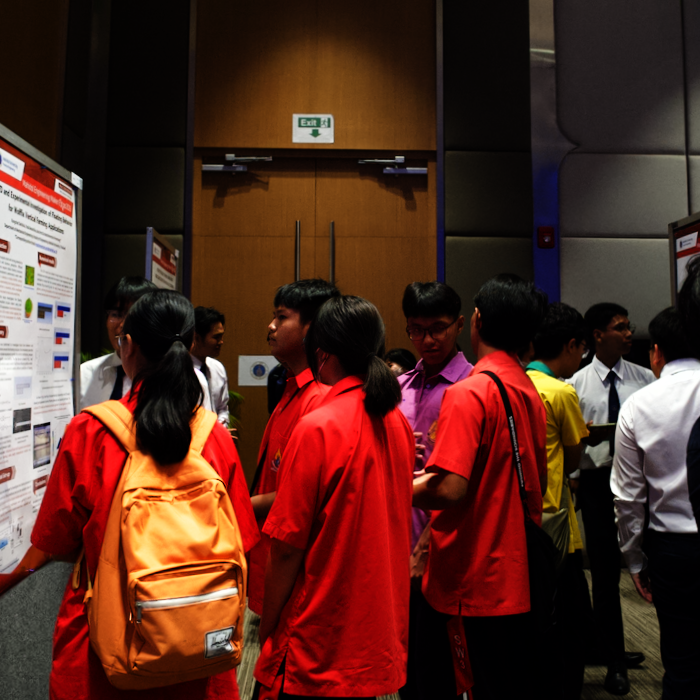
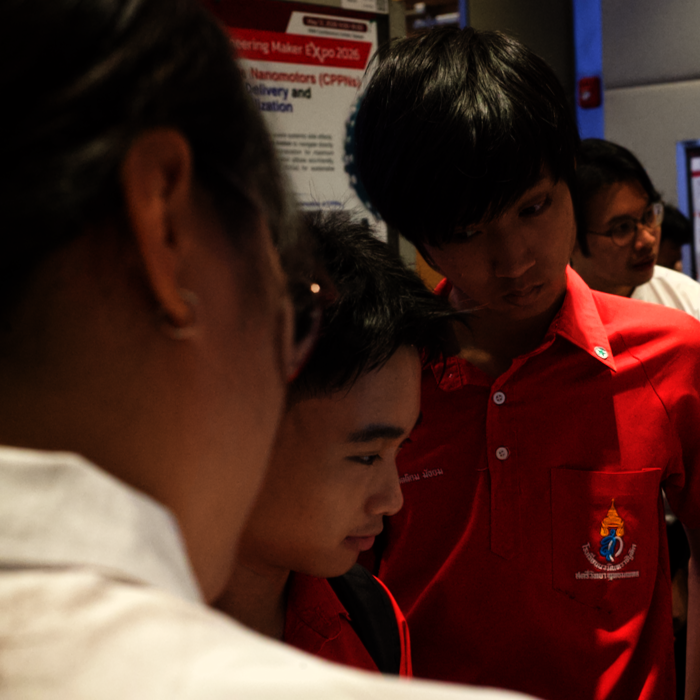
I spent a few busy few days looking at different forms of technology with Mahidol University's Expo 2026, which highlights the capstone projects senior students in the Faculty of Engineering. That included checking the brochure for the event a couple of times, taking photographs at the event, then editing the images, selecting about 50 and writing a suitable commentary about Expo 2026. I am currently engaged in writing outlines of projects that appealed to me.
|
|
Right now we are looking forward to WWDC and there will be much speculation about the hardware that will follow this event. What many commentators miss is that this is a software developers conference. The main thrust is not only how Apple is delivering new versions of its operating systems but how developers can make best use of the new features (and APIs) that Apple has prepared. The series of workshops - these can be seen via Apple TV or online - provides information directly to the developers from the engineers who have been working on the features.
What most people watch (as I will) is the keynote presentation, which will be Tim Cook's last as CEO. Doubtless Craig Federighi will be there (or on video) with one of his entertaining presentations along with a range of other Apple high-ups to provide information about what is to be delivered, probably around September. It is from these clues that people will write their speculative articles on the hardware that is to come: iPhones, iPads, Watches, and Macs. There may also be some hints on services or other software down the line.
In the last year, Apple acquired Pixelmator and has include that in its Creativity suite of apps. As yet, they have made no real move on the excellent Pixelmator, which has the potential to become another Aperture, as long as Apple do not spoil the basics of what is already there, particularly overdosing on AI. As an example, the AI Clean Up tool in Photos (which itself needs much improvement) makes it easy enough to remove unwanted people from images (Stalin would have loved this - Wikimedia Commons) but a simple repair or cleaning specks of dust from scans of negatives is less easy or intuitive.

I am not a fan of AI, but the way it is able to examine vast amounts of data - images, code - means that it can come up with some results that might take a human far longer to produce. Recently, the latest version of Anthropic's Mythos has been examining software and producing some interesting results in terms of coding errors and other insecurities Ryan Christoffel, 9to5Mac). Under normal circumstances it might take weeks (or even years) to discover some bugs or other security weaknesses. Mythos has been more successful than expected with its Project Glasswing. Its successes include finding a bug in macOS that allows access to Root. Which is just the sort of thing that Apple (and its users) want to know about.
Joe Rossignol (MacRumors) adds that the security researchers said "the exploit would not have been possible with Mythos alone, as it still required their human expertise on top, but it nevertheless proves that AI can assist with discovering software vulnerabilities." According to other information, as is correct, the researchers did not make the exploit public and informed Apple. We can expect a fix for this. There is more on this insecurity and its discovery from Mariella Moon at Engadget.
I am critical of AI, although there are some clear values when it is used properly. My bête noir (or should that be bêtes?) concerns writing and photography. The latter bleeds into the creation of images that are not what they claim to be. A nice spoof is reported by Michael Zhang (Petapixel) who writes about the informed comments that appeared online when someone posted an image of a real Monet painting in the water lilies series, but marked it as AI-generated and asked for critiques: ". . . what makes this inferior to a real Monet painting".
There were comments a-plenty and all fell into his trap and the trap of their own superiority. It may not have been Monet's best work, but AI it was not. As the post (and the comments) began to circulate, some began to delete their comments, but it was too late. The original poster had the evidence - screenshots - and they make interesting reading. Zhang comments that this matches some research about "how people perceive art differently in light of how it was produced." We have lotus round here rather than lilies.

There are some interesting comments on the courtroom appearances in the disupte between Elon Musk and Sam Altman (Elizabeth Lopatto, The Verge). There are some zingers here that do neither party much good, although from what many of us have already seen or read (e.g. New Yorker on Altman; and Musk's many public utterings) neither of these people should be trusted with much, let alone mega-corporations and a desire to take over the world.
As well as this dispute between Elon Musk and Sam Altman, Open AI is suing Apple because, as Andrew Orr (AppleInsider) explains, ". . . users did what they wanted with Apple's ChatGPT integrations and didn't sign up for enough paid accounts, instead of doing what CEO Sam Altman expected." I must admit, I was tempted to ignore the option to turn on ChatGPT because I had seen enough with the outputs from the AI writing tools Apple provided, until my Dean asked me if I had tried it. When I typed a question into the prompt, the result was a fair argument, if brief. Then I took a good look at the words themselves. It was not me. Obviously. But the sentence structures, the over-complex word choices were not what I would write. I have since noticed in a number of papers how AI-produced content, seems less real to me: not like what a real speaker of English would produce; and with certain favorite words or phrases.
 It lacks the depth of someone who has had a wide range of reading inputs. It sounds wooden and strained. I use the verb, "sound" deliberately as many would-be writers of English fail to listen to the sounds, the rhythms, the juxtapositions, the effect on the ears that the written text would have, even if read silently. So, no, I would not pay for any AI output. Writing is thinking and has no place in the production of academic content, despite what some universities and journals say. Research is a different matter, and if there is some AI that helps science come up with a new drug, is able to draw new conclusions from large data sets, or can control machinery, such as aeronautical equipment safely, I am all for that.
It seems that one of the reasons AI exists is to make money and it will only do that of people pay to use it. If not, the huge investments in chip technology (e.g. NVidia), in data centers, and other expenditures - this is billions of dollars now - is little more than a bubble. This may be part of the reason Apple has been so cautious with its introduction of AI. And why OpenAI was banking on a self-generated mirage. You cannot make users subscribe to a service if they do not see a need. It sounds like Open AI executives were a little over-optimistic. One wonders where else they have come short.
In one comment, Orr notes that "OpenAI's internal studies found users overwhelmingly preferred the standalone ChatGPT app over Apple's built-in integrations." To download an app, a user has to make a conscious decision about incorporating AI into the workflow, but not everyone is as starry-eyed about AI as Open AI or Wall Street. In a related article, Malcolm Owen (AppleInsider) writes that Craig Federighi, Apple Senior VP, has been added to another lawsuit in which Elon Musk is suing Apple and Open AI about the treatment of Grok in the App Store.
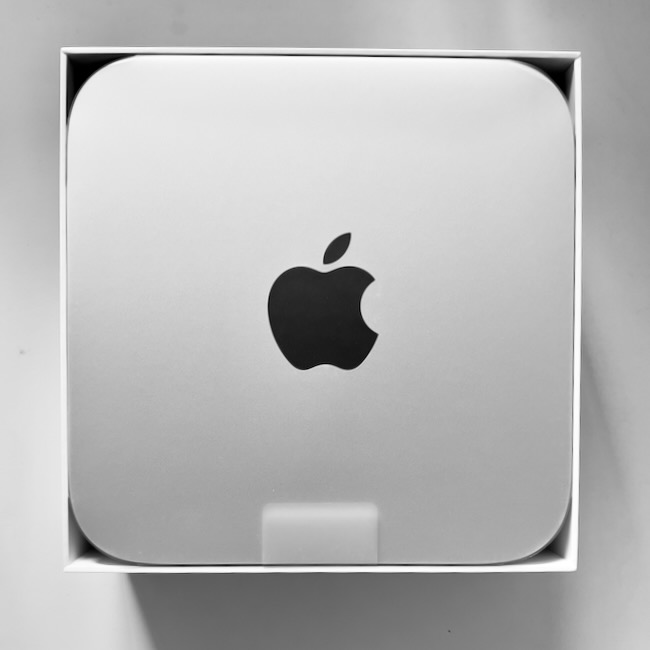
We recently saw updates to Apple's operating systems and one of the new features in macOS 26.5 is the ability to turn on a Mac mini, without having to lift up the side. When the Mac mini had its excellent redesign and was released with the M4 chip, I bought one right away, despite the much criticized re-siting of the power button under the device (left rear). Front or rear matters little with the small size of the Mac mini, which is one of its main attractions. I have become used to leaning over the monitor to where the Mac is positioned at the rear of my desk, but this only affects me once or twice a week. I usually turn it off for public holidays or weekends, then turn it on when I come back.
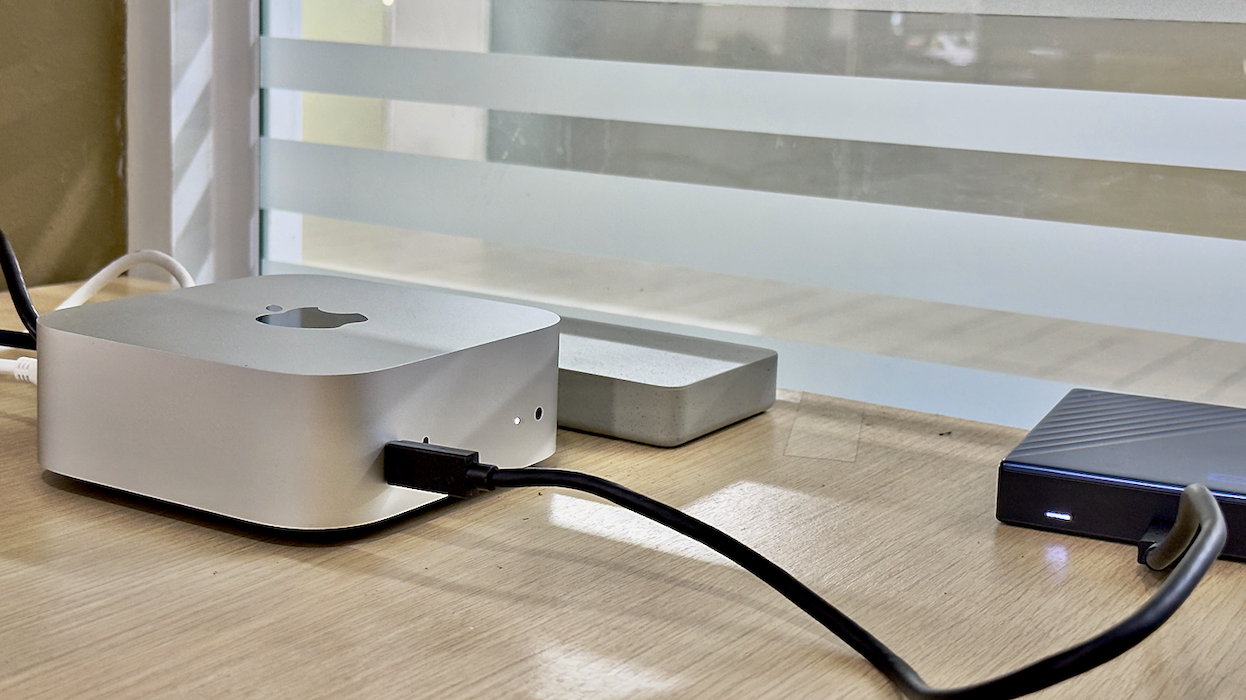
The updated feature, as outlined by Roman Loyola (MacWorld) allows start up when the power is connected. The problem with this way to turn it on would be that I have to walk to the other side of my desk, bend down and prise the plug from the power strip before reinserting it some 30 seconds later, putting a real strain on my back and new hips. It is much easier for me to lean over the desk, lift the side of the Mac mini and press the button.
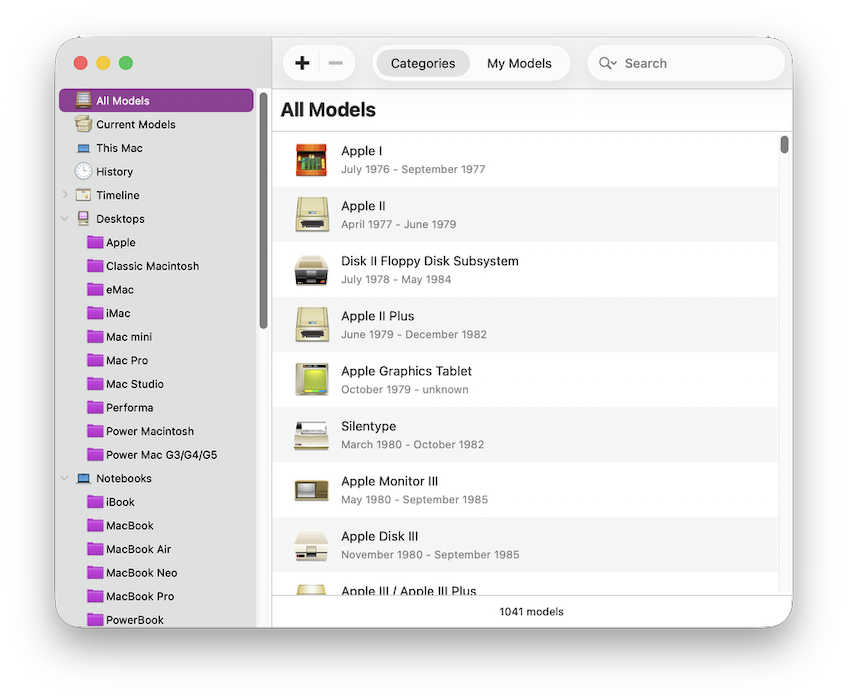
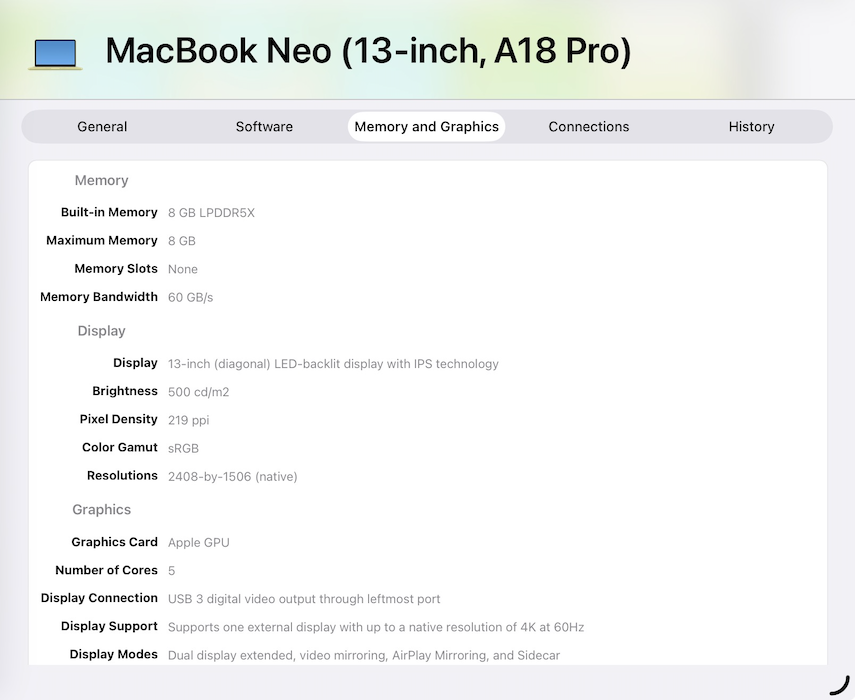
One of the more useful apps that I have used for several years, is Mactracker. Going back to when I first had Macs, if ever I need information about one of Apple's devices, this was (and still is) my first choice. I have it on all my Apple devices. Zac Hall (9to5mac) reports this
week that this app has now turned 25 and that there is a new version (Mactracker 5) for the iPhone and iPad. As I was writing this on the MacBook Pro, I opened the app and saw that there is also a new Mac version (v8.2.2) too.
|
|
Graham K. Rogers teaches at the Faculty of Engineering, Mahidol University in Thailand. He wrote in the Bangkok Post, Database supplement on IT subjects. For the last seven years of Database he wrote a column on Apple and Macs. After 3 years writing a column in the Life supplement, he is now no longer associated with the Bangkok Post. He can be followed on X (@extensions_th). The RSS feed for the articles is http://www.extensions.in.th/ext_link.xml - copy and paste into your feed reader. No AI was used in writing this item.

For further information, e-mail to
Back to eXtensions
Back to Home Page