
eXtensions - Monday 11 May 2026
By Graham K. Rogers
Expect updates to Apple's operating systems this week. Backup your devices. A solution for problems editing large files on iPad Pro? Notes on the MacBook Neo and its future after rumors suggest Apple has ordered more A18 chips after the success of this new device. With shortages of chips, Apple is making adjustments to its devices, and seeking out alternative sources, including Intel.
We can look forward to another update from Apple for its operating systems as the final versions of 26.5 have been seeded to developers in the last few days. I would think these would be arriving early next week (from 11 May on). As ever, backup your data to cloud and/or to disk. It is unlikely that anything will go wrong, but it pays to be ready: never say never. The information changed slightly by Saturday morning when multiple sources reported that Apple had issued a second Release Candidate for OS 26.5. This is not unheard of and probably indicates minor bug fixes. All now points to a release later this week.
One of the features that should be available with this update (on iOS 26.5) is "end-to-end encryption for RCS messaging between iOS and Android devices" (Joe Rossignol, MacRumors), which should please some people. However, the report continues with the point that this is "limited to supported carriers". I cannot help but be a little cynical and wonder if the carriers here will provide this.
I recently had some problems with scanned color negatives when I tried to edit them on the iPad Pro and the MacBook Neo (eXtensions 4 May). I scan with the MacBook Pro, add the images to Photos, and they are then shown in Photos on the other devices, including the iPhone. Depending on what I need, I have been able to edit them on any device. Recently, however (apart from on the MacBook Pro), either the image does not load; when edited is shown as black; or the edit fails to be saved. These images are large (around 185 MB). I tried again with two more rolls of film that came back from developing this weekend. Some, I edited right away on the MacBook Pro with no problems, as before. I had then been able to edit that altered image on the iPad Pro and the MacBook Neo.

|

|
However, this time, the image I had already edited on the MacBook Pro either loaded as a black image or failed to load completely. Black and white images, which are smaller (around 64 MB) also failed to load which had never happened before. After a restart of the iPad Pro, I was able to edit a couple of black and white images that had not been edited before. I again tried an edited color image. That failed to load, and unedited B&W images were again inaccessible. Another restart allowed me to edit the same B&W image that had just failed.
Just to confuse me even more, I opened Photos on the MacBook Neo and was able to edit a previously untouched image with no problems. There had been problems last time. Once the edit was complete, it saved and I was able to open it on the iPhone. I repeated this with other unedited scans, so this is working correctly, although it had not the week before. Similarly, I was able to re-edit an image I had previously adjusted on the MacBook Pro and that was also displayed on the iPhone.

|

|
I do not remember having editing problems with images (color or B&W) on the iPad Pro in the past. The only thing that had changed was that this behavior began after I had turned on Lockdown Mode. Although the MacBook Neo had begun to behave normally, the iPad Pro was still giving me problems with editing these color images. Reluctantly, I turned off Lockdown Mode. It has to be done device by device. The iPads and iPhone were relatively easy, and each device needed a restart. The Macs presented a problem as I work in a User account. I can turn the Lockdown Mode feature on in that account, but to turning it off can only be done from the Admin account.
Once done, I checked each device. Edited and unedited images could now be worked on without problem and there were no problems on the Macs, the iPad Pro or an older iPad mini. Security comes at a price I guess.
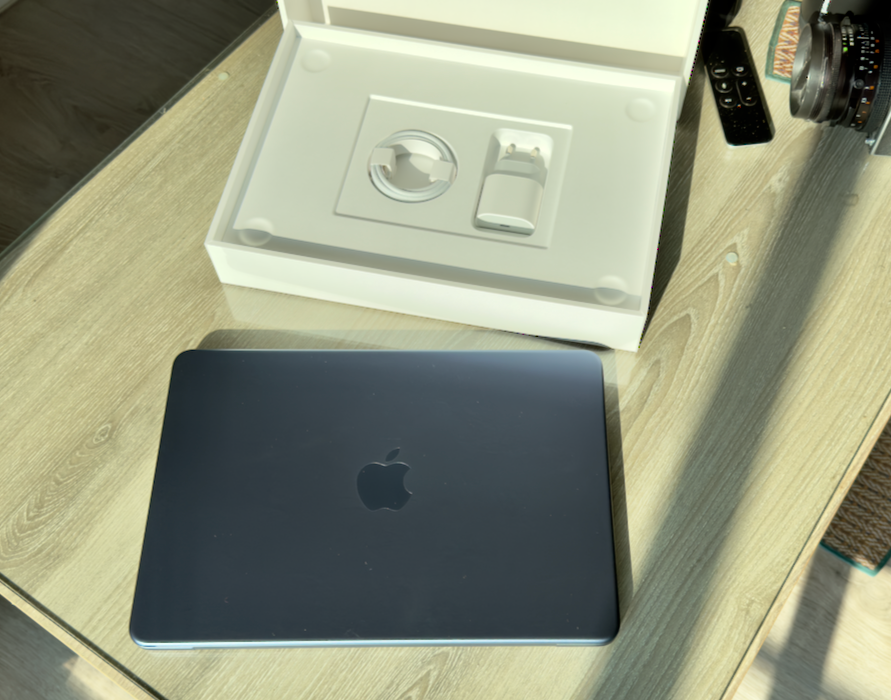
The success of the MacBook Neo caught everyone by surprise, including Apple by all accounts. The price and the capabilities hit a sweet spot for many people who want to use a Mac, may not need all the power of a Pro model notebook, and have a limited budget. There was not even much in the Windows-spehere that could compete on price and makers of such notebooks were also surprised. Apple does this sometimes.
Several years ago Apple moved from 32-bit apps to 64-bit, catching other phone makers on the hop Roman Loyola (MacWorld). Some estimated it would take them 6 months to catch up. It was around that time that the idea of Apple developing its own Mac chips began to be discussed. If - some theorized - Apple built in a new feature into its chips, it would have other computer makers rushing to try and catch up, with the added difficulty that the OS would also have to be revised. Apple's operating systems and chips tend to be updated in tandem, an advantage that other computer makers (and OS developers) cannot benefit from so easily.
Without intending to be patronizing, the MacBook Neo was not only for students and housewives. Many others saw the potential for this new device, including me. As soon as it was available here I placed my order, opting for the larger 512 GB storage. Apart from the problem with transferring and editing large image files that also affected the M4 iPad Pro (now fixed - see above), the MacBook Neo has been able to deal with anything I have thrown at it.
As part of my examination of the MacBook Neo and comparison of its performance, I looked at some new tethering software recently: Tether Studio. As well as having a feature that had been missing for a while from my Macs, I prefer to support independent developers. Apart from my inexperience with this new application - I had to learn as I was going along - there were no major problems with either the test or the licensed versions. The license allows me to use this on 2 devices, and I am as yet undecided whether to use this on the M1 MacBook Pro or the Mac mini at work.

The huge sales caused an unexpected problem. The MacBook Neo used binned A18 chips and these were running out. Jason Cross (MacWorld) has a useful explanation of the physical and economical reasons behind binning chips. There was considerable discussion on the problem that the limited supplies would have on the diminishing supply of the MacBook Neo. The consensus was that there were three options: ordering more A18 chips; ending the sale of the MacBook Neo and waiting for the A19 version next year; bringing forward a new A19 model to this year. I favored the last, but each option had its problems.
This week, a report from Tim Culpan (Culpium) suggests that Apple has chosen the first option, and despite the apparently less favorable economics, is cooking up a new batch of A18 chips. Culpan notes the comments from Cook at the last week's Q2 2026 event, "We were very bullish on the product before announcing it, but we under-called the level of enthusiasm that would be with it." A decision needed to be made and now we apparently have the result. He adds that Apple is now expecting sales of 10 million units, as opposed to its "initial estimate of 5 to 6 million." 4 million x $599 = $2.396 billion.
In the article Culpan also writes that this new order of chips from TSMC, will cost Apple some cash: the previously-binned chips were already there waiting to be used. He suggests that "Apple may kill the cheaper version and only offer the 512GB variant." This would mean a starting price of $699. Several reports picked up on this and, as if by magic, the rumor solidified into accepted fact. It is a consideration and Culpan was right to air it, but I am not totally convinced. The lower pricing was a major selling point. Apple often thinks long-term and drawing new customers in may be worth more to Apple than a quick profit.
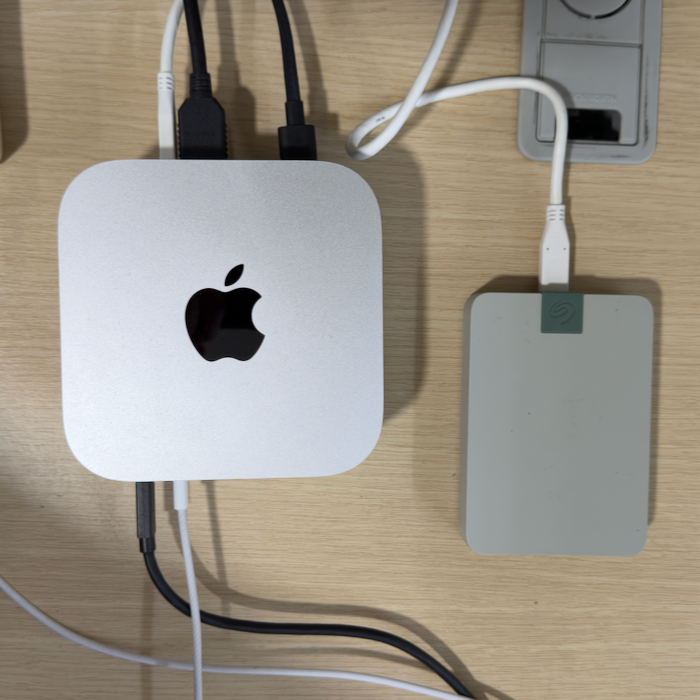 In support of the higher-price argument, Culpan noted that Apple "recently followed that strategy with the Mac Mini, pulling the $599 256GB model from sale leaving only the $799 512GB version available." That was for different reasons: the shortages in chips. I would not be surprised if there were higher pricing for the MacBook Neo with newly-forged A18 chips, but I would prefer to wait until Tim Cook (or John Ternus) announces this. Speculation is not a sound strategy.
I was pleased to find a column by Mahmoud Intani (MacWorld) who also doubted that this approach would work. As he points out when discussing the options, that $599 is a psychological line drawn in the sand and if there were changes as some have suggested, like removing the base 256GB storage to make 512 GB and $699 the new entry point for the MacBook Neo, many would look elsewhere. In the long term, attracting thousands of new users to macOS could well generate income far into the future as some of those new users stay with the platform.
With the shortages in chips, Apple is looking elsewhere as TSMC is stretched at the moment. There have been rumors that Apple is asking Samsung to produce some chips. The company has been used for this a number of times before. Other reports, including from Igor Bonifacic (Engadget) indicate that Apple has also asked Intel for assistance. As well as helping ease the supply load this is politically smart as well. Apple did have a good relationship with Intel for a number of years, but (as with the previous arrangement for PowerPC chips) the limitations of what the chipmaker was able to produce, forced Apple to look elsewhere.
With the PowerPC, the G5 was too hot for notebook computers and this was insurmountable, so Apple recruited Intel as its main supplier for Mac chips. This was successful up to a point, but the A-series chips showed A new direction. Apple silicon was the result. With the new limits on chip availability, Apple is already changing its own products and that could reduce sales. Pragmatism must come into play.

Graham K. Rogers teaches at the Faculty of Engineering, Mahidol University in Thailand. He wrote in the Bangkok Post, Database supplement on IT subjects. For the last seven years of Database he wrote a column on Apple and Macs. After 3 years writing a column in the Life supplement, he is now no longer associated with the Bangkok Post. He can be followed on X (@extensions_th). The RSS feed for the articles is http://www.extensions.in.th/ext_link.xml - copy and paste into your feed reader. No AI was used in writing this item.

For further information, e-mail to
Back to eXtensions
Back to Home Page