
eXtensions - Tuesday 31 March 2026
By Graham K. Rogers
A couple of blank film rolls led to the discovery of a broken lens in a camera. This was sent off for repair and was returned within a couple of days. Charging on the Apple Watch is still frustrating. Many sites report on the end of the Mac Pro. Apple's Lockdown Mode protects users, although there are restrictions when it is in use. Head of FBI hacked.
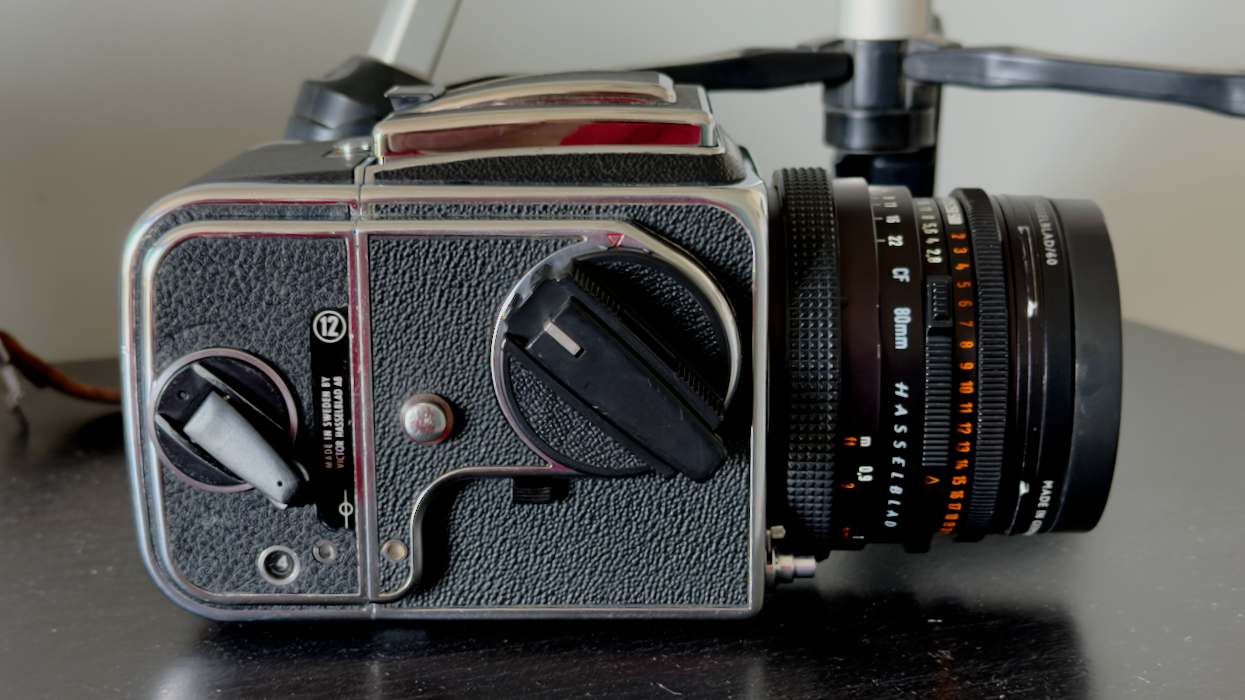
Last year I took over 500 photographs using my Hasselblad 500cm media
format film camera. This month I had three rolls of Film returned from
developing that were blank. The first one looked to me as if I had made
some mistake with setting up. However, when a couple more blank roles
followed two weeks later, I realized there was probably something wrong
with the camera. During the week I contacted John Kasawa from whom I had
originally bought the camera and lens. He has also maintained the camera
over the years with his staff, and offers sound advice when asked.
During a discussion on LINE he asked me to remove the film back and look through the shutter curtain. This normally opens for a split-second when the shutter is pressed. He had me run two tests: pressing the shutter and turning the aperture ring; then, pressing the shutter again and turning the timer ring. The aperture ring test showed that the lens aperture changed; but there was no movement inside the lens when adjusting the timer ring. His immediate comment was "Oh dear."
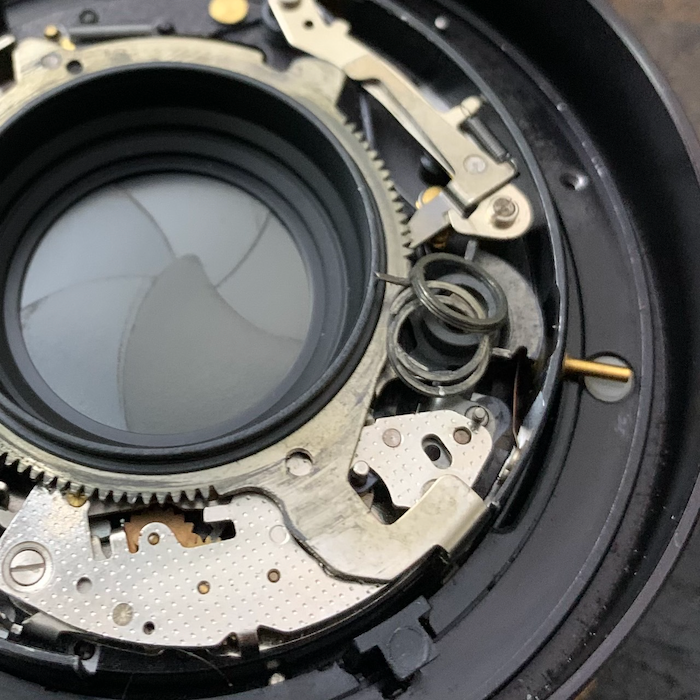
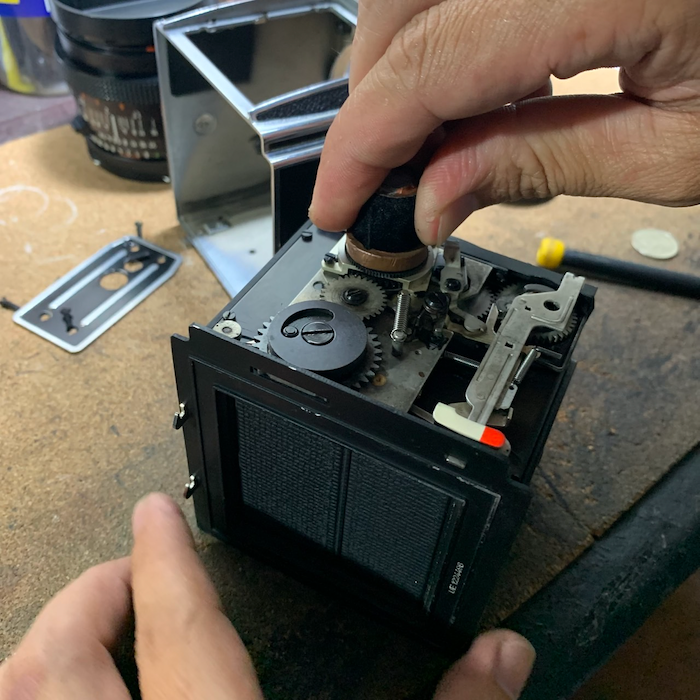
He suspected that a spring had broken within the lens. A couple of days later I went to the local post office and had the camera boxed up. It arrived at the workshop on Friday afternoon. It was dismantled, starting with the lens. Sure enough the spring had broken.
|
|
Of course he had a replacement and it was all up and running within
about 30 minutes. He sent a number of images and a film clip of the
repaired lens. I was delighted. He checked the lens focus and
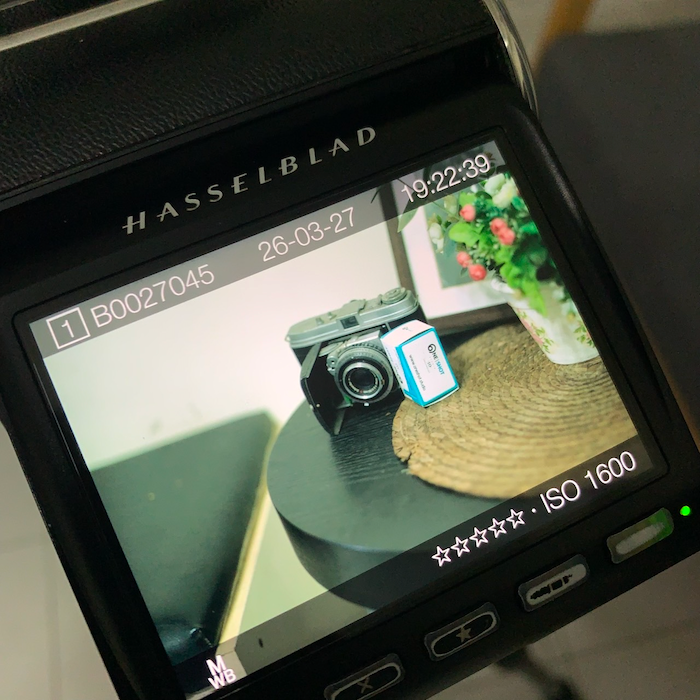
recalibrated that. He took a number of test images using the digital
back he has. He also made sure the camera body was operating at its
best then sent the camera and lens back to me the next day (Saturday).
I love it when I can get service like this, and the fix is relatively
cheap on what was an expensive camera when it first appeared. As well
as selling and maintaining these cameras, John teaches at a college in
Bangkok and runs occasional photo walking tours. He also has a You Tube
Channel. [Additional Note] In a comment he sent on the above, John mentions that he has a website for Hasselblad service which I had been unaware of. I receive no remuneration for the above, and when I have my cameras serviced or repaired, I pay the fees like any normal customer. I think it is good to support local businesses.
|
|
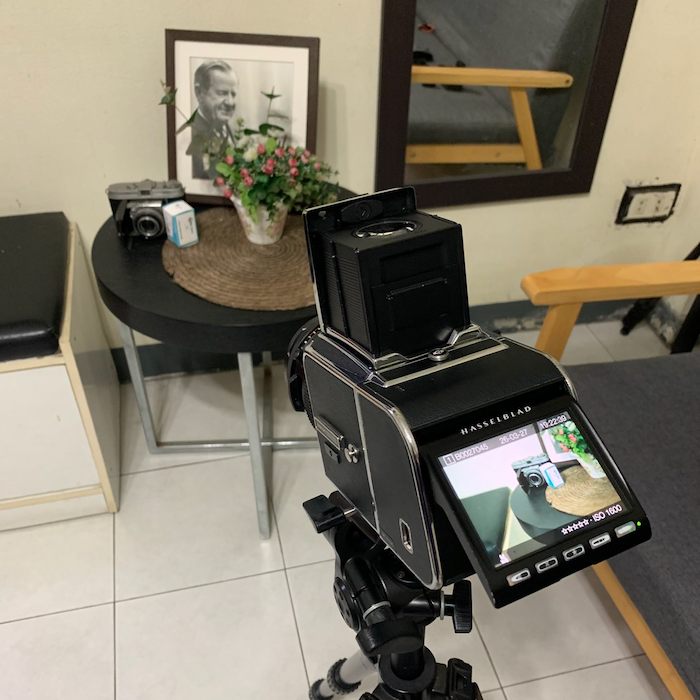
The box with
the camera arrived early Sunday afternoon. When I fought my way into
the packaging (the broken spring was there for me to see), I looked at
the camera which was cleaner than a few days before, and opened the
waist-level viewfinder. That looked better indeed. I took a couple of
shots, noting that some test shots had already been taken. I will use
up that roll later as I want to try out some new Harman Switch Azure.
The first roll was a victim of the camera problem and I have two rolls of this new film left.
I still use a DSLR camera, and that needs memory
cards to store the inmages rather than film. There are however problems
with that medium apparently. Jaron
Schneider reports that, except for a few low end examples, Sony is
suspending "the acceptance of orders from our authorized dealers and
from customers" from this time. The blame is put on the "global
shortage of semiconductors (memory) and other factors" and is unlikely
to end for the immediate future. According to ENC the
shortages are due to "geopolitical tensions, high demand, disasters,
supply-chain issues. . ." and specifically: continuing fallout from
Covid 19 when production would have been constrained; geopolitical
tensions, including the US trade war with China; and "Increased demand
for electronics and AI".
I continue to watch The Man
in the High Castle and am now at the end of Series 3. I took a
break to view Episode 1, Season 5 of For all Mankind (6 will be the last). On Netflix, I occasionally rewind certain sections of a
movie or series to make sure I heard something correctly, or because I
want to watch a scene again. However, last week I noticed
that the interface for doing this had changed and I was finding it less
easy than before. I am not alone. A link from John Gruber (Daring
Fireball) took me to an article by Amanda Kondolojy
(PocketLint) who is just as confused as I am. And just as unhappy with
this arbitrary change. I have mentioned this before, but do developers
(and Apple for that matter) consider users when they make such interface
changes? There is a rule in motorcycle maintenance, "If it ain't broke,
don't fix it."
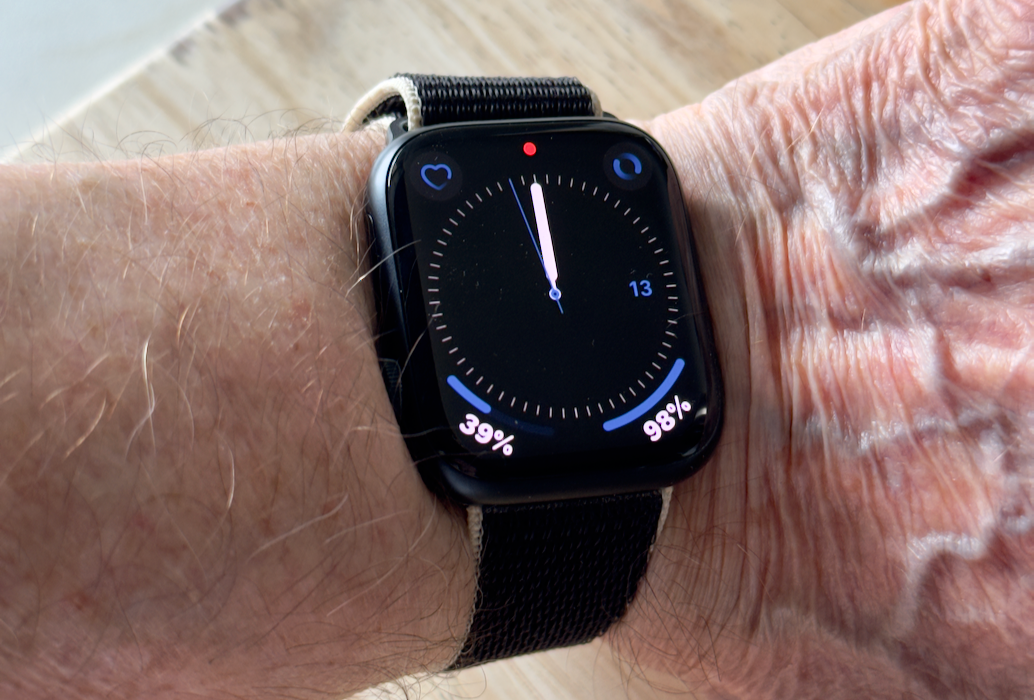
I am still frustrated with optimized charging on the
Apple Watch. It will not do what I want. One day this week, before I
showered, I put the Watch on charge with 87% showing. The panel on the
Watch showed "Charging to Full". That is a lie. When I returned some
30 minutes later, the Watch now showed 85% and the information showed
Optimized Charging. This is not a feature, but I cannot turn this off.
No matter what Apple may think I want, I would like my Apple Watch to be
charged to full when I place it on the charger stand, and not return
after half an hour and find it to have less power than when I put it on
the stand. Apple knows best, but this is not what I want and I am
unable to turn this off.
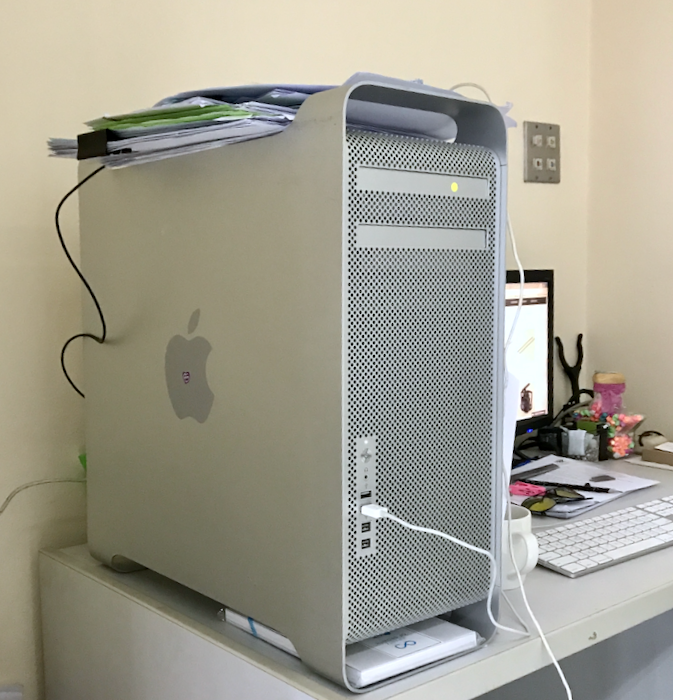
It was not really a surprise when I read the news on multiple sites late last week that Apple has discontinued the Mac Pro. As much as I love the idea of a large desktop computer that is upgradable, those days have ended. Apple's modern methods use the SoC (system on a chip) so during the manufacture of a
computer the cores, the memory and the storage are all built in and
there is no possibility to update components, although the last Mac
Pro did have expansion slots. These were mainly redundant, while the
main board was almost lost within the voluminous bowels of the device.
 It seemed obvious to me when the Mac Studio was first announced that
this more flexible system, when the main Apple silicon chip was updated
more or less annually with a range of cores and versions (Max, Pro,
Ultra) perhaps available, would be the future. It will be easier to
update more regularly for those who need high powered computing.
It seemed obvious to me when the Mac Studio was first announced that
this more flexible system, when the main Apple silicon chip was updated
more or less annually with a range of cores and versions (Max, Pro,
Ultra) perhaps available, would be the future. It will be easier to
update more regularly for those who need high powered computing.
Those who have high budgets, such as movie-makers, will just buy the devices they need for the duration of the project, then sell them off. This happens in many businesses. I was told recently of several M4 Mac mini computers with 32GB RAM that were being sold off for a reasonable price in the UK. Two people I know working at the Faculty of Engineering picked up a couple of Mac Pro devices (with Intel processors) about 5 years ago that were similarly sold off. These are still in use.
The Mac Pro was a leftover from earlier days when such computers were necessary and were regularly updated as new RAM modules arrived, larger storage became available and even more powerful chips were released. I had a G5 Power Mac on test a few years back and that was similar to the last Mac Pro with its tidy storage bays and an interior that was as clean as the exterior. Apart from the Trash Can Mac Pro which some hated, the same design had been with us for years. Time and technology have moved on. One advantage is that the computers recently released with M5 chips are the same price as when they were released with the M1. There are still some refurbished Mac Pro computers, Marcus Mendes (9to5 Mac) writes. These may not be available here. I do not think I have ever seen refurbs on offer in Thailand.
With the end of the MacPro, Ed Hardy notes that the engineering behind this change is the same reason that the MacBook Neo comes with only 8GB of memory: it is all built in to the system on a chip (SoC), which also means that RAM cannot be added after purchase. That Apple made this decision on specifications is "not a dirty trick" (Hardy writes). This was not just a decision on releasing an entry-level device in a market area that was untapped by Apple. That seems to have been more than a success of course. Hardy explains that the 8GB decision was due to the limits of the original (iPhone) chip itself: space and heat. That may also limit future development of this device, but this is Apple and they have a way of finding solutions that others think are impossible.
 I read a note from Lorenzo
Franceschi-Bicchierrai (Techcrunch) regarding Lockdown Mode. Like
several other sources (I saw this one first), he reports that no user
with this turned on has been hacked with spyware. I checked, and this
was not on for my devices. It is now. After restarts of the iPhone,
iPad Pro and Apple Watch, I checked the Lockdown Mode panel again to
recheck the restrictions and noted that 2G and 3G were also off now.
Some apps have restrictions. For example, sending email from certain
apps is not allowed. A warning panel shows that this can be turned off
for the app in settings. Zac Hall
(9to5 Mac) also looks at this security feature.
I read a note from Lorenzo
Franceschi-Bicchierrai (Techcrunch) regarding Lockdown Mode. Like
several other sources (I saw this one first), he reports that no user
with this turned on has been hacked with spyware. I checked, and this
was not on for my devices. It is now. After restarts of the iPhone,
iPad Pro and Apple Watch, I checked the Lockdown Mode panel again to
recheck the restrictions and noted that 2G and 3G were also off now.
Some apps have restrictions. For example, sending email from certain
apps is not allowed. A warning panel shows that this can be turned off
for the app in settings. Zac Hall
(9to5 Mac) also looks at this security feature.
When I woke the MacBook Pro and the MacBook Neo, they also needed to restart to activate this feature. I noticed in email that some images were not displayed, but a button at the top of any messages affected allowed me to download those if I wanted it. When I connected a Time Machine disk, I was also asked if I wanted to allow the disc to be used. The same happened when I connected another hard disk that I had been using for a month. This is a part of lockdown to ensure that external media are safe to use.
This is repeated each time I connect a disk, event those I use for Time Machine. When I activated this on the Mac mini I use at work, it disconnected from the university network and, although I can join if I insist, Lockdown Mode would prefer me not to because it detects risk.
On a coincidental note Reuters (Guardian) report
that the current head of the FBI has apparently had some of his emails
from 2010-2019 leaked by Iranian hackers. The embarrassment that one
of the top US officials in the current administration has been hacked
should have considerable repercussions for this person who is
clearly unqualified for the position, but under current conditions, this
will probably have no effect.
After the weekend, Maggie Miller & John Sakellariadis (Politico) report that the FBI confirm this was true although these older mails have nothing that is government-related in them. Tim Cushing at Techdirt - always a site worth looking at - has some comments on this and (as well as a certain amount of satisfaction) notes that there may be other implications to what has been released. On the Overspill Blog, Charles Arthur comments, "Patel got hacked because he used the same password for his personal email as on other sites, and so when those sites get hacked, your password is in there" adding, "Obviously hacking isn't good. But Patel is such a pompous idiot that one hopes it takes him down a peg or two: he has nobody to blame but himself."
Graham K. Rogers teaches at the Faculty of Engineering, Mahidol University in Thailand. He wrote in the Bangkok Post, Database supplement on IT subjects. For the last seven years of Database he wrote a column on Apple and Macs. After 3 years writing a column in the Life supplement, he is now no longer associated with the Bangkok Post. He can be followed on X (@extensions_th). The RSS feed for the articles is http://www.extensions.in.th/ext_link.xml - copy and paste into your feed reader. No AI was used in writing this item.

For further information, e-mail to
Back to eXtensions
Back to Home Page