eXtensions - Sunday 5 July 2026
By Graham K. Rogers
Having seen some earlier success in this year's Invent for the Planet, a team of students from the Faculty of Engineering and the Faculty of Science were among five winning groups with their shrimp feed solution: Kung Kung. The judges recognised the potential for further development in this sustainable solution and the prize money given to each group is to encourage the students to develop their projects further.
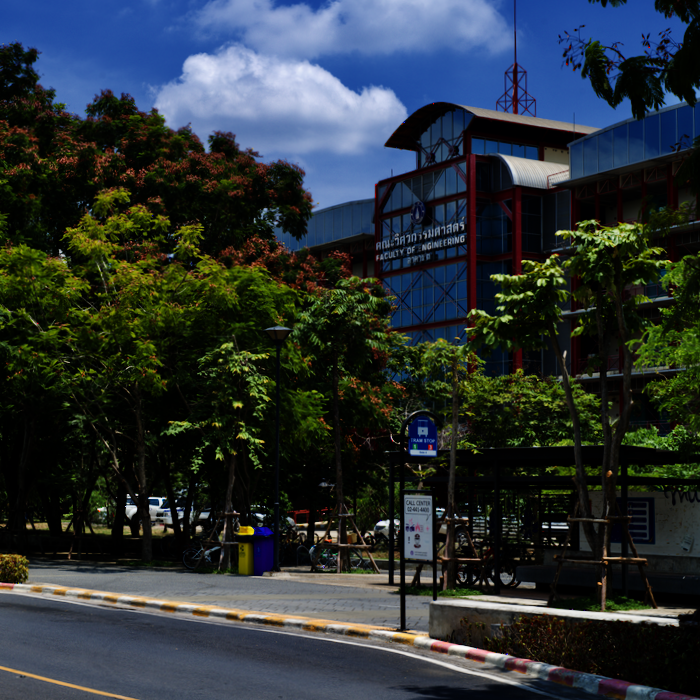
Each year, the Faculty of Engineering, Mahidol University, puts on a local event for the international Invent For The Planet series. This is a workshop style event in which groups of students come up with for solutions for problems that have been set by the organizers. This year all of the need statements were related to food, food production, and food waste. Starting on Friday evening, groups of students worked through their solutions which were presented to a team of judges on the Sunday afternoon. This year the winning group gave themselves the name Kung Kung (the Thai name for shrimp).
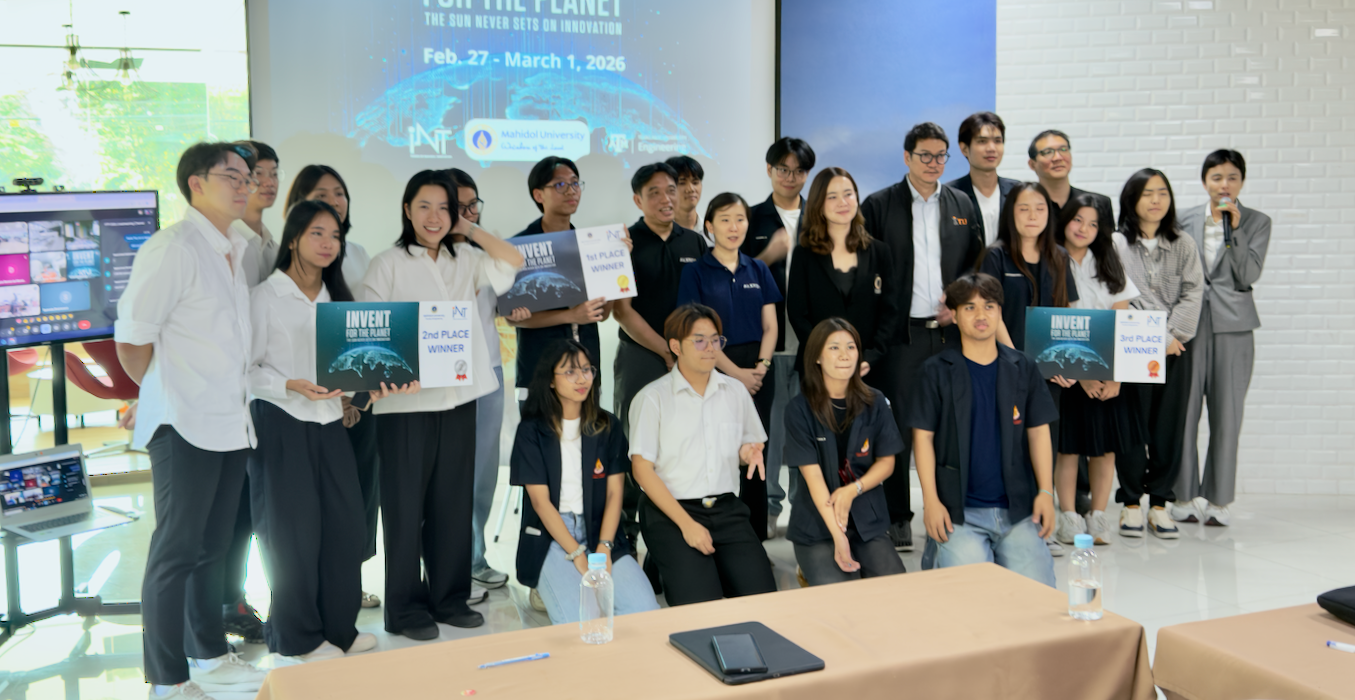
In the days after the event, the group put together information, including a project video and a second video of their presentation. This was sent to the organizers at Texas A&M University for consideration. Some days later it was announced that the Kung Kung team had been accepted for the final event which this year was to be held in Doha. Unfortunately, politics interfered and the venue was changed to Ireland. However, with the increase in fuel prices as fallout to the military actions, the university issued a number of energy-saving directions, including turning lights off, reducing AC use, and suspending travel unless necessary. This included the students who had expected to travel to the Atlantic Technology University (ATC) in the Republic of Ireland. Although the organizers at the Faculty of Engineering were disappointed, the students took it in good part. Unfortunately, there are not many opportunities for students at Mahidol University to compete head-to-head with those from other countries.
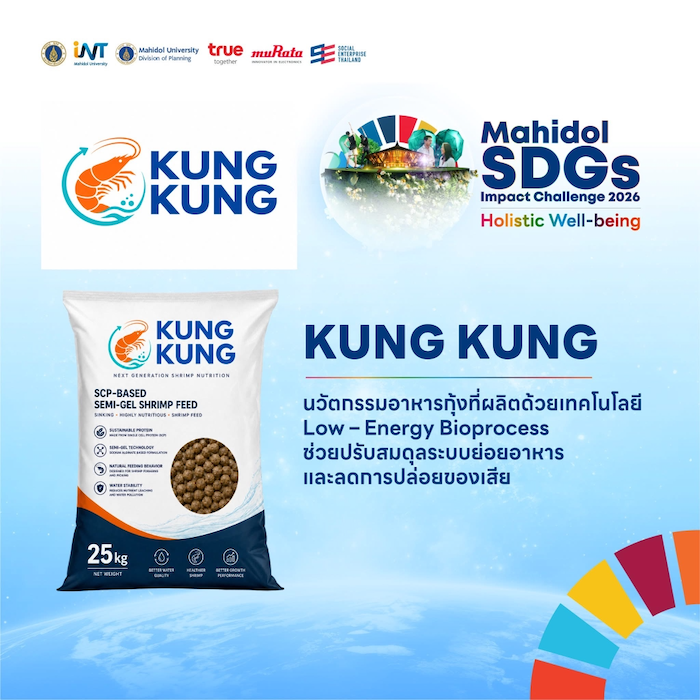
Their entry in the contest had focused on the need for sustainable solutions in food production. The group looked at problems in aquaculture, which is a huge industry in Thailand, particularly with regard to shrimp production: one of the most widely consumed types of seafood. The cultivation in ponds is chemical intensive, and with the food supplied to the crustaceans there are problems with pollution. The students' solution was to develop a new type of food pellet that can dissolve better in the water, and which does not leave as much content that would otherwise add to the water pollution. The way it dissolves also makes it easier for the shrimp to ingest the food. A further benefit is that, because the smaller food pellets dissolve more easily, the water does not have to be changed as often.
The members of the group were:
Since the event in February, the students have worked on refining their solution. They recently entered the annual Mahidol SDGs Impact Challenge 2026. This has been put together, like Invent for the Planet, to encourage students to develop skills outside the curriculum. With the Mahidol SDGs Impact Challenge, the main purpose is to help students develop business ideas and prototype innovations with holistic wellbeing: Physical, Mental, Social, and Environmental.
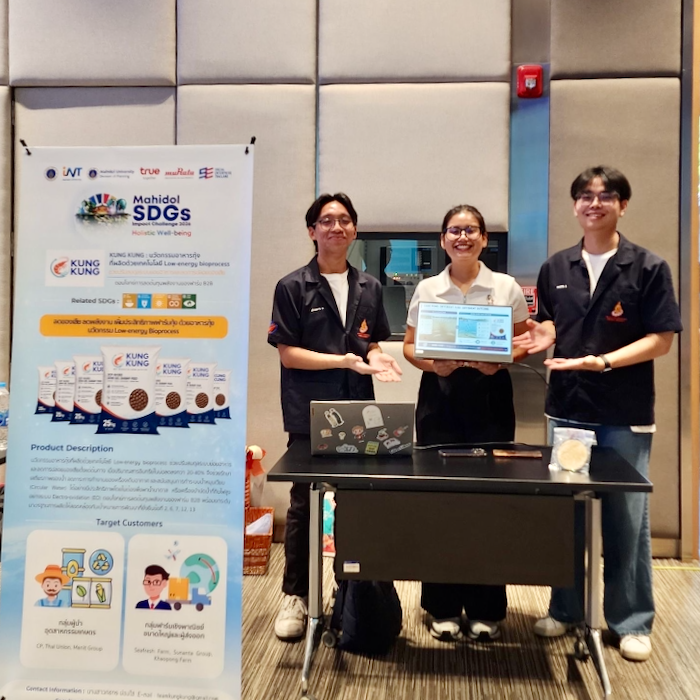
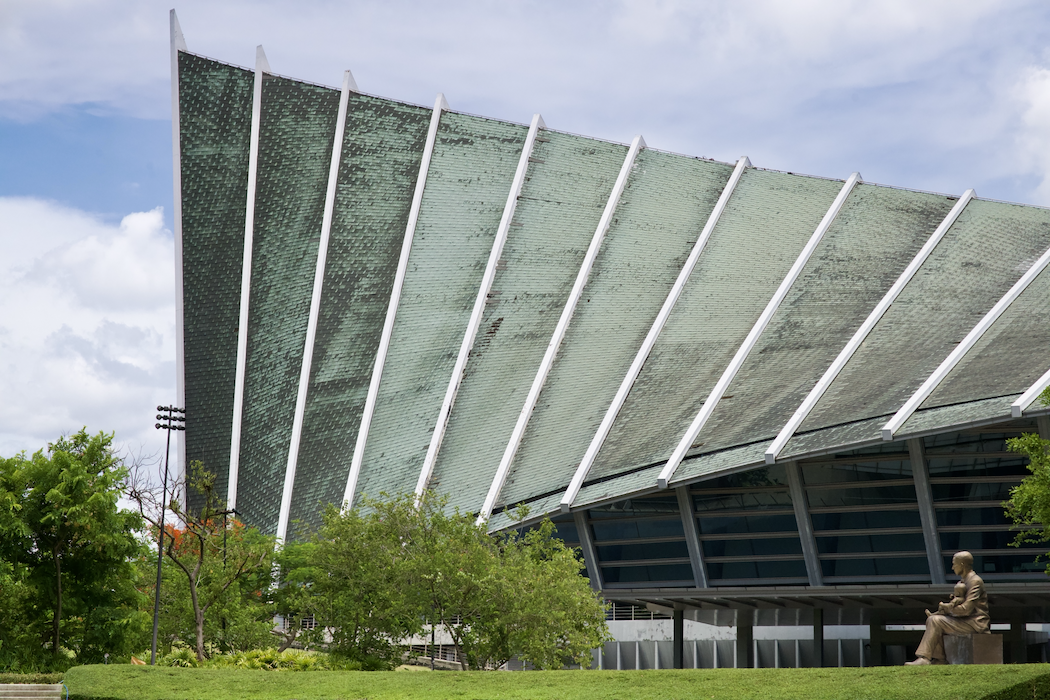
Groups from several faculties and campuses of Mahidol University competed. After earlier events, 8 groups were selected to pitch their ideas at the Mahidol Sittakarn Auditorium on Salaya campus. The final event took place this week (2 July). Each group was allowed 15 minutes to pitch their ideas: to showcase their innovation, as well as their abilities to solve social problems and create sustainability. The groups were questioned after their presentations by the judges who were selected from academia and industry. Questions for the Kung Kung group at iFTP included whether their product would be harmful to the shrimp or to humans consuming them. This time, only 3 members of the group were present as one was away working on an internship.
|
|
From the final 8 groups, 5 were awarded prizes. The decisions recognize the potential of the projects to contribute to United Nations Sustainable Development Goals (SDGs). Each group was presented with 150,000 baht ($4520) to develop their prototype. The University has the facilities to advise and guide the students on how to do this.
The groups selected for the awards were from:
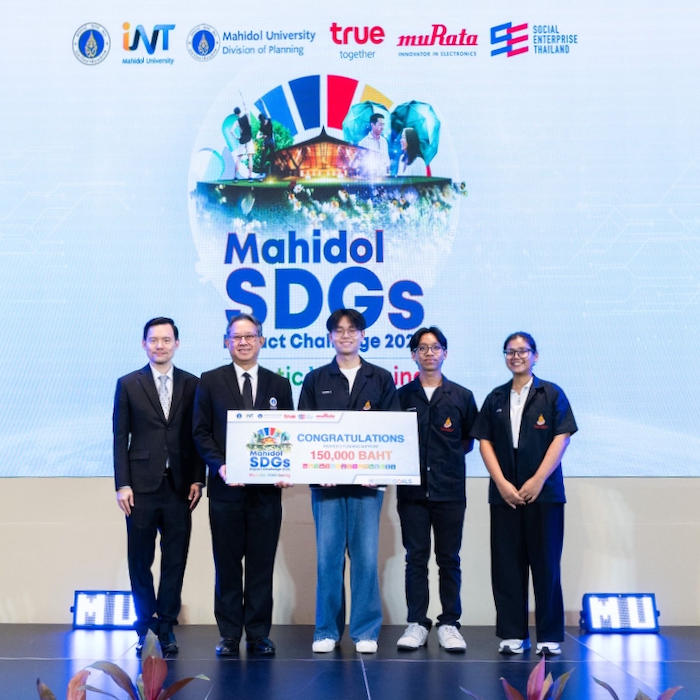
|
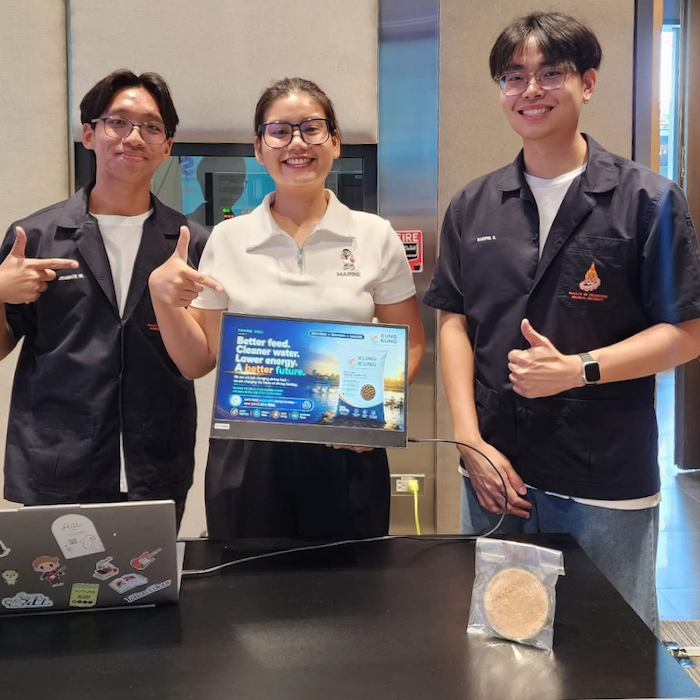
|
The Department of Electrical Engineering, is particularly happy with the result as the project had been developed through the Invent for the Planet (IFTP) program. The project was recognized for its potential to contribute to Sustainable Development Goals (SDGs). It is hoped that the students will be able to develop their prototype further and apply it to real world use.
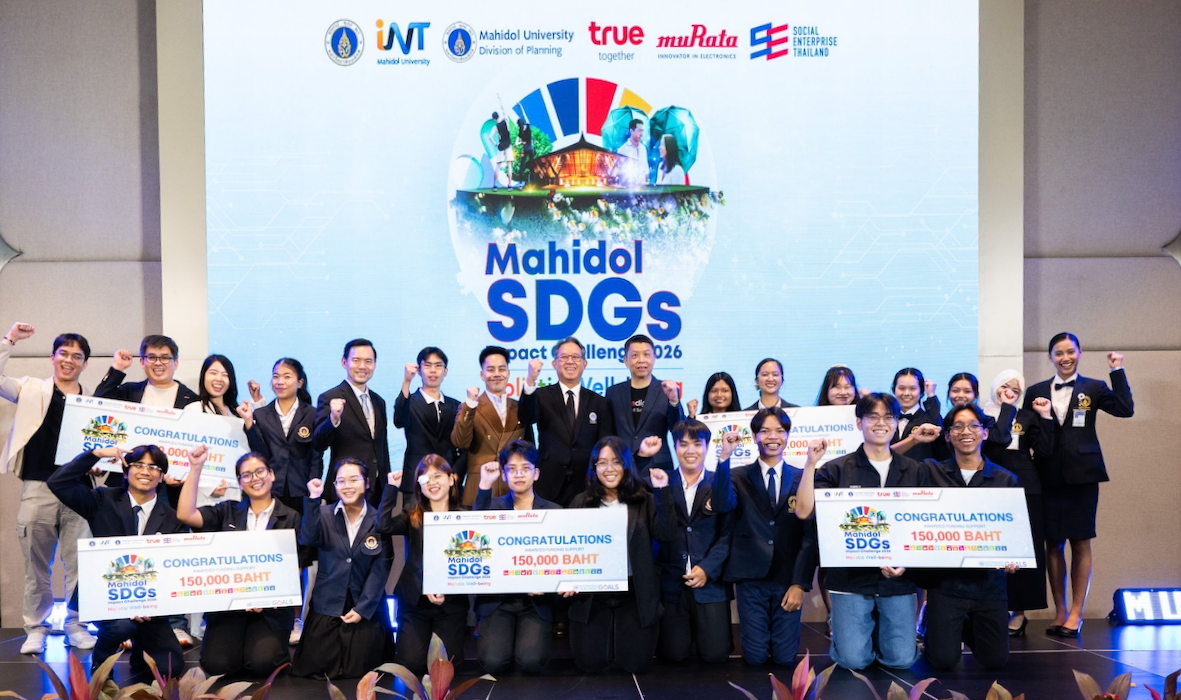
The success of the Kung Kung group is a major achievement. Having been placed first in Invent for the Planet and being selected for the finals in that contest, the refined project has seen more success in the Mahidol SDGs Impact Challenge 2026. The efforts of these students demonstrates strong interdisciplinary collaboration. Students from different academic backgrounds have come together to develop innovative solutions that address societal challenges and contribute to sustainable development.
Graham K. Rogers teaches at the Faculty of Engineering, Mahidol University in Thailand. He wrote in the Bangkok Post, Database supplement on IT subjects. For the last seven years of Database he wrote a column on Apple and Macs. After 3 years writing a column in the Life supplement, he is now no longer associated with the Bangkok Post. He can be followed on X (@extensions_th). The RSS feed for the articles is http://www.extensions.in.th/ext_link.xml - copy and paste into your feed reader. No AI was used in writing this item.

For further information, e-mail to
Back to eXtensions
Back to Home Page