
eXtensions - Thursday 3 September 2026
By Graham K. Rogers
Tim Cook has left the Apple CEO position after 15 years at the helm. John Ternus steps in and we can expect a somewhat different style. Events in Silo are causing a stir, while on Netflix two documentaries on Boeing are worth examining. Devices and technology evolve after a number of years. While the stylus was once a no-no at Apple, the Apple Pencil has become an essential tool for many. Will we now see a touchscreen Mac?
This week saw the retirement of Tim Cook from the position of CEO of Apple. His replacement, John Ternus, who has been with the company for several years, was decided long ago, as was the succession of Cook when Steve Jobs resigned, shortly before his death. Cook was the choice of Jobs who recognized his skills early on. Despite this, Cook was often criticized, mainly because he was not Steve Jobs. Some even lobbied strongly for Cook's replacement. Although his work grew the company significantly, and there were several new products during his tenure, including Apple silicon, somehow his critics always managed to give the credit to Jobs: the initial moves might have been made in his time.
There were of course several articles written about Cook's time at Apple and his departure. A MacWorld editorial suggests that although he brought several benefits to Apple, he was there too long. That sounds a little harsh as he walks out of the door (although he is on the Board), but MacWorld is often critical of Apple. William Gallagher (AppleInsider) reports that during his tenure, Apple grew by trillions, adding that he was only the 3rd Apple CEO who wasn't fired, but he was a businessman rather than a designer.
In a fairly lengthy reprise of Cook's time as CEO, which has some good images, he also notes that it was because of his skills that Apple was able to weather some of the turbulence of the current US Administration. I do have my own reservations about that, but there is some truth to this. He knew when to put his foot down and when to flatter. I also remember that Cook was not a great presenter, in the style of Jobs or Craig Federighi, although he did hold the live events together as a sort of ringmaster. William Gallagher also reports on what he calls, Cook's greatest moments hosting WWDC. Cook also sent a letter to Apple employees on his last day as CEO in which he thanks all members of the staff for their support during his time at the helm (Sarah Perez, TechCrunch).
Also stepping back this week is Phil Schiller, whose own life at Apple has gone through a number of transformations. Malcolm Owen (AppleInsider) reports that Schiller is stepping back from day to day events, but will still be an Apple Fellow and "he will instead be working on 'unspecified initiatives.'" One of his best-remembered interjections was when introducing the trash can Mac Pro when he said, Can't innovate, my ass. It is widely reported also that Luca Maestri is reducing his links to Apple at this time.
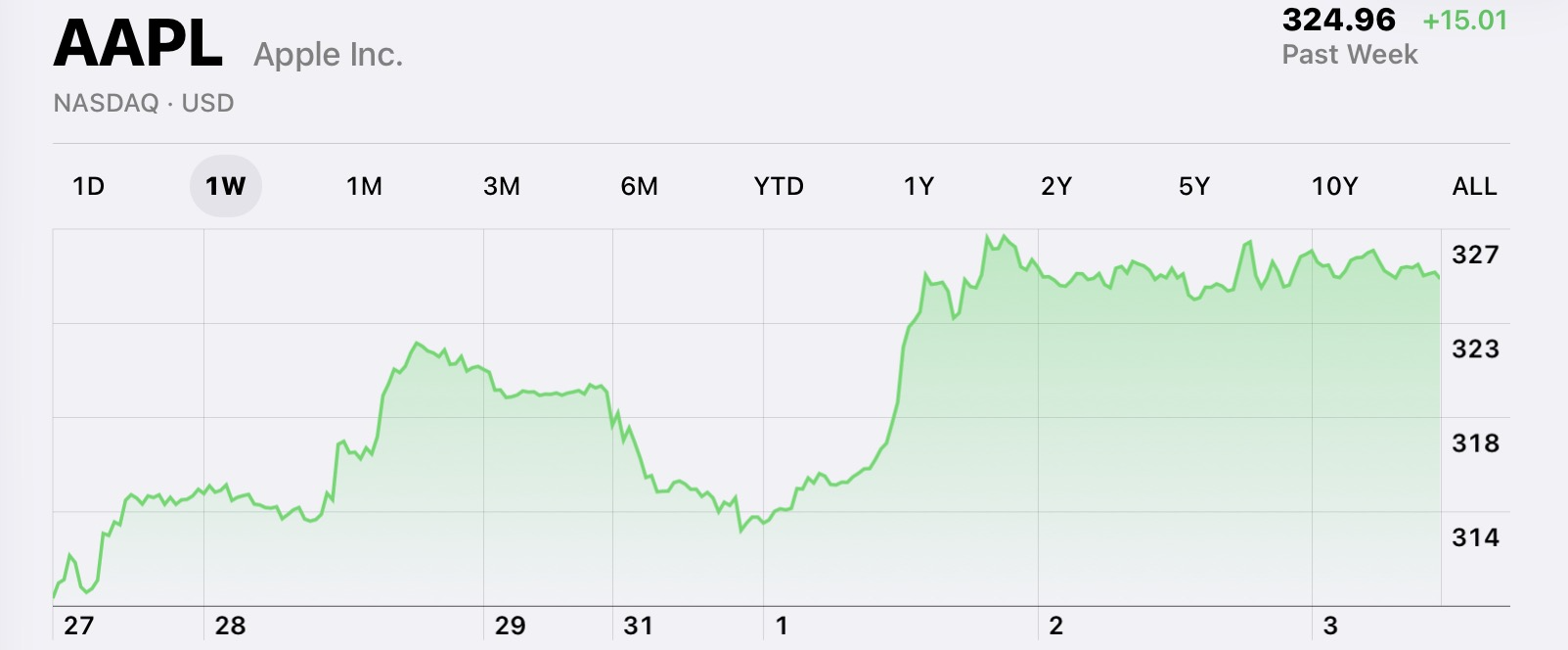
The leadership page on the Apple site has been updated, and Ryan Christoffel (9to5Mac) notes that the brief bio details of John Ternus includes a new paragraph. The information, he suggests, indicates some of the priorities Ternus will have: reliability and durability; innovation in hardware and materials; and a reduced carbon footprint, with product longevity. The new CEO now also has an account at X (@johnternus). Of course I followed. Perhaps as a side-benefit of the arrival and anticipated changes, Apple share prices rose this week.
Early this week Apple sent out the 6th developer beta versions of its various operating systems. Not long after, it was reported by several sources that the 5th Public beta versions of the operating systems were also available. I downloaded the macOS beta and installed that just after breakfast. This was quite smooth. I have not noticed any specific problems when using the beta versions on the MacBook Neo, although there are some things I am not totally happy with concerning AI; but not much about AI pleases me anyway.
I expect that the OS versions released to users will be arriving around 16-18 September. The announcements are on Wednesday 9th and the usual plan is that orders are open on the Friday after that, with deliveries starting a week later (18th) so the new versions of OS 27 should be with us by then. Some changes to apps have been made arbitrarily by Apple rather than developers. I am unsure whether this is reluctance on the part of the developers or Apple offering to do the job instead, or another reason, but I noticed recently that some of the apps being updated showed text information to the effect that they were "updated by Apple to prepare for watchOS 27 compatibility. No new features [were] included."

The most recent episode of Silo has caused quite some discussion online with the twin timeline, producing exciting potential. This week sees the finale of Season 3 and we have one more season to go. In the current time-line where Juliette holds sway, Bernard has just offered himself as a sacrifice perhaps to atone for some of his past deeds, but also giving those against Camille Sims some time to prepare their actions. In the historic pre-silo world, the main characters are invited to an unveiling of the 51 silos. The book has 50. Unexpectedly Daniel Keene (Ashley Zuckerman) is separated from his partner, Helen Drew (Jessica Henwick), who is pregnant, she goes to Silo 18 and that explains the Pezz dispenser that we saw in earlier series. He is ushered to Silo 1 for his tour, where we were delighted last time to see Peter Gabriel.
Per Stensen, played by Colin Hanks, speaks to Peter Gabriel, although Stensen looks somewhat distracted. He also seems to be less focused on rehearsing the comments he is scheduled to make later. Add to this, the concern of helpers to ensure Keene returns to Silo 1 when he walks away and tries to contact his partner. The urgency of the aides seems to imply they know something is about to happen. Of course, as has now been widely reported, there was a nuclear explosion a few kilometers from the Silos. This does not appear to have been a worldwide destruction, which is the justification for the construction of the silo complex. However, some have suggested that this was a way to herd the invited guests into the silos, so that the full scale attack, whatever it may be, could follow. Who, why, and many other reasons are left open. The Apple TV version differs in several ways from the books, but it is widely reported that the author, Hugh C. Howey, who is listed as one of the producers, wholly approves (Matthew Rudoy, Screen Rant et al).
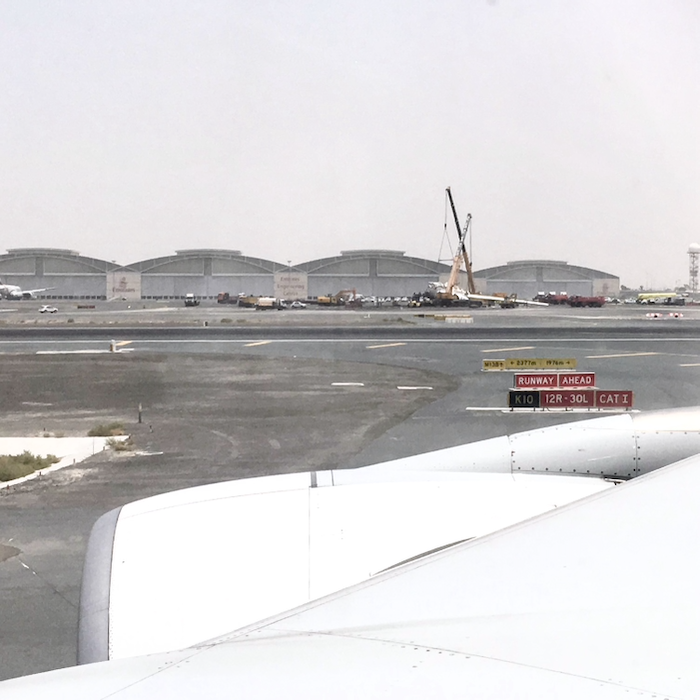
On Netflix I recently watched two documentaries about Boeing. Freefall: A Reckoning for Boeing was released this year and is a follow up to the 2022, Downfall: A Case Against Boeing that mainly concerned some of the reasons and events behind the two crashes of the 737-Max, in Indonesia and Ethiopia. When the first of these accidents occurred, I was not wholly convinced by the initial pilot-error story. I have read several accident reports and find the excellent analyses by Admiral Cloudberg to be of great value, for my own education and for teaching materials. As I was aware from looking at motoring accidents when I was in the police, there is never one single cause. That initial feeling of uncertainty turned to a conviction of something more when a few months later the jet in Ethiopia crashed in strikingly similar circumstances. There are few coincidences in such events.
|

|
It turns out that the real cause of the crash was the new software control Maneuvering Characteristics Augmentation System (MCAS) that the pilots or airlines were not told about. That would have needed additional training and authorizations, which would cost money. There had already been doubts about the priorities of Boeing after its merger with McDonnell Douglas, from caring plane-maker to profit hunting corporation, that included the move of corporate HQ from Seattle to Chicago. The documentary makers bring these facts in as part of the first of these documentaries, Downfall.
The follow-up, Freefall adds to the story of the 737-Max with another incident (Alaska Airlines, Flight 1282), plus the problems surrounding the development of the 787 Dreamliner, and the generally poor quality-control that was exercised at the new factory in South Carolina (no unions). A major problem the second documentary expands on is the ways that those trying to ensure quality was checked properly were dealt with. Some were dismissed, some left on their own accord after pressure, and some turned whistleblower. One of these allegedly killed himself after making part of a deposition.
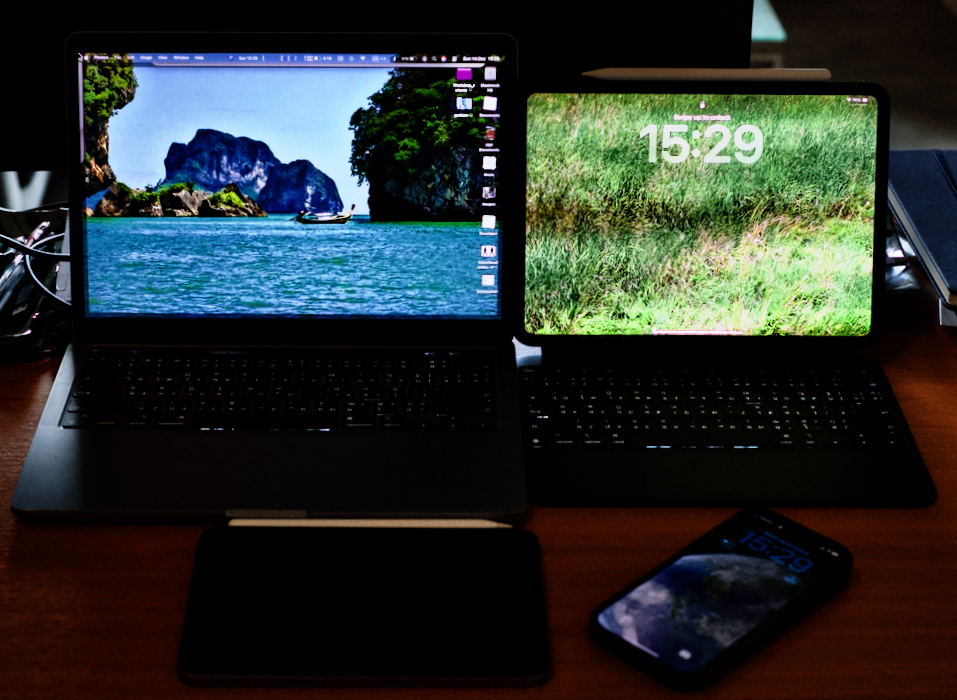
A report last week from Michael Burkhardt suggested (with some confidence) that there could be a touch screen Mac available in a couple of months. I considered this in the light of advancing technology, and the obvious comments we may expect about what Steve Jobs said on the concept. He was famously dismissive of the stylus when announcing the iPhone. At the time the iPad was announced in 2010 Jobs mentioned that Apple had considered the idea of a touch screen Mac but decided against it, partly due to the problem of muscle fatigue. However, we have moved on.
The iPad Pro that I have with its Magic Keyboard, is just as much a computer as I want (but not quite a Mac). Indeed, a student looking at this recently who had asked about my MacBook Neo, thought that the iPad Pro was a computer. As I work with the iPad with its angled screen, I have no problems switching between modes of operation: touching the screen, entering key commands (like the Mac), or using the Apple Pencil for text markup, editing images or other tasks. Touching the screen when I work is second nature, and so when I switch to the notebook Macs I use, occasionally I forget and touch their screens as well now. It takes less than a second to switch to a menu, or use the trackpad, but there is that residual feeling that perhaps I could have done the specific task by touching the screen. It is nothing that has been changed on the Mac but the familiarity of working on the iPad that has created the muscle memory.
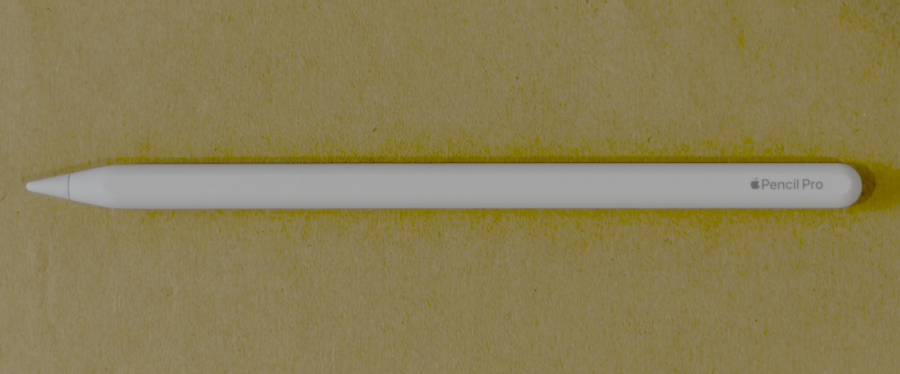
Then there is the Apple Pencil. Likewise, Jobs had famously dismissed this with his comments at the original iPhone announcement, and Apple was ridiculed when the Apple Pencil was announced. Things had changed. This was for the iPad (it still doesn't work for the iPhone) and the device demanded different ways for working. I initially expected the iPad would be a fair substitute as a reader so was surprised when the News International The Daily failed. This was more a question regarding the relationship of content and medium. Note how the circulations of many traditional newspapers fell as they treated the web as a broadsheet medium.
It was interesting to be reminded of the 15th anniversary of United Airlines dumping the 20Kg flight bag and replacing it with the iPad for essential data. As Luke Dormehl (Cult of Mac) reports that this saved "16 million sheets of paper each year, the equivalent of 1,900 trees not cut down". The reduced weight also saved about 1.23 million litres of jet fuel per year. Others also responded to the non-traditional forms that the iPad allowed and the number of apps that appeared (music, image editing, research) even caught Apple by surprise. The Apple Pencil was a natural part of this evolution rather than something to be ridiculed. But Apple. . . .
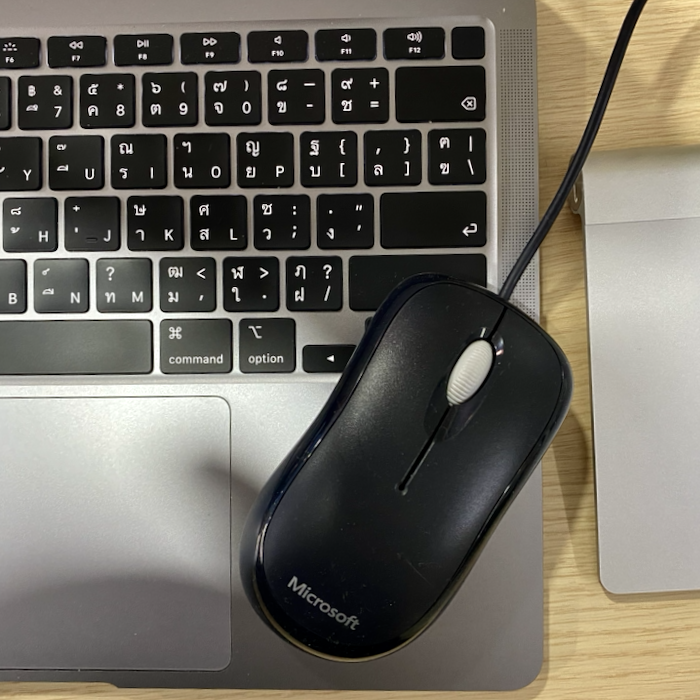
In the last couple of years, as my iPad Pro has become more my daily go-to device, so I use the Apple Pencil - mainly for markup of text, but also when working on image editing, and (perhaps oddly) when I am playing Soduku. Once or twice, however, I have also reached for the screen on my notebook Macs but not the Mac mini. The almost vertical external screen, a few centimetres from the Mac mini does not invite me to reach for the screen. On a related note, with most of my productive use focused on notebook Macs and the iPads, I use a touchpad rather than a mouse. The Magic Keyboard for the iPad Pro also has a touchpad, making this even more like a notebook computer, and I also have one for the Mac mini. I now find a mouse awkward to use, although I do have a couple gathering dust that are available for emergencies.
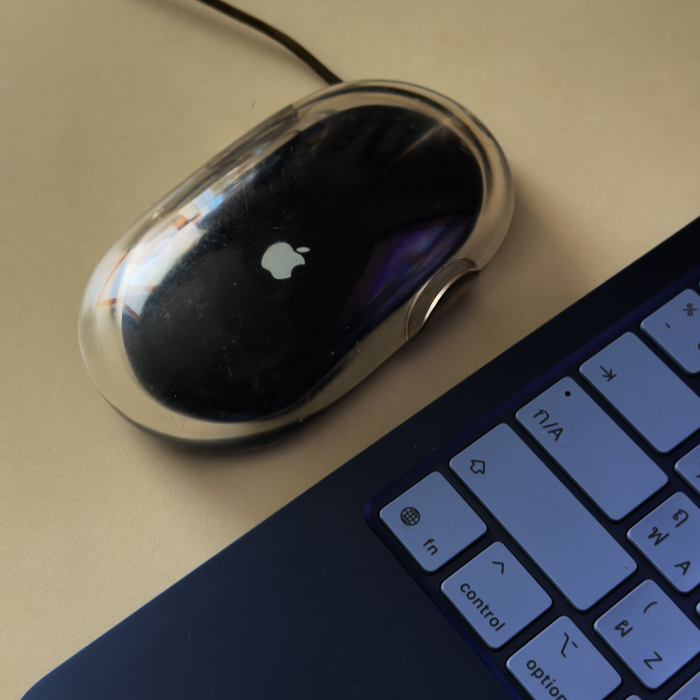
The Apple mouse shown below dates from the time of the G3 iMac. It still works although it is a bit scratched. I tried it on the MacBook Neo, using a USB adapter. The Mouse section appeared in Settings when it was connected and I was able to adjust the parameters. I prefer using a trackpad, but a couple of the mouses (check the dictionary) that I have used over the years came from Logitech, although I never installed the software that came with the devices, relying on the Mac plug and play along with System Preferences (now Settings). On the whole, Logitech was a company that produced reliable accessories. However, Alex Cooke (Fstoppers) reports some potential shady behaviour from the company.
|
|
The current US administration seems to have a love affair with tariffs, despite the historical evidence that suggests these are more damaging than some believe. A decision by the US Supreme Court reversed the Executive Order on tariffs and the money collected was to be returned. Cooke reports that when the tariffs were applied, Logitech raised its prices like many companies. However, following the Supreme Court decision, it "[kept] both the higher prices and the federal refund it collected". A lawsuit is demanding that the money is returned to "customers who bought a mouse, keyboard, or webcam at the inflated price" which may have been "as much as 25%, with an average increase of 14%." It appears to be not only Logitech as "Nintendo and Sony are facing their own tariff-related suits". Logitech lawyers argue that as the charges were legal when collected, the ruling "does not automatically create a duty to refund money paid earlier."
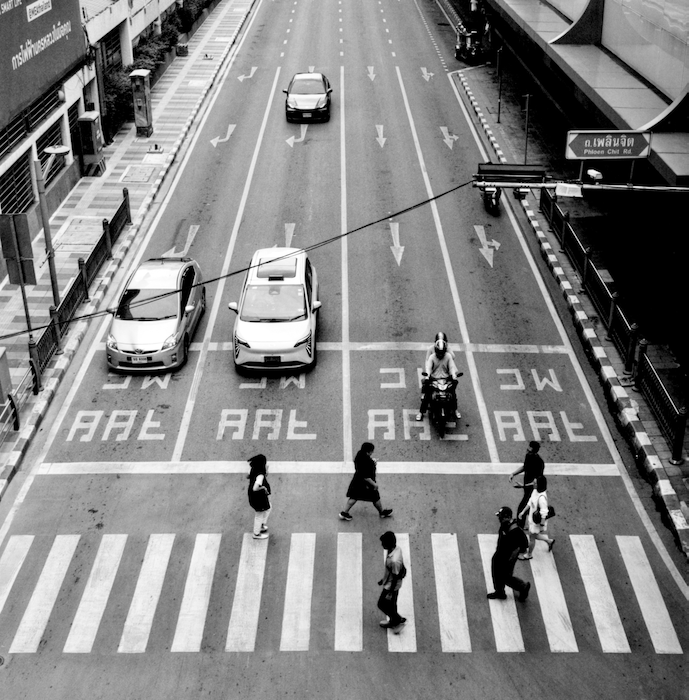
I have been fairly consistent on my low opinion of the use of AI, particularly when it comes to academic writing. I am also against its use with regard to photography, although I can see a limited value for creating images used in some types of advertising. When it comes to my own photography, all my images are original (I keep all RAW files and TIFF scans) and are edited minimally. What you see was really there. Jaron Schneider (PetaPixel) comments on the unnecessary AI slop that a couple of camera companies had included in its advertising, when the real output is just as effective. He writes about advertising videos produced by Xtra and its Muse gimbal camera, and by Ricoh GR Europe. The first is quite blatant, while the second is less so, but has all the hallmarks of AI.
He despairs about the unnecessary use of AI by Xtra: "It just doesn't make sense to me. Just show the real thing, put it in the hands of a real person, and use that. It's not even that hard or, frankly, that expensive." As for the Ricoh images, including one with thumbnail a man holding up the Ricoh GR to his eye, on camera without a viewfinder, it all seems unnecessary. He does not "understand why a company selling a product that is . . . tied to being creative would think that making fake, AI-generated, visual slop" is acceptable. Schneider does however concede a point that I have noticed, especially with the use of AI in academic circles, that "in Asia, the sentiment around generative AI use isn't as negative as it is in the West", adding that its use is "a lot more common there and especially in China, they aren't as immediately repulsed by seeing its use as folks in the United States, Canada, or even Europe are" [my italics].
|

|
Graham K. Rogers teaches at the Faculty of Engineering, Mahidol University in Thailand. He wrote in the Bangkok Post, Database supplement on IT subjects. For the last seven years of Database he wrote a column on Apple and Macs. After 3 years writing a column in the Life supplement, he is now no longer associated with the Bangkok Post. He can be followed on X (@extensions_th). The RSS feed for the articles is http://www.extensions.in.th/ext_link.xml - copy and paste into your feed reader. No AI was used in writing this item.

For further information, e-mail to
Back to eXtensions
Back to Home Page