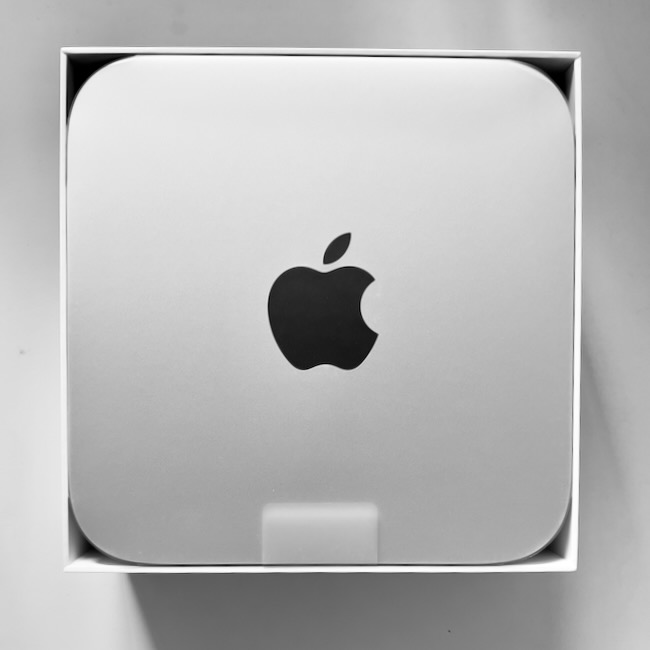
eXtensions - Sunday 8 March 2026
By Graham K. Rogers
What a week. We had been expecting some product releases during the Apple Experience, held simultaneously in USA, UK and China, but the range of products was impressive. It included a totally new computer aimed at students and those with less demanding needs than pro-users. Pre-orders are already pushing back delivery dates. Harman also dropped a surprise new film (some of us still use this): the Switch Azure. Emulsion chemistry changes the colors for unusual effects.
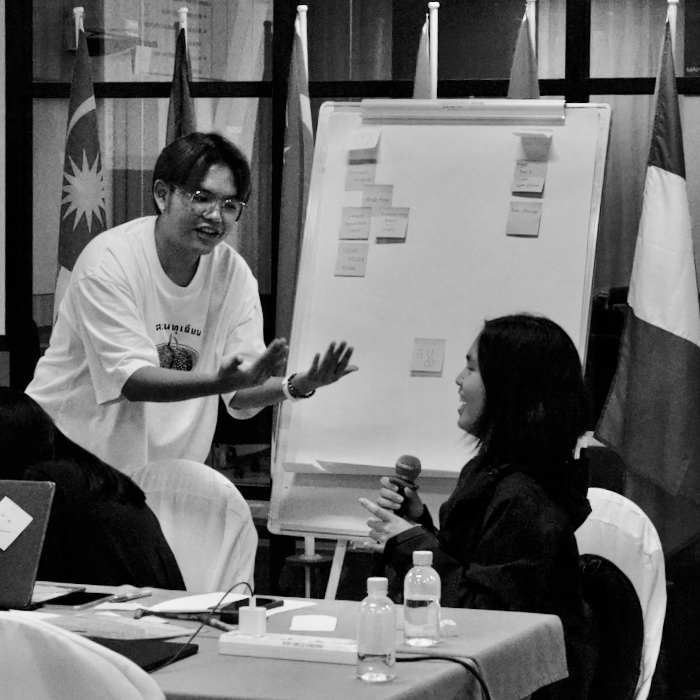
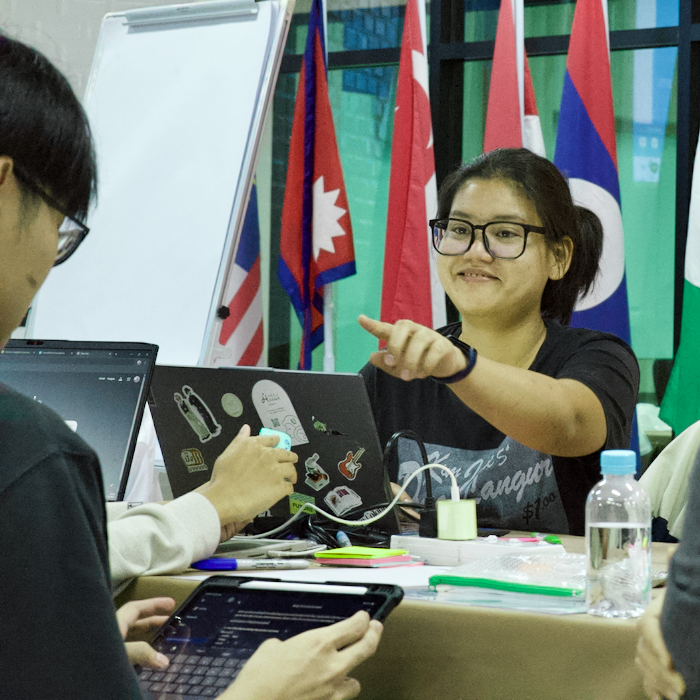
What an unusual week. It began for me last weekend when I was involved in this year's Invent for the Planet event at Mahidol University, just outside Bangkok. During the couple of days that this runs, groups of students are asked to produce solutions that will answer specific Need Statements. This year, the theme focused on food: from growing, harvesting, through to the logistics and delivery to consumers; plus climate problems.
|
|
Some of the students had attended this event in previous years, and included some winners. They were keen to see success again. For others this was their first time. They had to come to terms with the requirements and the pressure cooker environment. They were helped by advice from mentors whose experience helped them generate ideas. It was gratifying to see that, despite the efforts of the older hands, a group of newcomers took first prize.
|
|
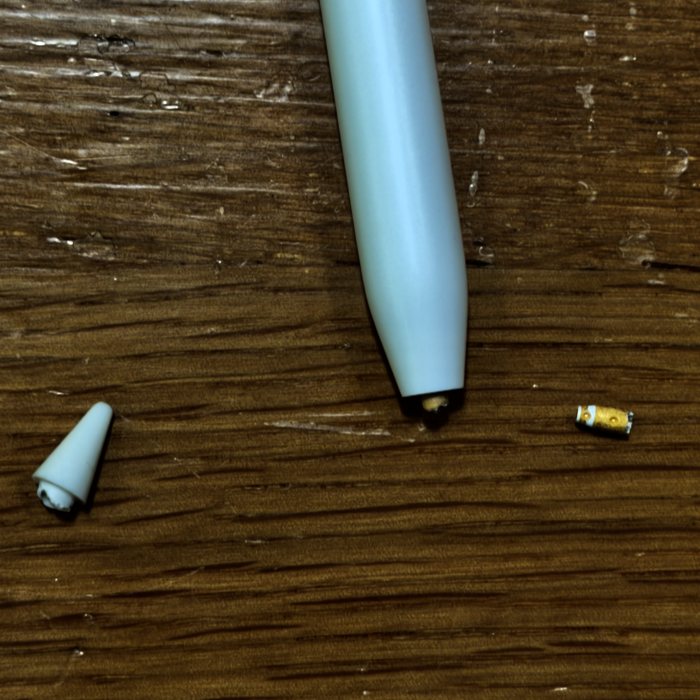
During the weekend, with all the moving about within the Engineering Faculty's Innogineer Studio where the event was held, I put my Apple Pencil Pro in the top pocket of my lab jacket. I leaned forward only to have the Apple Pencil fall to the floor: not for the first time. When I tried to use it to mark up some comments, it would not work although the iPad Pro recognized it. I checked to see if the end was screwed in properly, but it came away in my fingers. The important part inside had snapped off. There was no repairing that, I could see straight away.
On the final day of the event I brought in my iPad mini and its Apple Pencil 2 in case this were needed. I had planned to go in to Bangkok on the Monday morning, but this added another job to my task list. In the iStudio on floor 2 of Siam Paragon, I was dealt with quite quickly and walked out within a few minutes carrying a new one (price 4,450 baht). At home later, I looked in System Settings > Bluetooth and "forgot" the older Pencil, then just linked the new Apple Pencil to the iPad by connecting it to the magnet in the top edge.
Apple had announced, not an event, but an "Experience" that would take place in New York, London and Shanghai. Most commentators expected product announcements, including a new low-price Mac. We were not disappointed. As a result of one announcement (see below), Apple released updates to OS 26 for iPhone, iPad and Mac that arrived here on Thursday morning. Version 26.3.1 expanded external display support for new monitors that were announced.
Apple kicked off its expected week of announcements on Monday with a new iPad Air. I first saw this in a report by Ryan Christoffel, so heads-up to him and 9to5Mac for that. This has the M4 chip although it is almost the same as its M3 predecessor with faster speeds and more memory (12GB). I expect there will be some criticism for what I think is a sensible approach to device development: building on what works. Ryan also reports that this now has the C1X 5G modem chip and the N1 wireless chip. The iPad Air is $599 and it should arrive in customers' hands next Wednesday (11 Mar). Prices here start at 21,900 baht for the 11" iPad and 28,900 for the 13" model. Like most of the other new releases this week, they are not yet available for ordering here.
Almost immediately, I spotted another item by Hartley Chalrton (MacRumors) which reported the expected iPhone 17e with the A19 chip that was used in the iPhone 17, with a 6-core CPU and 4-core GPU. Charlton reports that this is $599 but with 256GB of memory, compared with the 128GB of the iPhone 16e at the same price. Here this is listed at 22,900 baht (compare the iPad Air above). Pre-orders are open and the iPhone 17e is shown as being available 11 March. Charlton and Anna Washenko & Cherlynn Low (Engadget) note that this now includes the Magsafe charging that was missing on the iPhone 16e. Apple also updated some of its accessories, Amber Neely (AppleInsider) reports. There are some new iPhone case and Watch band colors: bright enough but nothing that will have me reaching for my credit card.
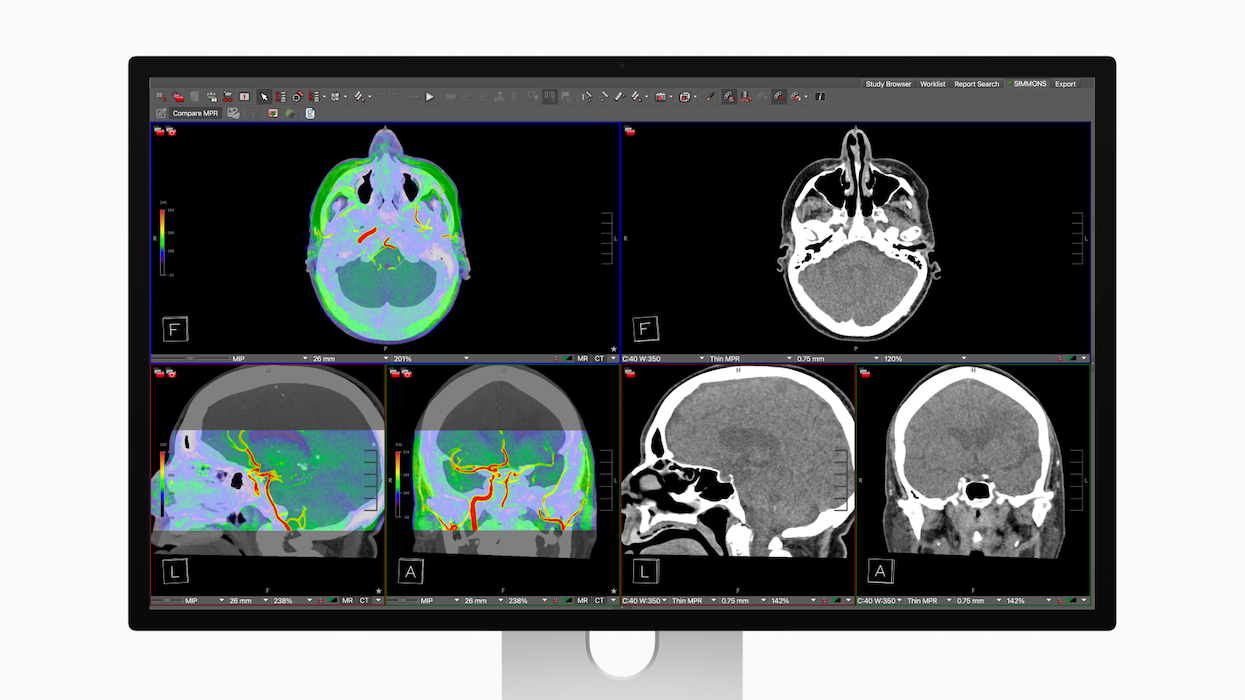
On Tuesday there was more. It had been expected that Apple would update its Studio Displays and this was confirmed in a press release: the Studio Display and all-new Studio Display XDR. The latter has a "27-inch 5K Retina XDR display with a mini-LED backlight, 2000 nits of peak HDR brightness, and a 120Hz refresh rate". Chance Miller (9to5Mac) breaks this down in his outline of the specifications. The Studio Display starts at $1,599, while the Studio Display XDR is priced from $3,299. There is more detail in the Apple PR release which includes information about the introduction of new DICOM medical imaging presets and a Medical Imaging Calibrator. Obviously aimed at the medical profession and specifically radiologists, this allows viewing of diagnostic images directly on the Studio Display XDR.
Also released were new (and expected) MacBook Pro computers along with the M5 Pro and M5 Max chips Ryan Christoffel reported. He notes that, like other devices, while the chips are new, they are used in what is basically the same design of MacBook Pro that we have been familiar with for a while. I am happy with that. These chips had been rumored following analysis of code in beta releases of Apple's software, but there is some clever engineering at play here.
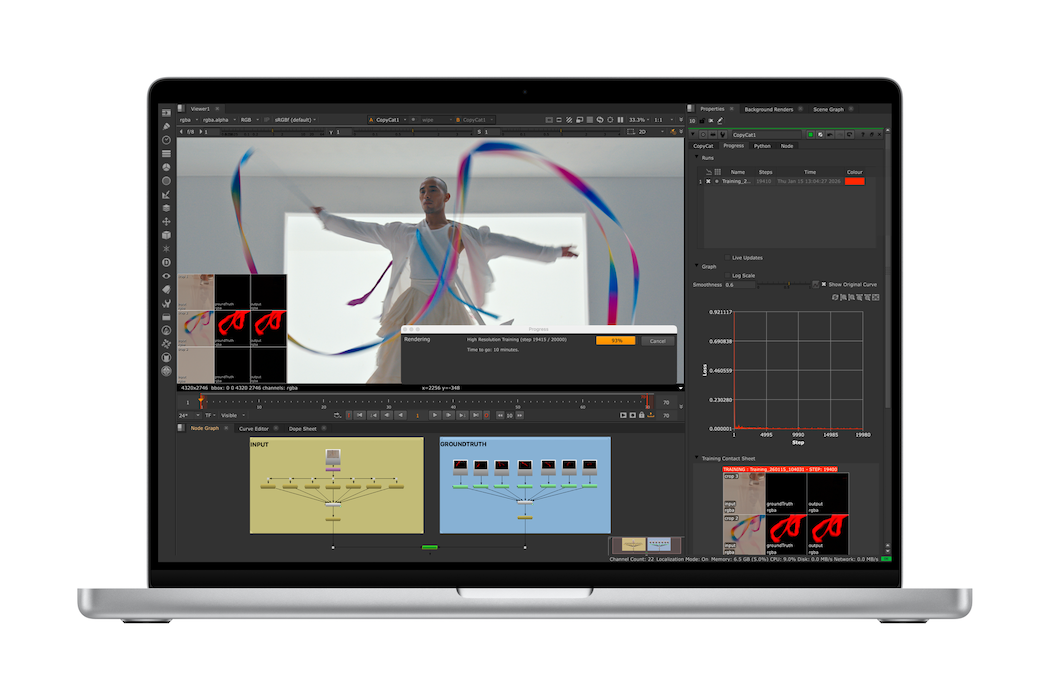
Ben Lovejoy (9to5Mac) writes, that while earlier versions of Pro and Max chips were formed separately, "for the M5 generation, Apple has combined two dies into a single chip". This had been rumored a couple of weeks ago. Lovejoy describes some of the features of this. In a fairly enthusiastic commentary, Om Malik describes the reasoning behind the new Fusion architecture, and the implications for future developments with this modular silicon.
I was impressed by the first look at the new M5 MacBook Air. So much so that I priced one out to specifications that would suit me. However, I asked the important question, Do I really need this? With the other devices I use, the M1 MacBook Pro is working fine for now. When I asked the same question about the M4 iPad Pro and the M4 Mac mini, the answer was, Yes, and I ordered straight away. There is an odd thing with the pricing, and depending on whose report you read, this is an increase, a good deal or a decrease. Recent events connected with the growth in AI which we are being told is good for your health, have seen the prices of chips and memory raised considerably.
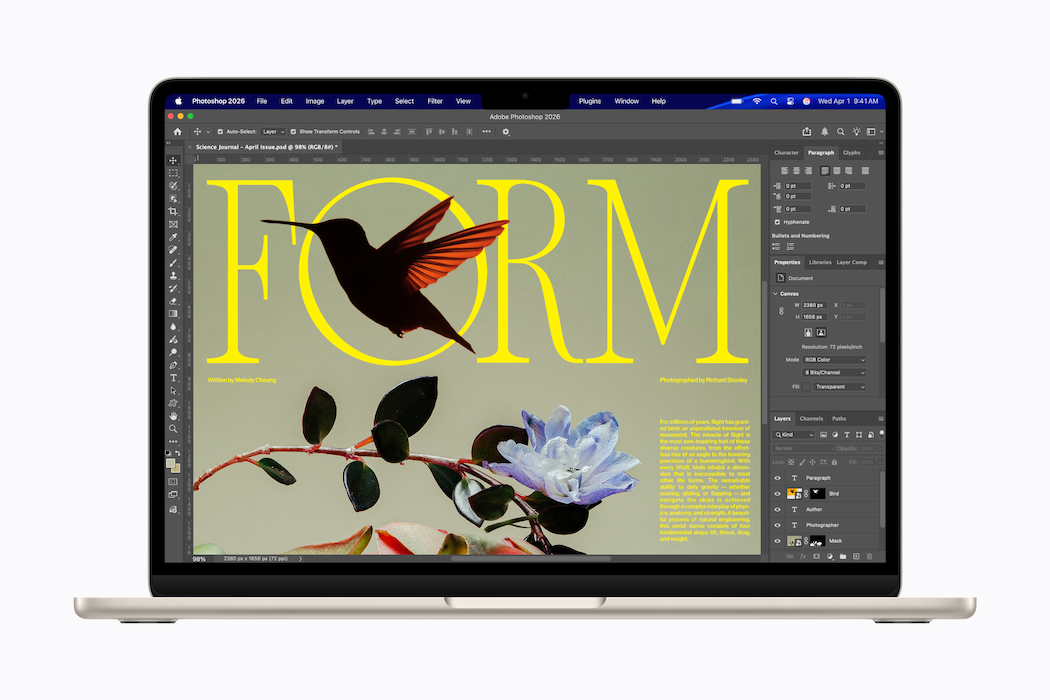
It is not really a surprise to see that the MacBook Air is up from the $999 to $1099 (a base price here of 36,900 baht): a prima facie price increase. It is the sort of change that I would just take in my stride with a shrug, especially after the price I paid for the iPhone 17 Pro. I still don't know how Apple calculated that compared to the US price. However, as David Price (MacWorld) notes, the specifications have also changed. Not only do we have the M5 chip, which will leave my reliable and (still) impressive M1 MacBook Pro in the dust, but the base storage has been upped from 256GB to 512GB - when all this is supposed to be more expensive. In his report which outlines the specifications, Price writes, "technically this is a price cut - the 512GB model has dropped by $100". The higher level MacBook Pro models go even further with this upscaling (and higher prices) as the former entry point 512GB storage is no longer available. These now start with 1TB SSD.
Reports appearing Wednesday morning here suggested that Apple had accidentally (perhaps) leaked the name of its long-rumored, low-price MacBook with the A18 chip: the MacBook Neo.
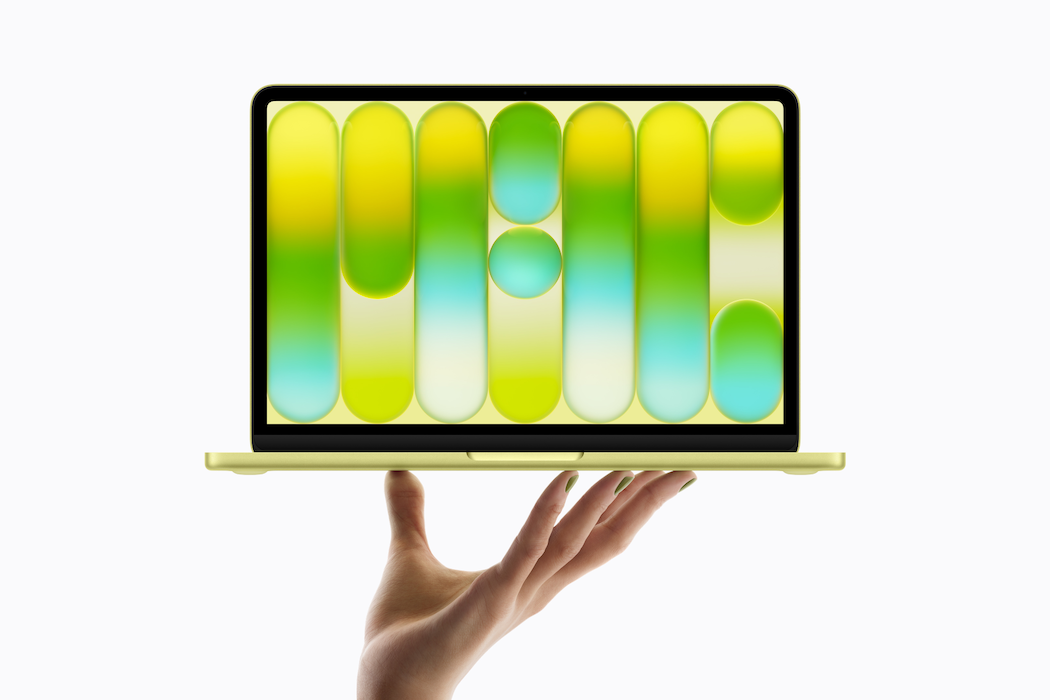
That was announced late Wednesday evening here. All the rumors appear to have been correct: A18 Pro chip, $599 with 256GB storage and 8GB RAM. The education price starts at $499. As Zac Hall (9to5Mac) notes, that is the same price as the M4 Mac mini, although a user would need to provide keyboard, mouse and screen. And sacrifice mobility. I have a Mac mini (I have had several) and it is just great, but the form does limit how I use it. I have a MacBook Pro and iPads that I can move around far more easily.
Potential buyers should not be confused when some people describe this as an iPhone chip, Oliver Haslam (Cult of Mac) argues that this is Apple silicon: the same architecture as the M4 or M5, just fewer cores and made using 3nm technology. While it did power the iPhone 16, the chip design has been adapted for macOS (and remember Steve Jobs introduced the iPhone as running OS X).
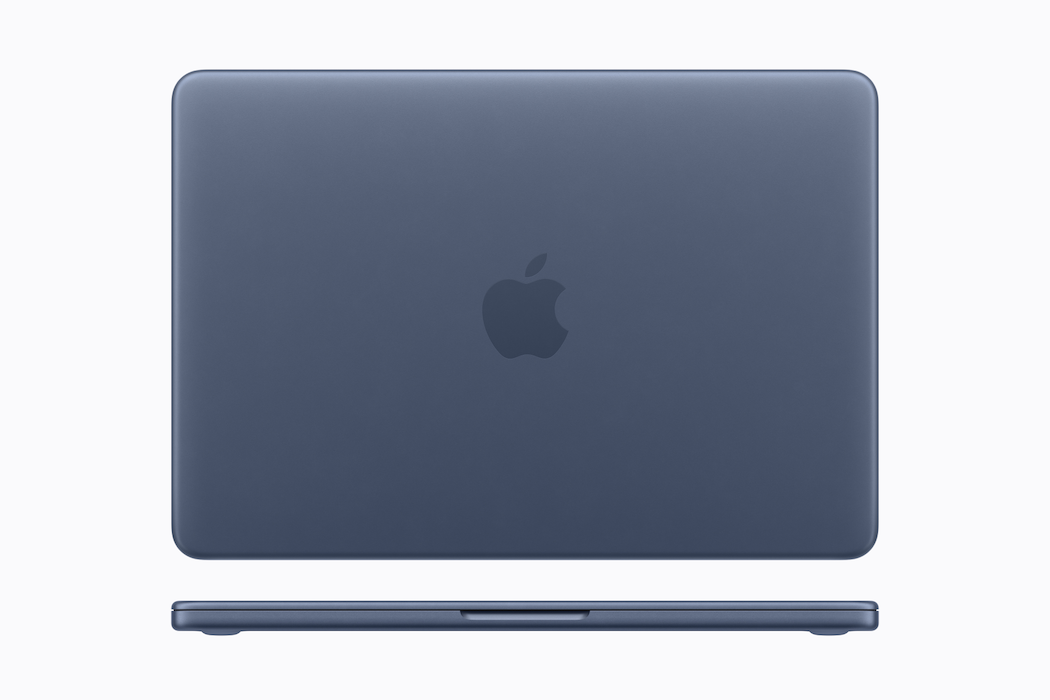
The MacBook Neo is priced starting at 19,900 baht in the online Apple Store, 6-core CPU, 5-core GPU, 16-core neural engine. It comes in 4 colors. I sort of like the yellow (citrus), but that and the pink (Blush) seem a little bland. Customers clearly do not think so. By Friday, the Blush configuration was already sold out according to several reports. The other colors are Silver and Indigo which is the nicest of the colors for me. Like the other new devices (apart from iPhone 17e), it is not yet available here, although pre-orders are open in the USA with delivery due next Wednesday there (11 March).
A Steve Jobs' quote is being widely circulated: "We don't know how to make a $500 computer that's not a piece of junk, and our DNA will not let us ship that." This is not a piece of junk. As with his earlier comments on the stylus, technology, app development and user needs have moved on. I find the Apple Pencil indispensable for the work I do marking up and commenting on text output. I can quite understand why people would want this for image editing. Jobs also dissed cheap netbooks at the iPad announcement in 2010, but here we are. This is no netbook. The MacBook Neo uses a version of Apple silicon that first saw life in the iPhone. There are compromises with features, but for an entry-level Mac, this has much potential and may silence (at least for a short time) those pundits who wanted Apple to make the iPad work like a Mac.
Alex Cooke (FStoppers), wryly notes how, online commentators look at a new Apple device, "benchmark it against the most expensive thing in the lineup, declare it insufficient, and move on." Wrong, he declares, and adds, "once you understand what Apple is actually doing, the product makes perfect sense" for the target audience. His article details several of the ways he thinks Apple has a winner here. Andrew Orr (AppleInsider) has a look at how Apple made a lower-priced Mac without cheapening the Mac.
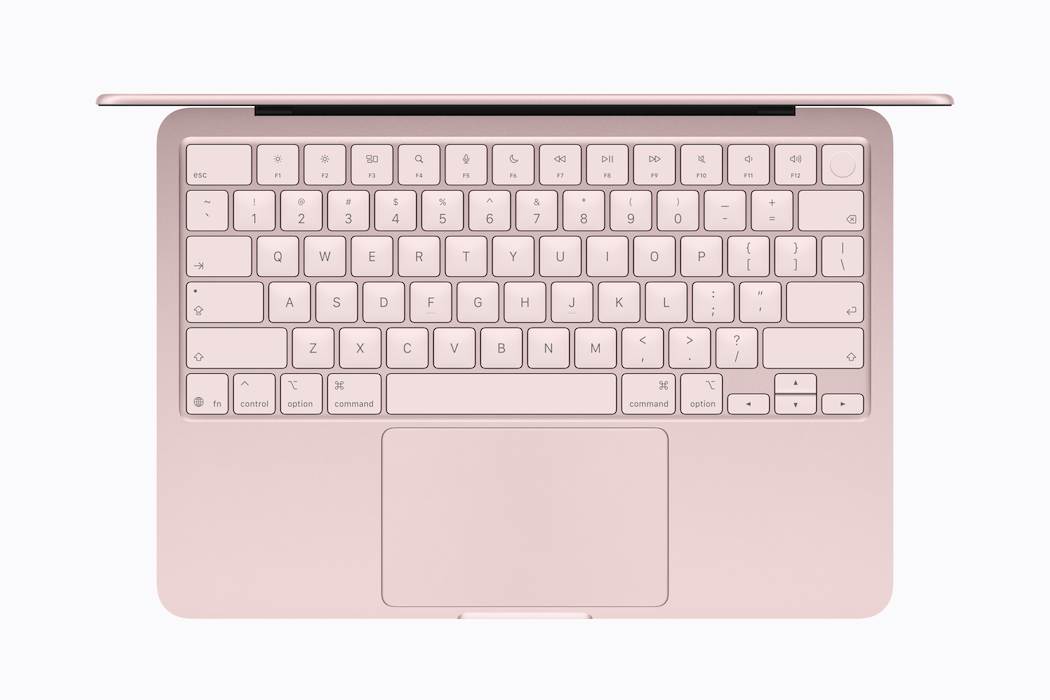
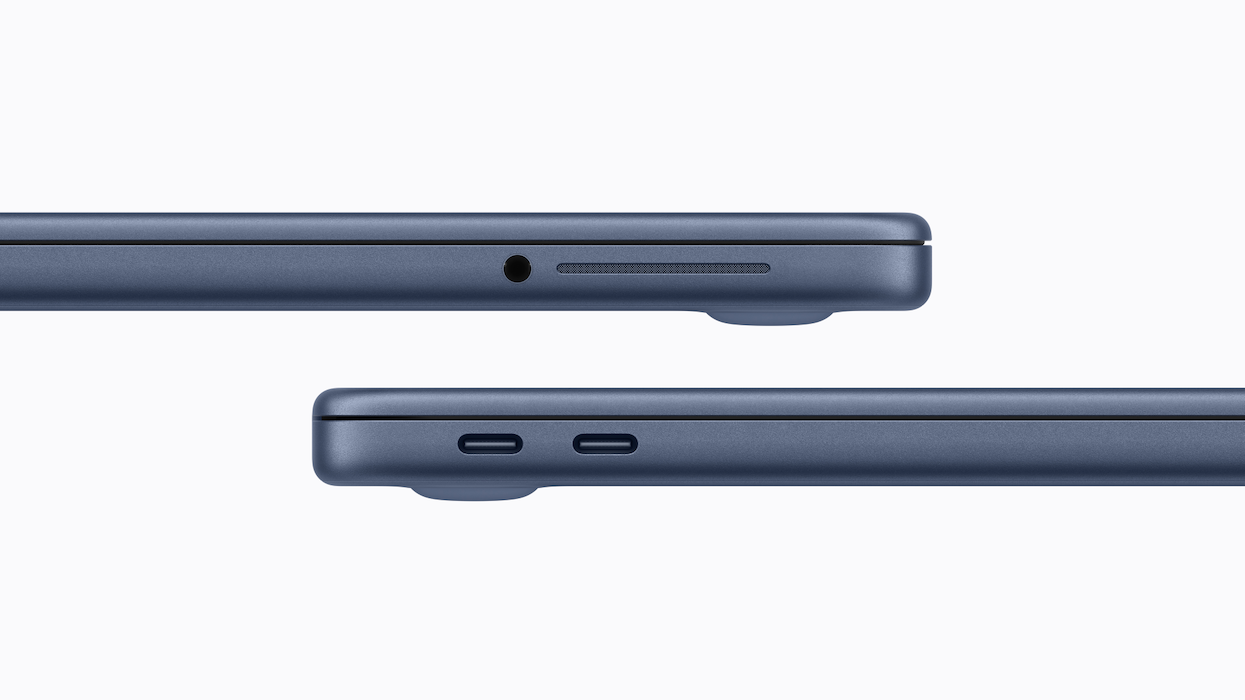
There are compromises with the Neo and those in the market for the device should note that this is not a Pro device. The screen is 2408 X 1506 and at 500 NITS brightness is less bright than a MacBook Pro. The device is fan-less, so runs quietly. The two USB-C ports are not the same. Only one can support a quality monitor. Their data transfer speeds are different too. Hartley Charlton (MacRumors) notes that one of these is limited to USB 2 speeds. There is no mention of Thunderbolt (the MacBook Air supports Thunderbolt 4). Rajesh Pandey (Cult of Mac) comments, "the Neo cannot drive Apple's new Studio Display or Studio Display XDR at the monitors' native 5K resolution." However, as Zac Hall (9to5Mac) reports, there are some new features: a new trackpad with a different way to click for behaviors; the A18 chip (see benchmarks, below) is not simply an iPhone 16 chip and has seen specific developments. Unlike the iPhone, for example, this A-series chip allows more than one data port.
Despite the limitations of the device - which are fairly obvious and up front - this is still capable of excelling at most everyday tasks, William Gallagher (AppleInsider) reports. It is, he explains, just fine for "browsing, writing, and music that most users need". In a bulleted list he adds Emailing, Word processing, Spreadsheets, and "Certain mostly older games". He explains how A18 iPhone benchmarks support this. The Neo is a slightly different environment of course, but the benchmark figures are still in the expected ballpark. Chance Miller (9to5Mac) has had a hands-on try of the MacBook Neo in NewYork. He thinks that the colors are fantastic, but while he has lots of photos, there is no feedback on performance. Jason Snell (6 Colors) has some positive words in his good look at this new Mac. As Ed Hardy (Cult of Mac) notes, these are "flying off the shelves" and pre-orders of certain models are already causing delivery dates to be put back. He also comments on the numbers of orders that include additional fees: additional memory, increased storage and the keyboard with Touch ID sensor.
By the weekend, the first benchmarks began appearing and there is some fairly good news for potential buyers. Joe Rossignol (MacRumors) started the ball rolling reporting record benchmarks for the 16" MacBook Pro with the M5 Max chip. The multicore score was 29,233 compared to that of the M3 Ultra in the Apple Studio of 27,726. The article includes a list of 18 Apple devices with the M1 MacBook Air down at the bottom with 8,342 slightly less than the MacBook Neo at 8, 668: more on that below. Wesley Hilliard (AppleInsider) also reports on the new M5 Macs. He notes that, "The M5 Max results are quite impressive and once again show Apple's ability to consistently increase performance in Apple Silicon."
Similarly, Rajesh Pandey (Cult of Mac) reports on these benchmarks. He uses "impressive" 4 times in this article, noting that "Early results show the new chip outperforms every other CPU currently on the market." However, Anton Shilov (Tom's Hardware) confirming that the 18 cores of the M5 Max outperform the best of the rest, does note that GPU performance is less impressive. He also notes in his wide-ranging report that the types of test used may not give an accurate indication of just how a chip might perform in a real world situation.
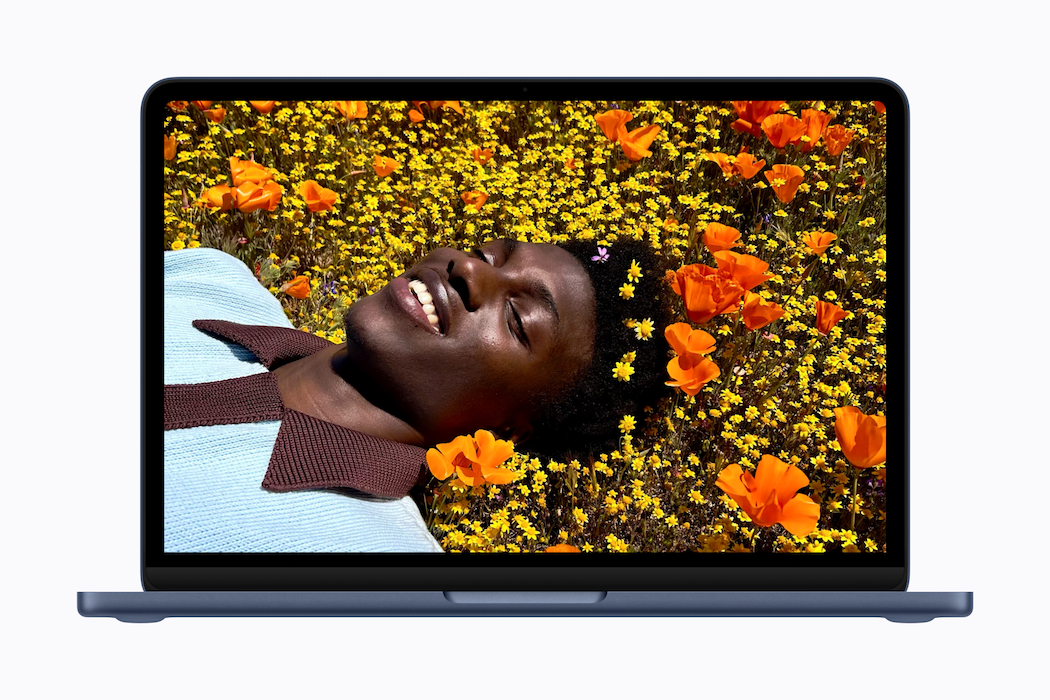
The MacBook Neo scores are reported by Juli Clover who includes some relevant comparisons. She writes, "The MacBook Neo earned a single-core score of 3461 and a multi-core score of 8668, along with a Metal score of 31286." Most notably the iPhone 16 Pro shows scores of 3445 single-core, 8624 multi-core, and 32575 Metal, confirming that the chip has been tweaked for the new Mac. The article lists 5 Macs and iPads and it is clear where the MacBook Neo fits within the range. Wesley Hilliard (AppleInsider) notes that the benchmark scores are predictably similar to those of the iPhone 16 Pro, but adds that these figures are remarkably close to the M1 MacBook Air. I looked these up on Geekbench and those figures suggest that the MacBook Neo has a higher score than my M1 MacBook Pro which is still performing exceptionally well (albeit with 16GB RAM).
In the middle of the Apple Experience, one of my other interests was enlivened by the release of a new film from Harman. These are the guys that make the Ilford films that I have been using since I was a child. There is a wide range of black and white films, and this has been supplemented by a smaller range of Kentmere films: 100, 200 and 400 ISO. Harman began to release color films under its own name, so that the recognition for its B&W products stays firmly with Ilford. This began with Phoenix and was followed by a remix of the emulsion to give a slightly bluer tint in Phoenix 2. I prefer the original Phoenix, and usually shoot at 100 or 125 instead of the box speed of 200. Harman also produce Harman Red 125 film, which as the name suggests emphasizes reds, yellows and orange colors. I have not tried this as it is only available in 35mm. I use 120 film. Harman does, however, suggest this works best at box speed.
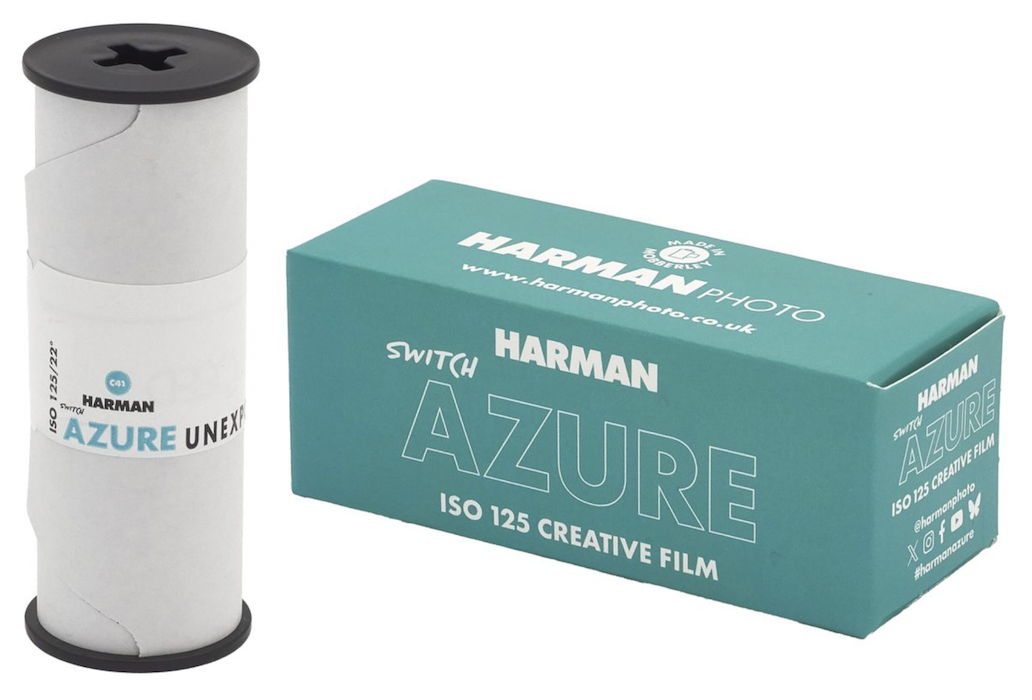
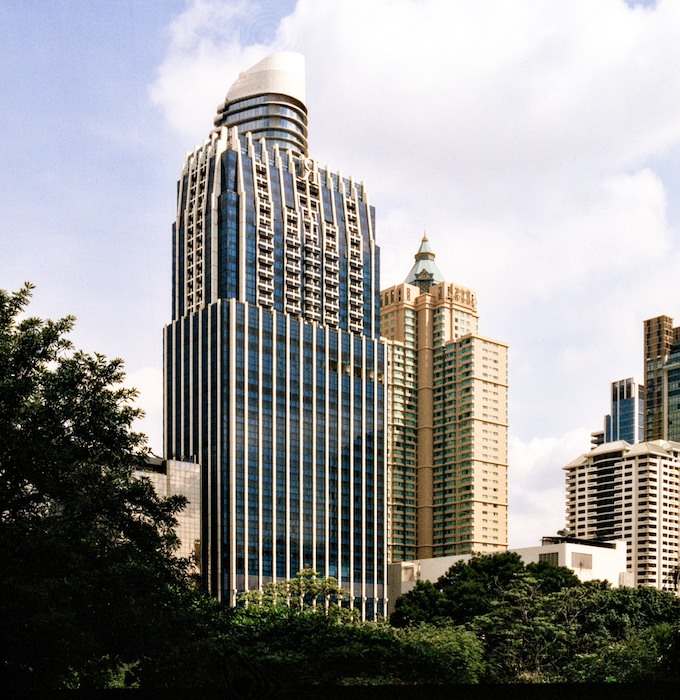
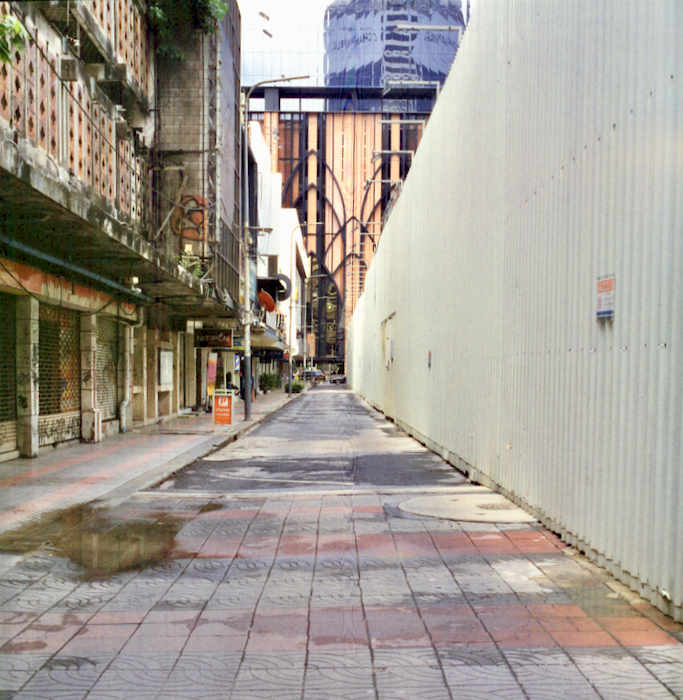
Now Harman has expanded the range to include a new Switch Azure film and as announced this is available in 35mm and 120. I did try the Lomo Turquoise films but was disappointed with the results, particularly as I had such interesting output from their Lomo Purple. Harman Switch Azure has not yet appeared in the listings of my usual supplier, so I keep checking and I shall check other sources. While I prefer working in black & white, the occasional color challenge is worth a try.
|
|
Matt Growcoot (PetaPixel) notes comments from Harman, "that the scanner used on the film also affects the color: Fuji scanners appear to make the colors more intense, while Noritsu makes the blues more faded." I will have to remember that and make sure I adjust the scanner levels when I handle the negatives (when I am able to buy this). Growcoot tried some film and was surprised by the way the emulsions really do switch the colors around. He writes that color changes can be made or adjusted in post-editing, but suggests we avoid shooting in the rain as the drops show up as small red dots.
That was quite a week. From comments online, there are still several more product updates in the pipeline. And, of course, we will soon start thinking about the World Wide Developers Conference in June, OS updates and the next generation of the iPhone.
Graham K. Rogers teaches at the Faculty of Engineering, Mahidol University in Thailand. He wrote in the Bangkok Post, Database supplement on IT subjects. For the last seven years of Database he wrote a column on Apple and Macs. After 3 years writing a column in the Life supplement, he is now no longer associated with the Bangkok Post. He can be followed on X (@extensions_th). The RSS feed for the articles is http://www.extensions.in.th/ext_link.xml - copy and paste into your feed reader. No AI was used in writing this item.

For further information, e-mail to
Back to
eXtensions
Back to
Home Page